
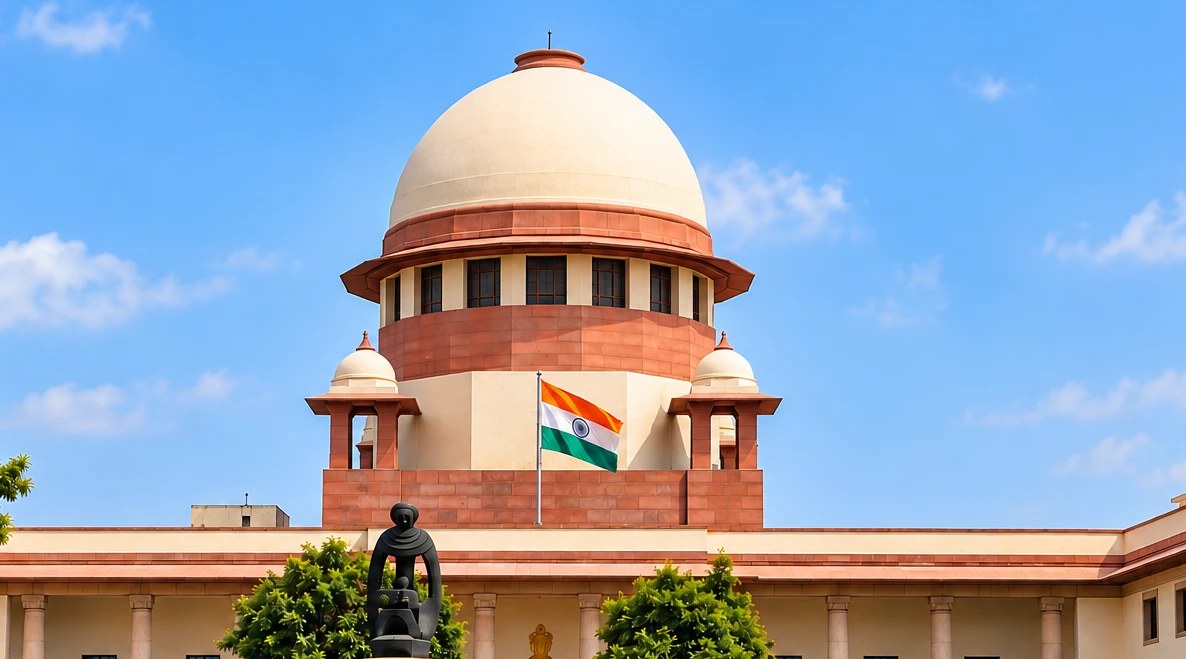
The Supreme Court held that foreign law firms and foreign lawyers cannot practise law in India, in litigation or in non-litigation work, unless they meet the Advocates Act. A casual 'fly in and fly out' visit to advise on foreign law is not practice, foreign lawyers have no absolute right to conduct international commercial arbitrations, and BPO services that in substance amount to legal practice are covered (paras 41, 44-46).

The Supreme Court set aside a High Court acquittal of two accused found in a car with about 18.85 kg of cannabis mixture and restored their conviction under Section 20 read with Section 29 of the NDPS Act (para 7). Examining independent witnesses is "not an indispensable requirement", and a case-property parcel produced torn in court did not create doubt where no tampering was suggested to the witnesses and the chemical examiner noticed nothing doubtful (para 6).

The Supreme Court granted bail to a man in judicial custody since April 2017 in a cheating case, holding that the trial judge and the High Court ought to have granted it because he was never arrested during seven months of investigation (paras 12, 17-18). Restating that "the grant of bail is the general rule" (para 2), the Court said that where the investigating officer did not arrest an accused, "a strong case should be made out" for judicial custody after the charge sheet (para 4).

The Supreme Court dismissed the Union of India's appeal against the Bombay High Court's acquittal of a foreign national found with 12.03 kg of hashish in a suitcase at Mumbai airport. The two panch witnesses said the bag was already open when they arrived and that they signed papers without reading them, and a retracted Section 67 statement and the officer's word alone could not sustain a conviction (paras 10-14).

The Supreme Court dismissed the Union of India's appeal against a Madhya Pradesh High Court acquittal in a 7.2 kg opium case (para 13). After samples were drawn, the Executive Magistrate handed the bulk back to the investigating officer, and it was never produced at trial; any destruction needed a Magistrate's order under Section 52A, which was never sought (paras 8-11). With hostile independent witnesses and a Section 67 statement recorded in custody, the acquittal stood (paras 12-13).

The Supreme Court acquitted a man serving 15 years for possessing 59 kg of ganja because neither the seized ganja nor its sample was ever produced in court, the independent witnesses had turned hostile, and the prosecution gave no explanation (paras 5, 7-8). A forensic report alone could not confirm the seizure or that the substance was ganja, and police testimony alone was not safe (paras 7-8).

A nine-Judge Bench of the Supreme Court held that the right to privacy "is protected as an intrinsic part of the right to life and personal liberty under Article 21 and as a part of the freedoms guaranteed by Part III of the Constitution" (Order of the Court, para 2). M P Sharma, and Kharak Singh to that extent, were overruled. The plurality judgment added that privacy is not absolute: an intrusion needs a law, a legitimate aim and proportionality.

In Shayara Bano v. Union of India (2017 INSC 785), the Supreme Court held by a 3:2 majority of a five-Judge Constitution Bench that the practice of talaq-e-biddat, instant triple talaq, is set aside (Order of the Court). Justice Rohinton Fali Nariman, for himself and Justice Uday Umesh Lalit, held that Section 2 of the Muslim Personal Law (Shariat) Application Act, 1937 recognises and enforces triple talaq, which is manifestly arbitrary and violates Article 14, so the Act is void to that extent (paras 18, 57). Justice Kurian Joseph concurred: triple talaq is against the Quran and lacks legal sanctity (concurring, paras 10, 26). Chief Justice Khehar and Justice Nazeer dissented.
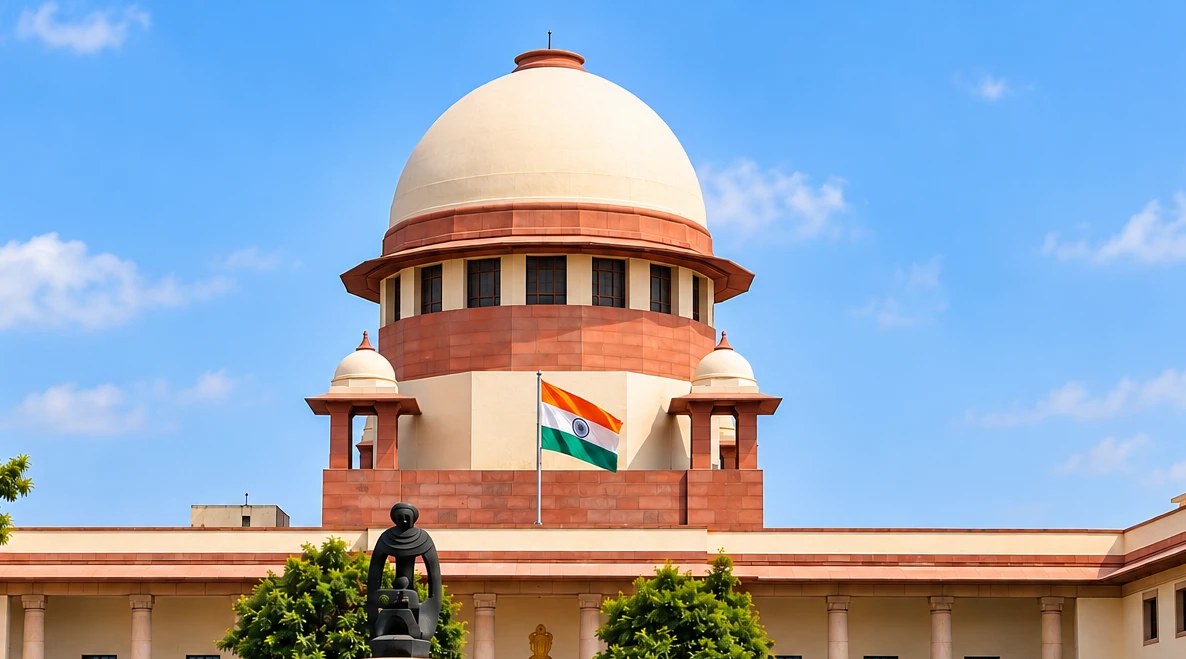
A seven-Judge Bench held a sitting Calcutta High Court Judge, Justice C.S. Karnan, guilty of the gravest criminal contempt for unfounded public allegations against Judges and purported orders against the Bench itself, and sentenced him to six months' imprisonment. A separate opinion called for a mechanism, short of impeachment, to correct the conduct of constitutional court Judges (Khehar CJI, paras 35-36; Chelameswar J., paras 25-26).

Hearing bail pleas of prisoners held for years, including NDPS accused in custody since 2013, the Supreme Court directed that the pending trial and appeal be decided within six months. It then set norms for all High Courts: bail applications decided within a week in subordinate courts, sessions trials of persons in custody within two years, and release on personal bond of undertrials held longer than their likely sentence (paras 7, 20, 27).

In State of Rajasthan v. Jagraj Singh alias Hansa (Criminal Appeal No. 1233 of 2006), the Supreme Court held that a privately owned jeep with no permit to carry passengers was not a ‘public conveyance’ under the Explanation to Section 43 of the NDPS Act, so officers who searched it on recorded prior information had to comply with Section 42 (paras 16-18). As no grounds of belief were recorded under the proviso to Section 42(1), and the copy sent to the superior officer did not match the recorded information, it dismissed the State’s appeal and upheld the acquittal (paras 13-14, 25-27).

Finding that only 16% of drugs seized between 2002 and 2012 had been disposed of, the Supreme Court issued nationwide directions on the sampling, storage and disposal of seized narcotics. Under Section 52A of the NDPS Act, samples must be drawn in the presence and under the supervision of a Magistrate, who certifies them. Governments were directed to set up secure storage within six months, and stocks in concluded cases were ordered destroyed (paras 13, 15, 19-20).