

The Supreme Court granted bail to a man held for about one year and four months in an NDPS case involving an alleged 27 kg of ganja-patti, after the Punjab and Haryana High Court had refused it. Weighing the period in custody and the time the trial will take, the Court kept in mind Article 21 and the principle of Section 37 of the NDPS Act and enlarged him on bail on conditions to be set by the trial court (paras 3, 5-6).
The Supreme Court set aside the life sentence of a man convicted of raping and murdering his young niece in Sikkim in 2013, holding that the chain of circumstances was broken at several points. No witness saw him take the child, the recovery spot was open to passers-by, the bones recovered were of male origin, the forensic tests were inconclusive, and his Section 313 answers could not fill the gaps.
The Supreme Court dismissed Himachal Pradesh's appeal against the acquittal of a woman accused of strangling her step-mother and minor step-brother. The last-seen witness had improved on his police statement, the investigating officer never explained why or when he recorded the taxi driver and hotel worker, tower locations were never collected, and a DNA match on a trunk showed only that the accused, a regular visitor, had been there at some point.
The Supreme Court quashed a Chhattisgarh rural roads agency order that withheld Rs 84.17 lakh from a contractor's bills under three ongoing PMGSY contracts to recover an alleged overpayment on earlier, separate works. None of the contract clauses relied on authorised it, the audit clause required a hearing and the CEO's orders, and an unadjudicated claim is not a debt presently due.
The Supreme Court restored a cheque-dishonour conviction that the Kerala High Court had set aside because the statutory demand notice was received by the accused's mother, not by him. Once the notice is sent by registered post to the drawer's correct address, service is presumed and the drawer must rebut it (paras 24, 32, 35). The Court declared M.D. Thomas v. P.S. Jaleel, which had held service on the drawer's wife insufficient, per incuriam (para 30).
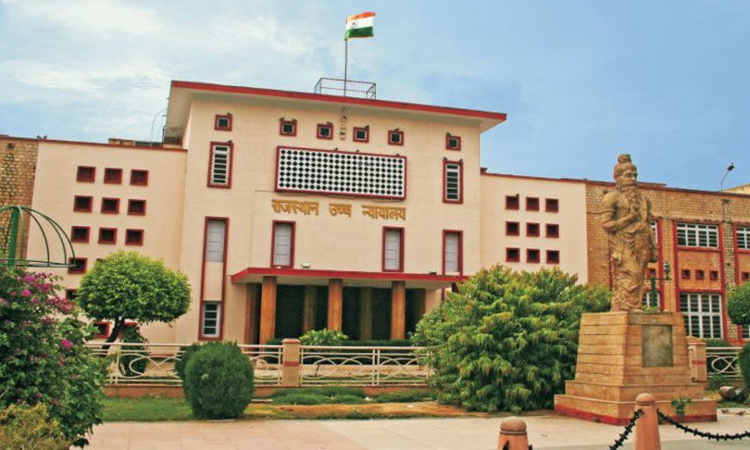
On a State appeal against sentence, the Rajasthan High Court held that Section 21 of the Juvenile Justice Act bars only death and life imprisonment without the possibility of release for a child in conflict with law, so life imprisonment with the possibility of release remains available. The Children's Court had imposed ten years' rigorous imprisonment for murder without giving any reason, so the sentence was set aside and the matter remanded for fresh sentencing (paras 6-7).
The Supreme Court quashed the National Security Act detention of Mulla Afroz, arrested after the November 2024 violence during a mosque survey in Sambhal, and imposed costs of Rs 10 lakh on the State. A confession made to the police cannot by itself ground preventive detention (para 36). The other grounds rested on material never supplied, and the detention was an attempt to frustrate bail: "the process was made the punishment" (paras 46-52, 68).
The Supreme Court granted bail to Shubhanshu Dixit, a former secretary of the Rajasthan Water Supply and Sewerage Management Board, and Sanjay Badaya, alleged to be a middleman for the then PHED Minister, in the Jal Jeevan Mission tender case. With chargesheets filed, documentary evidence already seized and a long trial ahead, further pre-trial custody served no purpose (paras 10-14). Economic offences must be viewed seriously, but pre-trial incarceration cannot become punitive detention (paras 10, 12).
Taking suo motu cognisance of recent sexual offences against women and minor girls in Delhi NCR, the Supreme Court held that the right to live free from the fear of violence is part of Article 21, and that expressions of concern without accountability are not enough (paras 5-6). It called for status reports on how safety mechanisms actually work on the ground and ordered interim steps within four weeks, including vulnerability mapping, patrolling, and lighting and CCTV audits of public spaces (paras 9-12).
The Supreme Court set aside orders compelling the CBI to produce documents it had not relied on, at the stage of framing of charges. Without deciding the conflict between Debendra Nath Padhi and Sarla Gupta, it held that an accused may access documents held by the prosecution to shape the defence, but the stage depends on the document: voluminous unrelied material is inspected, and specific documents are produced at trial.
The Supreme Court set aside the appellant’s rape conviction, finding that the prosecutrix’s evidence did not inspire confidence. It reiterated that sole testimony can sustain conviction when credible, while moral disapproval cannot substitute for proof. (Paras 28–31)
The Supreme Court held that a victim's appeal against an acquittal recorded by a Magistrate lies to the Sessions Court, not the High Court. Under the proviso to Section 413 of the BNSS, a victim's appeal lies to the court that ordinarily hears appeals against convictions by the trial court, and Section 415(3) sends appeals from a Magistrate's conviction to the Court of Session. The Court upheld the High Court's order and allowed the petitioner to appeal to the Sessions Court within one month (paras 10-13).