

The Rajasthan High Court dismissed three revision petitions against a Special Court's order of 21.01.2019 taking cognizance under Sections 3 and 4 of the PMLA in a mines bribery case, and seven Section 482 petitions against the refusal to convert the accused's arrest warrants into bailable warrants (opening paragraph, paras 2, 48, 63). A person accused of money laundering need not have committed the scheduled offence (para 44), and the 2019 Explanation to Section 3 is clarificatory (para 41).

The Supreme Court set aside the Kerala High Court's orders granting bail to two accused in hashish oil cases involving commercial quantities, because the High Court had not recorded the satisfaction that Section 37 of the NDPS Act requires. Reasonable grounds for believing an accused not guilty, it held, mean more than prima facie grounds, and bail to co-accused or a bare claim of false implication does not lift the Section 37 bar (paras 21-24, 26).

A three-judge Bench of the Supreme Court upheld a conviction under Section 18 of the NDPS Act for possessing 1 kg 750 grams of opium (paras 4, 17). The chain of evidence was complete although the officer who took the sealed case property to the Magistrate was not examined; the search in an ASP's presence complied with Section 50 although the ASP was never examined; and the absence of independent witnesses did not show false implication (paras 10-15).

The Rajasthan High Court set aside a 1999 conviction for carrying 250 grams of opium, holding that a notice which merely conveyed that the accused could be searched before a Gazetted Officer or Magistrate did not apprise him of his right under Section 50 of the NDPS Act. The prosecution also never exhibited the seized opium or the sample, leaving the seizure itself unproved (paras 7-11).
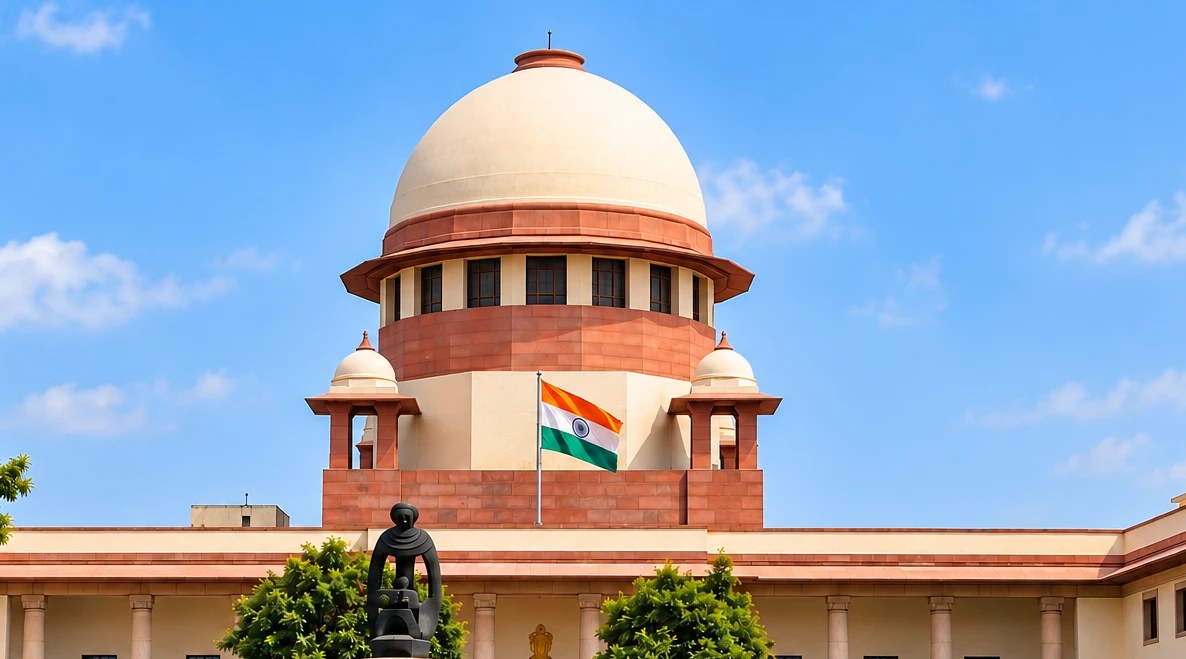
A Constitution Bench declared Section 13(2) of the Chhattisgarh Rent Control Act, 2011, which provided a direct appeal to the Supreme Court from the Rent Control Tribunal, ultra vires and void. Only Parliament can legislate on the Supreme Court's jurisdiction under Entry 77 of the Union List, and the President's assent to the State Act could not cure the State Legislature's lack of competence (paras 54, 76, 89).
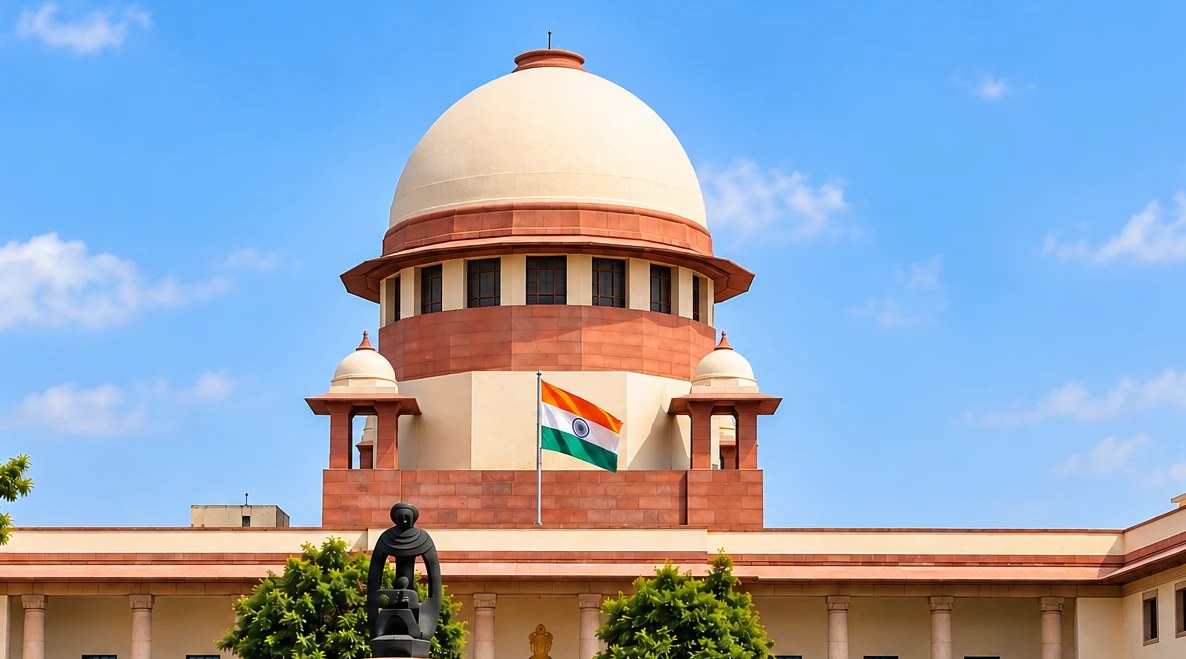
A Constitution Bench struck down the Tribunal Rules, 2017 framed under Section 184 of the Finance Act, 2017, for diluting the judiciary's role in appointing tribunal members, and ordered fresh rules. It referred to a larger Bench whether Part XIV of the Finance Act could be passed as a Money Bill, and held, by majority, that Section 184 is not excessive delegation (Gogoi CJI, paras 123, 228-230).

A three-judge bench of the Supreme Court held that non-compliance with Section 50 of the NDPS Act in the personal search of an accused does not invalidate contraband recovered from a vehicle, where that recovery stands proved independently. Section 50 applies only to a personal search, not to a vehicle, container or premises. The Court held Dilip v. State of M.P. to be not correct, restored the conviction and reduced the sentence to ten years (paras 16-20).

In State of Rajasthan v. Sahi Ram (Criminal Appeal No. 1497 of 2019), the Supreme Court held that failure to produce the entire contraband before the court does not by itself entitle the accused to acquittal where the seizure is otherwise proved and not in doubt. None of its earlier decisions had acquitted on non-production alone. As the seizure of 223 kg of poppy straw stood proved, it set aside the acquittal and restored the conviction under Section 8 read with Section 15 of the NDPS Act, with 10 years’ rigorous imprisonment (paras 15-18).
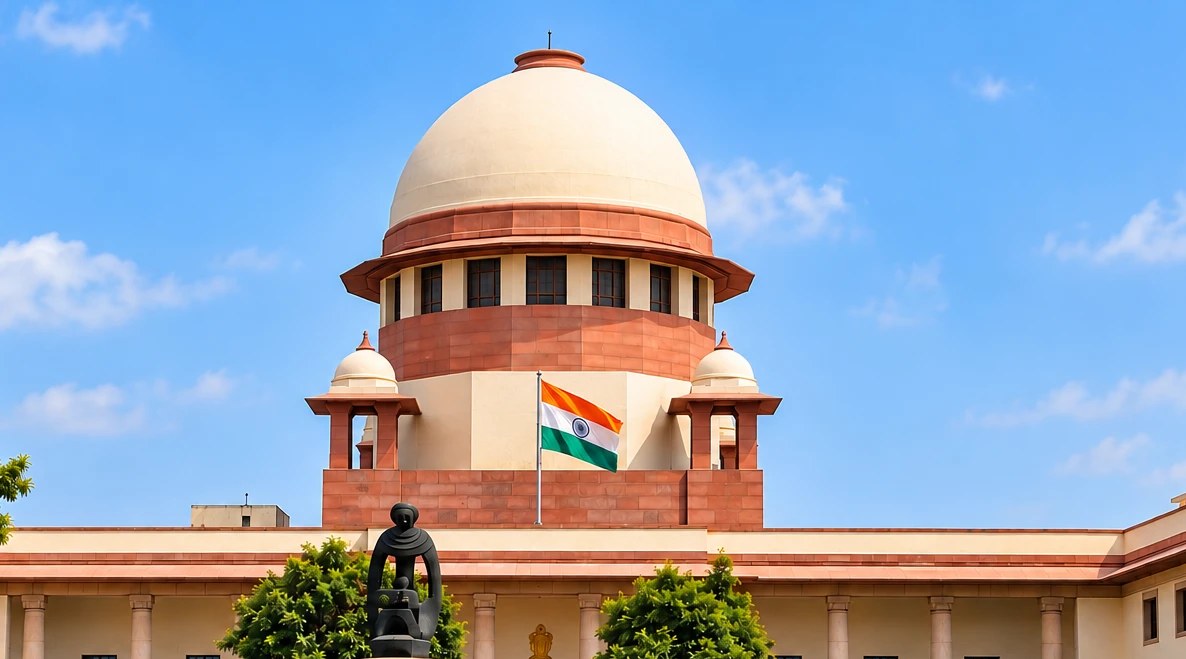
Resolving a split verdict, a three-judge Bench held that compelling an accused to give a voice sample does not violate the protection against self-incrimination under Article 20(3), and that until Parliament enacts an express provision, a Judicial Magistrate may order any person to give a voice sample for the investigation of a crime. The power was read in by judicial interpretation and under Article 142 (paras 6, 9, 25).

The Supreme Court acquitted Vijay Pandey, sentenced to 15 years for possessing 10 kg of opium, because the prosecution never proved that the sample tested in the laboratory was the one seized from him. Failing to link the sample to the seizure, it held, is no different from not producing the contraband at all, and a laboratory report on its own is not conclusive proof (paras 5, 8, 10).

The Supreme Court held that the factors listed in Section 32B of the NDPS Act are not the only grounds for a sentence above the statutory minimum; courts may also weigh other relevant factors, such as the quantity of drugs. It upheld a sentence above the ten-year minimum for 609.6 g of heroin but, as the appellant was only a carrier, cut the High Court's 16 years to 12 (paras 15, 17, 22-23).

The Supreme Court set aside a Punjab and Haryana High Court order that suspended the sentences of convicts in 25 cases involving codeine syrups, diphenoxylate tablets and similar manufactured drugs, on the view that such cases belonged under the Drugs and Cosmetics Act. Under Section 80, it held, the NDPS Act applies in addition to that Act, and unlicensed bulk possession is prima facie a violation of Section 8 (paras 14-18).