

A Division Bench of the Rajasthan High Court at Jodhpur held that a pujari appointed to perform sewa puja in a temple is not a ‘workman’ under Section 2(s) of the Industrial Disputes Act, 1947. Designation is not conclusive; the test is the main work assigned, and incidental manual work does not change it (paras 13-14). The intra-court appeal was dismissed in limine (para 17).

The Supreme Court upheld the High Court's reversal of an acquittal for possessing 13 kg of charas found in a gunny bag under a dhaba counter. The trial court's findings were contrary to the evidence and its view was not possible at all (paras 10-11). Section 50 applies only to personal search, and the accused at the counter was in conscious possession (paras 10-11). The 15-year sentence was reduced to ten years (para 13).

The Supreme Court upheld the conviction of a man found with 20 kg of ganja on his motorcycle, although both independent panch witnesses turned hostile. The evidence of police witnesses found reliable and trustworthy can sustain a conviction; the law does not require it to be corroborated by independent witnesses (para 8). Failure to prove who owned the motorcycle, or to recover it later, does not vitiate the trial (para 11). The five-year sentence was not reduced (para 12).

A five-Judge Constitution Bench of the Supreme Court held that an investigation is not vitiated merely because the informant or complainant police officer also investigated the case, and the accused is not entitled to acquittal on that ground alone (para 12). Bias or prejudice depends on the facts of each case and has to be established, not inferred (paras 11-12). The Bench overruled Mohan Lal v. State of Punjab and confined three earlier acquittals to their own facts (para 12).

The Rajasthan High Court held that an arbitration between two India-incorporated parties is not an ‘international commercial arbitration’ under Section 2(1)(f) of the Arbitration and Conciliation Act, 1996, even though its seat is Singapore and any award would be a foreign award under Part II (paras 74, 75, 93). As it has no original civil jurisdiction, the High Court returned Barminco's Section 9 application against Hindustan Zinc for filing before the Commercial Court, Udaipur (paras 78, 101, 102).
A three-Judge Bench of the Supreme Court held that when a narcotic drug or psychotropic substance is seized mixed with neutral substances, the weight of the whole mixture, not just the pure drug content, decides whether it is a small or commercial quantity. E. Micheal Raj was held not good law, and the 2009 notification adding Note 4 was upheld as clarificatory (paras 8.2, 9, 10).
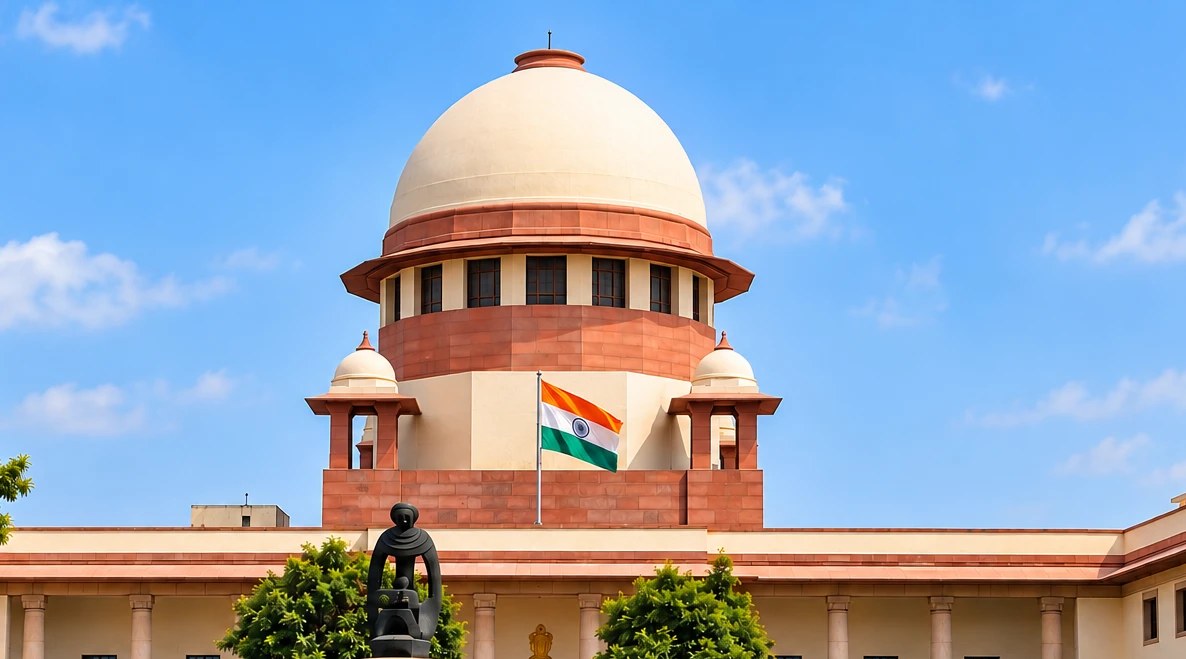
A five-judge Constitution Bench refused to refer the challenge to the August 2019 Article 370 orders to a larger Bench. It held that Prem Nath Kaul and Sampat Prakash, both five-judge rulings, do not conflict once read in their own facts and context, and that Sampat Prakash is not per incuriam. The order decided only this preliminary question, not the merits (paras 2, 45-47).

The Supreme Court upheld Than Kunwar's conviction under Section 18 of the NDPS Act for carrying 6.3 kg of opium in a bag. Following Baljinder Singh, it held that Section 50 does not apply to a recovery from a bag even if the person was also searched, and, following Sahi Ram, that not producing the bulk contraband in court is not fatal where the seizure and the samples are otherwise proved (paras 21, 29-31).

A TSP-ST (Female) candidate for Nurse Grade-II who had not claimed disability reservation was medically examined at document verification and rejected as ‘Out of other PH category’ for a 24% impairment in one arm. The Rajasthan High Court allowed her writ petition: only candidates claiming the disability quota could be medically examined before selection, and a person with a disability, more or less than 40%, who does not claim reservation cannot be denied appointment (paras 32-34, 53).

The Rajasthan High Court faulted a trial court for refusing to summon the call details of the Seizure Officer and other police officials in an NDPS trial, where the accused claimed they were not at the place of seizure on the date and time alleged. Summoning them was imperative for a fair trial (para 4). All courts in Rajasthan were directed to decide such applications forthwith, as service providers delete records after one year (para 6).

The Rajasthan High Court held that the period for paying 20% under Sections 143A and 148 of the Negotiable Instruments Act, 60 days extendable by 30, can be extended in the facts of each case, because the provisions state no consequence for non-compliance (para 11). Relying on Supreme Court rulings on time limits, it set aside an Alwar Additional Sessions Judge's refusal to extend time and directed the amount to be deposited within 15 days (para 12).
The Rajasthan High Court quashed the cognizance of offences under Sections 18(c) and 27(b)(ii) of the Drugs and Cosmetics Act, 1940 taken against a hospital's Trustee and authorised Secretary. The complaint alleged that drugs were sold in the hospital without a valid licence, but did not state his specific role in the sale or in obtaining the licence. Overall responsibility for a hospital does not create liability under Section 34(1), and the Magistrate had not examined this (paras 11-12).