

In Pramod Sharma v. State of Rajasthan (2025:RJ-JP:15551), the Rajasthan High Court quashed a Section 7A PC Act prosecution of a private person accused of demanding money for a Deputy Inspector General of Police. Once the ACB's closure report found no public servant involved, the Court held that inducing a public servant is the basic ingredient of Section 7A, so a private person cannot be prosecuted for it alone (paras 10-13, 18).

The J&K and Ladakh High Court granted bail to a driver allegedly found with 106.86 g of a heroin-like substance in his jeans pocket at a naka; 104.89 g was allegedly found on a rear-seat passenger (paras 2, 11). The State called the seizure commercial quantity (para 9). The Court held that any common intention among the accused had to be established at trial; the applicant's own intermediate quantity kept Section 37 out, and bail followed Section 437 CrPC principles (paras 12-14).
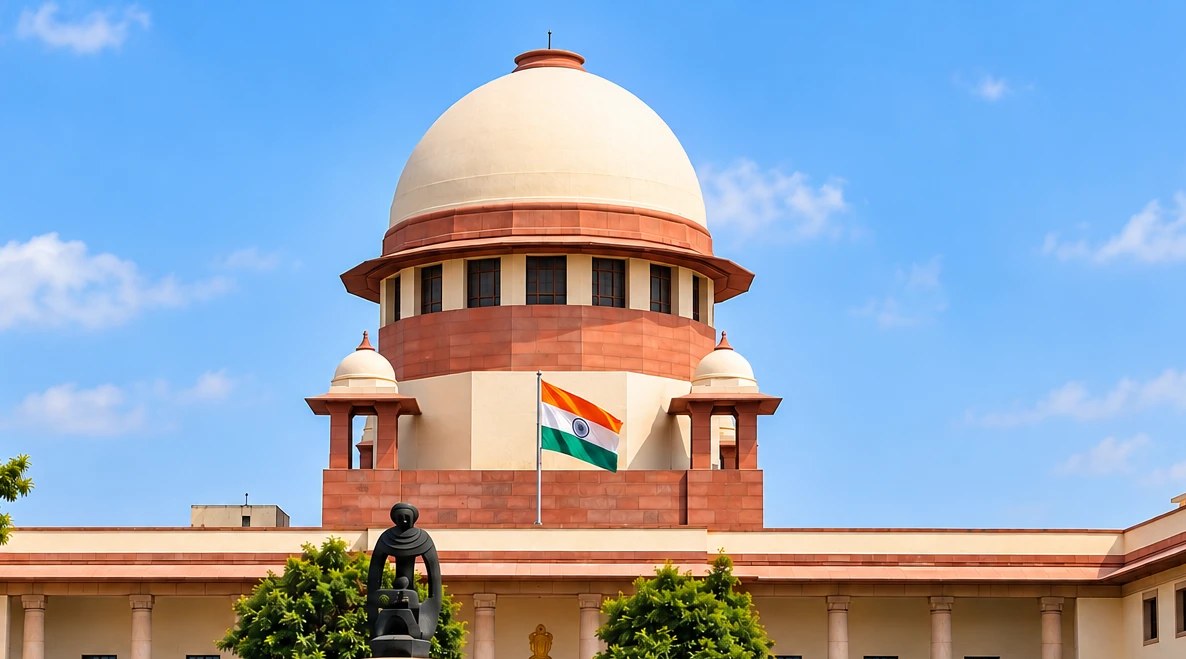
The Supreme Court quashed an FIR registered in Jamnagar against a Rajya Sabha member over a poem recited in a video he posted on X, holding that the poem preached non-violence and made out no offence under the BNS. The effect of words is judged by the standard of reasonable, strong-minded people, and the police and the courts are bound to protect free speech under Article 19(1)(a) (paras 10, 12, 29, 33, 38, 44).
The Rajasthan High Court held that a woman lecturer placed fourth in the Rajasthan Public Service Commission's merit list could not be passed over for promotion to Principal because she is a woman. Rule 28(3) of the Rajasthan Educational Service Rules, 1970 fixes seniority by the Commission's merit order and draws no line between men and women, so the separate schedules for boys' and girls' institutions gave no ground to promote lower-ranked men ahead of her (paras 15, 19, 25-27).
The Rajasthan High Court quashed a 2002 charge-sheet accusing a government employee of misappropriating Rs 3,822. Departmental proceedings on the same charge had been dropped in 1991 after he deposited the amount, and a Special Judge had acquitted him in the criminal case in 2000. With no rule allowing a closed enquiry to be reopened, the second charge-sheet amounted to double jeopardy; his retiral dues were ordered released with 9% interest (paras 6-7, 11-14).
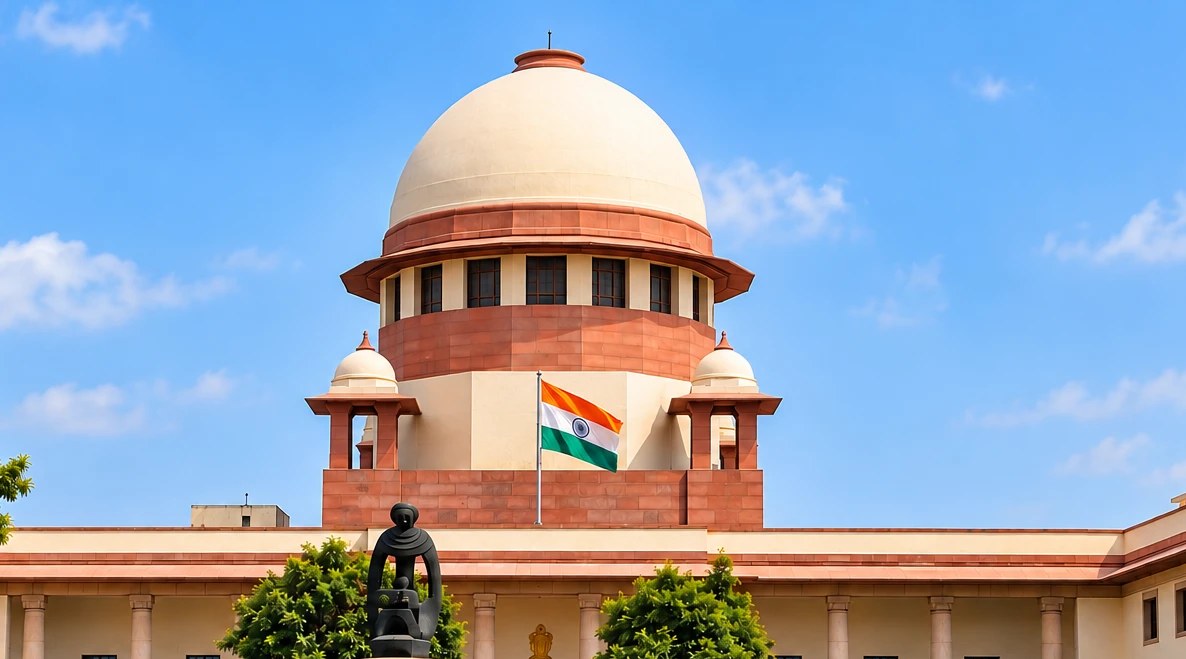
The Supreme Court held that an inquest under Section 174 CrPC only finds the apparent cause of death and cannot replace an FIR when a complaint discloses a cognizable offence. It directed the Delhi Police to register FIRs on the complaints of the families of two IIT Delhi students found dead in their hostel rooms in 2023, and constituted a National Task Force on the mental health of students in higher educational institutions (paras 27, 40, 48, 69).
In a writ petition pending since 2016, the Rajasthan High Court found that the department's officer-in-charge (OIC) had not handed the case file to its counsel, and said all efforts to improve the State's handling of court cases had been in vain (paras 1-2, 7). It ordered circulars warning that costs for poor assistance would be recovered from erring officers, and issued a general mandamus to give every department's counsel a list of pending cases within one month (paras 9-10). The petitioner's own claim was not decided.

A Division Bench of the Rajasthan High Court held that the proviso to Rule 50(4) of the Rajasthan Civil Services (Pension) Rules, 1996, which bars a government servant from withdrawing a voluntary retirement notice once its acceptance is communicated, is manifestly arbitrary under Article 14 (paras 36, 39-41). Reading it down, the Court held that a withdrawal request made before the effective retirement date must be considered on merits and administrative inconvenience (para 42). The petitioner's rejected request was sent back for fresh consideration (para 43).
The Rajasthan High Court quashed an SDM's order that required a man held in preventive proceedings to furnish three bonds of Rs 1,00,000 each from government employees and bound him for six months (para 1). Holding that such a condition has no statutory backing and is a denial of bail in the guise of grant (para 6), it declared the proceedings under Sections 126, 135 and 170 BNSS illegal and directed a circular to Executive Magistrates (paras 12-13).
A Division Bench of the Rajasthan High Court at Jodhpur dismissed a challenge by general-category ex-servicemen to Rule 2(3) of the Rajasthan Civil Services (Absorption of Ex-Servicemen) Rules, 1988, as substituted on 07.12.2022, which makes ex-servicemen reservation in direct recruitment category-wise. The Court held that nothing in the Constitution or any law requires that reservation to be vertical, and that Saurav Yadav and Ramnaresh concern the method of applying horizontal reservation, not its form (paras 13, 19-22).
The Rajasthan High Court quashed proceedings under Sections 107 and 151 CrPC against a law student who was detained after he allegedly raised his voice while accompanying a relative to a counselling session in a matrimonial dispute, and declared his arrest and detention illegal (paras 2-3, 28-29). The Executive Magistrate's half-printed proforma order showed non-application of mind (paras 6, 10). The Court called for a review of ACPs acting as Executive Magistrates and a mechanism within three months (paras 22, 26).
The Rajasthan High Court allowed a writ petition by prisoners at Central Jail, Jodhpur, who sought to attend their pending criminal trials by video conferencing (paras 1, 7). The order records that the petitioner faces 259 cases across districts; the Court held that an accused cannot be physically present at several places at once and that his absence leads to adjournments (paras 2-3). It directed the authorities to arrange video conferencing in the jail and asked the State to consider amending the CrPC (paras 6-8).