

Join our WhatsApp Group
Breaking
Saturday, October 10, 2026 Jaipur Edition
Rajasthan High Court
Criminal Law

Preventive Arrest Under Sections 107/151 CrPC Needs Cogent Material, Not Proforma Orders: Rajasthan High Court

Published: · NyayVidhan

The Rajasthan High Court quashed proceedings under Sections 107 and 151 CrPC against a law student who was detained after he allegedly raised his voice while accompanying a relative to a counselling session in a matrimonial dispute, and declared his arrest and detention illegal (paras 2-3, 28-29). The Executive Magistrate's half-printed proforma order showed non-application of mind (paras 6, 10). The Court called for a review of ACPs acting as Executive Magistrates and a mechanism within three months (paras 22, 26).

Preventive Arrest Under Sections 107/151 CrPC Needs Cogent Material, Not Proforma Orders: Rajasthan High Court
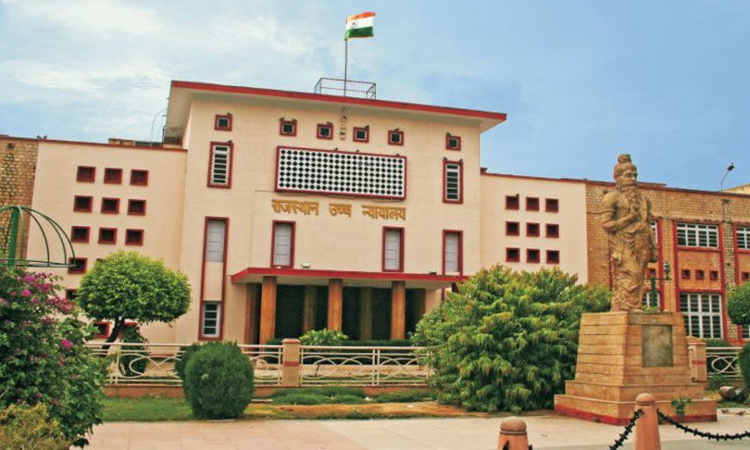
Photo: TrendSPLEND via Wikimedia Commons (CC BY-SA 4.0)

Judgment Intelligence

Petition Allowed
Pawan Gaur v. State of Rajasthan & Ors.
2025:RJ-JD:15397
S.B. Criminal Misc(Pet.) No. 929/2021
Court
Rajasthan High Court
Date of Decision
7 March 2025
Bench
Justice Farjand Ali
Relevant Acts & Sections
Code of Criminal Procedure, 1973 — Sections 107, 151; Constitution of India — Article 21
Final Outcome

Petition allowed. The proceedings under the orders of 13.06.2020 and 03.12.2020 were quashed and the arrest and detention declared illegal. No compensation was awarded; he may seek legal recourse for the wrongful confinement. Copies to the ACS (Home) and DGP (paras 28-30).

Key holdings

  1. Raising one's voice at a matrimonial counselling session does not by itself justify arrest under Section 151 CrPC (para 18).
  2. A half-printed, half-written proforma order under Sections 107 and 151 CrPC shows non-application of mind (paras 6, 10).
  3. An Executive Magistrate must apply independent judicial reasoning and cannot act as a rubber stamp for the police (paras 10, 16).
  4. The appellate court must examine the legality of the Magistrate's order, not merely dismiss the appeal (para 17).
  5. ACPs promoted from the ranks ought not to act as Executive Magistrates without formal training; a mechanism is due within three months (paras 22, 26).

Brief Facts

The petitioner, a law student, accompanied a relative to a counselling session at the Mahila Suraksha Salah Kendra on 12.06.2020, after the relative's wife had made a police complaint in their matrimonial dispute (para 2). He allegedly raised his voice during the session, was detained for that reason under Sections 107 and 151 CrPC, and produced before the Executive Magistrate on 13.06.2020 (para 3). The ACP-cum-Executive Magistrate passed an order that day; the Sessions Judge, Jodhpur Metro dismissed his criminal appeal on 03.12.2020 (paras 1, 17). In person, he alleged he was detained in revenge for a complaint against a counselling-centre employee, and sought quashing, a declaration that the arrest was illegal, and compensation (paras 4-5).

Court's Findings

The Court held that Sections 107 and 151 CrPC are preventive provisions that require a reasonable apprehension of a breach of peace or of a cognizable offence; they cannot be invoked arbitrarily or as a tool of harassment (paras 6-7, 9). Relying on Istkar v. State of Uttar Pradesh, it said Section 107 is preventive, not punitive (para 8). The Executive Magistrate's half-printed, half-written proforma order showed non-application of mind; he acted as a rubber stamp for the police instead of applying independent judicial reasoning (paras 6, 10-11, 16). No material showed the petitioner was about to commit a cognizable offence, and no immediate threat or lawful reason for the arrest (paras 6, 14). He was neither an accused nor a party to any case, raised voices during counselling do not justify arrest, and the FIR in the matter was lodged only on 15.07.2020 (paras 18-19). Holding him for 24 hours before production before the Magistrate was unlawful under Article 21 (para 15). The Sessions Judge dismissed the appeal without examining the Magistrate's order (para 17). It found such misuse by ACPs acting as magistrates recurring (para 21).

Legal Principle

Preventive action under Sections 107 and 151 CrPC must rest on cogent material showing a real and imminent threat to public peace or of a cognizable offence. A routine or mechanical invocation, or a Magistrate's proforma order passed without independent application of mind, violates personal liberty under Article 21 (paras 9, 11, 13-14).

Precedents Relied Upon

  1. Istkar v. State of Uttar Pradesh & Anr. Criminal Appeal No. 2034 of 2022 (arising out of SLP (Crl.) No. 8586 of 2022)
    Relied Upon Discussed at ¶ 8

    The scope and nature of Section 107 CrPC is preventive, not punitive; Chapter VIII proceedings aim to avert a breach of peace and are not a vehicle for punishment.

  2. Joginder Kumar v. State of U.P. 1994 AIR 1349
    Referred To Discussed at ¶ 4

    Cited by the petitioner: an arrest cannot be made in a routine manner without due investigation and necessity.

  3. State of Haryana v. Bhajan Lal 1992 AIR 604
    Referred To Discussed at ¶ 4

    Cited by the petitioner for the instances in which criminal proceedings should be quashed, including mala fides.

View all precedents (7)
  1. Kishor v. State of Maharashtra Criminal Writ Petition No. 183/2014 (Bombay High Court)
    Referred To Discussed at ¶ 4

    Cited by the petitioner on fair investigation and protection against abuse of police power.
  2. Pankaj Kumar Sharma v. Govt of NCT of Delhi W.P. (C) 3851/2023 (Delhi High Court)
    Referred To Discussed at ¶ 4

    Cited by the petitioner on fair investigation and protection against abuse of police power.

  3. Shiv Kumar Verma v. State of U.P. Criminal Misc W.P. No. 16386/2020 (Allahabad High Court)
    Referred To Discussed at ¶ 4

    Cited by the petitioner on fair investigation and protection against abuse of police power.

  4. Anand Mahadevan v. State of Kerala Crl.MC No. 1940/2023 (Kerala High Court)
    Referred To Discussed at ¶ 4

    Cited by the petitioner on fair investigation and protection against abuse of police power.

NyayVidhan
Court Judgments · 3 min read
Decided: March 7, 2025 Justice Farjand Ali
WhatsApp Telegram X / Twitter LinkedIn

✕

Popular: POCSO, IBC, Electoral Bond, Article 370, NDPS Act, Bail Conditions, SC Contempt