
Join our WhatsApp Group
Breaking
Saturday, October 10, 2026 Jaipur Edition
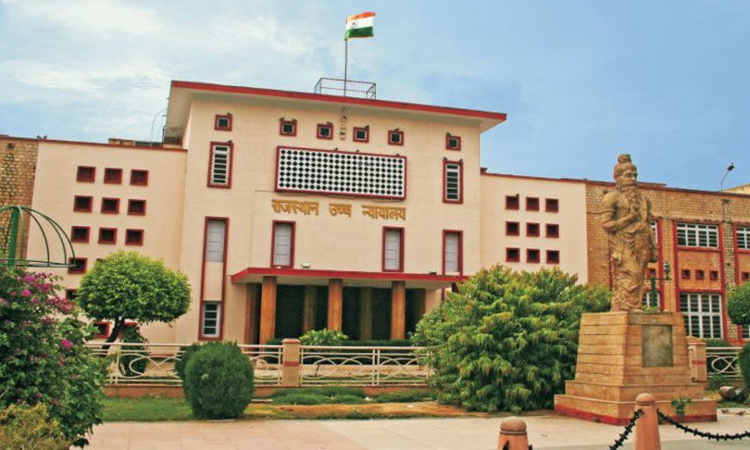
Rajasthan High Court
Labour Law

Female Lecturer Cannot Be Denied Promotion Because of Her Gender; Merit-Based Seniority Applies: Rajasthan High Court

Published: · NyayVidhan

The Rajasthan High Court held that a woman lecturer placed fourth in the Rajasthan Public Service Commission's merit list could not be passed over for promotion to Principal because she is a woman. Rule 28(3) of the Rajasthan Educational Service Rules, 1970 fixes seniority by the Commission's merit order and draws no line between men and women, so the separate schedules for boys' and girls' institutions gave no ground to promote lower-ranked men ahead of her (paras 15, 19, 25-27).

Female Lecturer Cannot Be Denied Promotion Because of Her Gender; Merit-Based Seniority Applies: Rajasthan High Court

Judgment Intelligence

Petition Allowed
Smt. Rajani Bhardwaj v. Director, Secondary Education & Anr.
2025:RJ-JP:11228
S.B. Civil Writ Petition No. 4255/2015
Court
Rajasthan High Court
Date of Decision
27 March 2025
Bench
Justice Anoop Kumar Dhand
Relevant Acts & Sections
Rajasthan Educational Service Rules, 1970 — Rules 4(4), 6 and 28(3); Constitution of India — Articles 14, 15, 16 and 21
Final Outcome

Petition allowed; the impugned order of 22.10.2014 was quashed (para 26). The petitioner must be considered for promotion to Principal from the date her junior male colleagues were promoted, with consequential benefits, within three months (paras 27-29). A general mandamus issued to the State (para 31).

Key holdings

  1. Rule 28(3) ties direct recruits' seniority to the Commission's merit order, with no distinction by sex (paras 15, 19).
  2. Separate cadres for boys' and girls' institutions under Rule 4(4) do not bar a woman lecturer's promotion (paras 15, 19).
  3. Discrimination founded on stereotypes about the role of the sex fails Article 15(1); effect, not object, decides (para 22).
  4. Consideration for promotion is a fundamental right (para 24).
  5. A general mandamus directs the State to correct rules and policies that deny women the benefits men get for the same work (para 31).

Brief Facts

The petitioner was selected as a Lecturer through the Rajasthan Public Service Commission at merit No. 4 and served throughout in boys' institutions (para 12). When the seniority list for promotion to Principal was prepared, her merit position was disregarded and two male lecturers at merit Nos. 8 and 31 were promoted (para 12). The Rajasthan Civil Services Appellate Tribunal rejected her appeal on 22.10.2014, relying on Rule 6, under which promotions for Boys and Girls Institutions (Schedules I and II) are made separately; as a woman she was treated as falling under Schedule II (para 13). The State argued that she had not challenged the Rules (para 10).

Court's Findings

Rule 28(3) provides that the seniority of persons directly recruited in one selection follows the order of the Commission's list under Rule 20, and the Court found that it makes no distinction between male and female Lecturers (para 15). Nor does Rule 4(4), which creates separate cadres for Boys and Girls Institutions, bar her promotion (para 15).As Rule 28(3) does not provide for a separate seniority list for women, the classification drawn from Schedules I and II "has no legal bearing" (para 19). Drawing on C.B. Muthamma and Anuj Garg (paras 17-18), and on Navtej Singh Johar for the rule that a provision is judged by its effect and that discrimination founded on stereotypes about the role of the sex cannot survive Article 15(1) (paras 21-22), the Court held this a clear case of discrimination barred by Articles 14, 15(1) and 16(2), leaving no scope to differentiate between the sexes in appointment and promotion (para 23). Relying on Ajay Kumar Shukla, it noted that consideration for promotion has evolved into a fundamental right (para 24). Not considering the petitioner violated Articles 14, 15, 16 and 21 (para 25).

Legal Principle

Where service rules fix direct recruits' seniority by the Commission's merit order without distinguishing between men and women, the State cannot pass over a more meritorious woman for promotion by placing her in a separate cadre for girls' institutions; such sex-based classification violates Articles 14, 15 and 16 (paras 15, 19, 23, 25).

Precedents Relied Upon

  1. C.B Muthamma v. Union of India (1979) 4 SCC 260
    Relied Upon Discussed at ¶ 17

    Service rules that disadvantaged women officers in the Indian Foreign Service offended Articles 14 and 16; save where a differentiation is demonstrable the rule of equality must govern, and service rules should be overhauled to remove sex discrimination.

  2. Anuj Garg & Ors v. Hotel Association of India & Ors (2008) 3 SCC 1
    Relied Upon Discussed at ¶ 18

    A law barring the employment of women in premises where liquor is consumed was struck down; measures resting on stereotyped notions of sexual roles call for heightened scrutiny and are judged by their effect, not their aims.

  3. State of W.B. v. Anwar Ali Sarkar (1952) 1 SCC 1
    Referred To Discussed at ¶ 20

    A reasonable classification under Article 14 must rest on an intelligible differentia having a rational nexus to the object sought to be achieved.

View all precedents (6)
  1. Deepak Sibal v. Punjab University (1989) 2 SCC 145
    Referred To Discussed at ¶ 20

    There must be a causal connection between the basis of classification and the object of the statute; a classification with an illogical, unfair or unjust object is unreasonable.

  2. Navtej Singh Johar v. Union of India (2018) 10 SCC 1
    Relied Upon Discussed at ¶ 21, 22

    Article 14 has substantive content beyond the classification test; a provision challenged under Article 15(1) is assessed by its effect on individuals, and discrimination founded on a stereotypical understanding of the role of the sex is prohibited.

  3. Ajay Kumar Shukla v. Arvind Rai & Ors (2022) 12 SCC 579
    Relied Upon Discussed at ¶ 24

    There is no fundamental right to promotion, but consideration for promotion has evolved into a fundamental right; a more meritorious candidate cannot be denied consideration in favour of one with lesser merit.

NyayVidhan
Court Judgments · 3 min read
Decided: March 27, 2025 Justice Anoop Kumar Dhand
PDF
WhatsApp Telegram X / Twitter LinkedIn

✕

Popular: POCSO, IBC, Electoral Bond, Article 370, NDPS Act, Bail Conditions, SC Contempt