
Join our WhatsApp Group
Breaking
Saturday, October 10, 2026 Jaipur Edition
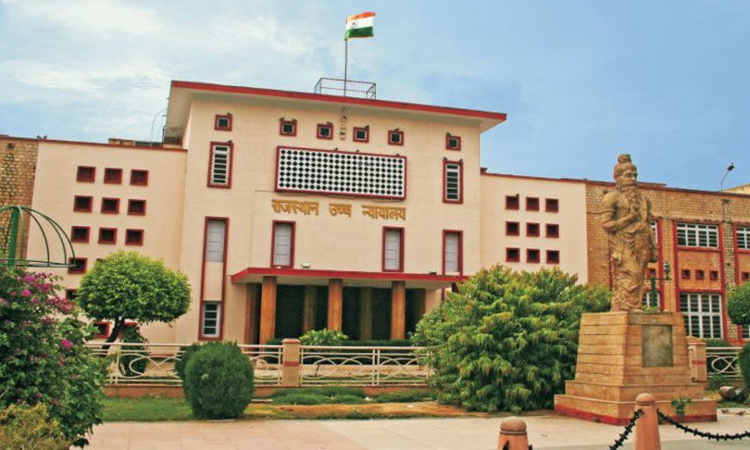
Rajasthan High Court
High Courts

Lax Officers-in-Charge Face Costs and Disciplinary Action; Counsel Must Get Pending-Case Lists: Rajasthan High Court

Published: · NyayVidhan

In a writ petition pending since 2016, the Rajasthan High Court found that the department's officer-in-charge (OIC) had not handed the case file to its counsel, and said all efforts to improve the State's handling of court cases had been in vain (paras 1-2, 7). It ordered circulars warning that costs for poor assistance would be recovered from erring officers, and issued a general mandamus to give every department's counsel a list of pending cases within one month (paras 9-10). The petitioner's own claim was not decided.

Lax Officers-in-Charge Face Costs and Disciplinary Action; Counsel Must Get Pending-Case Lists: Rajasthan High Court

Judgment Intelligence

Other
Badri Narayan Sharma v. State of Rajasthan & Anr.
S.B. Civil Writ Petition No. 4213/2016
Court
Rajasthan High Court
Date of Decision
24 March 2025
Bench
Justice Anoop Kumar Dhand
Relevant Acts & Sections
Rajasthan Law and Legal Affairs Department Manual, 1999 — Rule 233 (duties of the Officer-in-Charge of cases); Rajasthan State Litigation Policy
Final Outcome

Directions issued; the writ petition itself was not decided. Copies went to the Advocate General, the Chief Secretary, the Principal Law Secretary, all District Magistrates and the heads of the 54 departments in Schedule-A, and the matter was listed on 15.04.2025 to check compliance (paras 11-15).

Key holdings

  1. Circulars must require OICs to perform all duties assigned to them so that cases are not delayed (para 9).
  2. Costs for lack of proper assistance would be recovered from the erring officer after due process of law (para 9).
  3. An adverse order passed for want of assistance is the officer’s personal responsibility and may bring disciplinary action (para 9).
  4. Every department and OIC must give its counsel a list of all pending cases against it within one month (para 10).
  5. Senior officers and all District Magistrates must report compliance and the steps taken for quicker disposal (para 13).

Brief Facts

Badri Narayan Sharma's writ petition against the State, through its Public Health and Engineering Department, had been pending since 2016 (para 2); the order does not describe his claim. The Court found that the concerned OIC had not handed the case file to the department's counsel (para 1). On 07.02.2025, in Sardar Mal Yadav, the same Court had directed the Chief Secretary, the Advocate General and the Principal Law Secretary to make OICs assist government counsel, warning that an adverse order caused by poor assistance would be the officer's personal responsibility (para 2). The State's own machinery includes the Justice Department set up in 2005, the LITES case-tracking software and District Magistrates as nodal officers for court cases (paras 4-5).

Court's Findings

The Court observed that in most cases OICs do not give the original file to their advocates, so hearings are deferred from day to day, which hampers justice to litigants (para 2). Rule 233 of the 1999 Manual lays down an OIC's duties, but OICs appear unaware of them and handle court cases casually (para 3). Departmental advocates change with governments; newly appointed ones cite non-receipt of files, and no department-wise list of pending cases is given to them, so they cannot tell how many cases are pending (para 3). Despite the Justice Department, LITES and the circulars, every effort had failed because officers treat court cases without seriousness and urgency (paras 4-7). The Court then made fourteen suggestions, including performance evaluation with a column in APRs/ACRs for cases decided, penalties for delay, inter-departmental meetings, training, case-management software integrated with e-Courts, AI-based case sorting, data analytics, real-time dashboards, rewards for efficient officers and a Central Case Oversight Unit (para 7). Better role definition, coordination, training and technology would, it said, speed up case resolution (para 8).

Legal Principle

Officers-in-charge of government cases must perform the duties assigned to them and keep the State's counsel equipped to assist the Court. Where a court is denied proper assistance, costs may be recovered from the erring officer after due process, and an adverse order caused by that lapse is the officer's personal responsibility, attracting disciplinary action (paras 3, 9).

Precedents Relied Upon

  1. Sardar Mal Yadav v. State Elementary Education & Ors. S.B. Civil Writ Petition No. 807/2012, order dated 07.02.2025
    Referred To Discussed at ¶ 2, 3

    The Court’s earlier State-wide order (paras 12-15 quoted) directing the Chief Secretary, Advocate General and Principal Law Secretary to ensure that Officers-in-Charge assist government counsel; an adverse order caused by lack of assistance is the officer’s personal responsibility.

  2. State of Rajasthan v. Mansukh Dass SLP (Civil) Diary No. 4941/2018
    Referred To Discussed at ¶ 6

    Orders of the Supreme Court in this case are cited as the occasion on which the Department of Law and Legal Affairs formulated the Rajasthan State Litigation Policy and its recommendations on legal cells.

NyayVidhan
Court Judgments · 3 min read
Decided: March 24, 2025 Justice Anoop Kumar Dhand
PDF
WhatsApp Telegram X / Twitter LinkedIn

✕

Popular: POCSO, IBC, Electoral Bond, Article 370, NDPS Act, Bail Conditions, SC Contempt