
A nine-Judge Bench held by majority that not every privately owned resource is a 'material resource of the community' under Article 39(b), rejecting the wide view of Justice Krishna Iyer's minority opinion in Ranganatha Reddy that Sanjeev Coke followed (Chandrachud CJI, para 229). Whether a resource qualifies is a context-specific inquiry, and 'distribution' may include vesting in the State. All nine Judges held that Article 31C, as upheld in Kesavananda Bharati, survives. Nagarathna J. partly agreed; Dhulia J. dissented on Article 39(b).

The Rajasthan High Court dismissed in limine a writ petition against a Returning Officer's order accepting a candidate's nomination for the MLA election from Dausa constituency. Improper acceptance or rejection of a nomination is a ground for declaring an election void under Section 100 of the Representation of the People Act, 1951, and Section 80 and Article 329(b) allow an election to be questioned only by an election petition (paras 5, 10, 12). The writ court would not examine whether the grounds for acceptance were flimsy or substantial (para 12).

The Supreme Court held that a direction to pay a fine "is also a sentence" that the appellate court may suspend under Section 389(1) CrPC, with or without conditions (paras 5-6, 8). It refused to disturb a Delhi High Court order of 2016 suspending the sentence of a convict in a CBI corruption case, treating his deposit of Rs. 15 lakh as the condition for suspending a fine of Rs. 95 lakh (paras 1, 7, 10).

The Rajasthan High Court granted 15 days' interim bail to an undertrial, in jail since 02.08.2018, so that he could attend his son's wedding; the son had filed the writ petition on his father's behalf. The Court held that Article 21, which protects an accused or undertrial too, includes the dignity of attending once-in-a-lifetime family rituals, such as a father attending his son's marriage, and that this right cannot be curtailed merely because cases are pending (paras 7, 10).
A nine-Judge Bench held by 8:1 that ‘intoxicating liquor’ in Entry 8 of List II is not limited to potable alcohol and covers alcohol that could be used noxiously, such as rectified spirit, extra neutral alcohol and denatured spirit. Parliament cannot take over the industry of intoxicating liquor under Entry 52 of List I, and Synthetics and Chemicals (7J) was overruled (Chandrachud CJI, para 140). Nagarathna J. dissented, holding that Synthetics was correctly decided (Nagarathna J., para 31).
The Rajasthan High Court held that a pending departmental enquiry is no ground to refuse permission to travel abroad. Personal liberty under Article 21 includes the right to go abroad, and an employer that remains free to continue its enquiry can secure the employee's presence through conditions (paras 9-10, 14-15). The respondent was directed to permit a six-day visit to the petitioner's son in Singapore, on his undertaking to return and to join the enquiry (para 16).
The Rajasthan High Court set aside the convictions and 14-year sentences of two men in a tramadol tablet case, holding that samples drawn at the spot without a Magistrate, in admitted breach of Section 52A of the NDPS Act, were enough to discard the prosecution case. The absence of independent search witnesses and a delay in sending samples to the FSL added to the doubt (paras 12, 16-21).
A Constitution Bench held by a 4:1 majority that Section 6A of the Citizenship Act, which confers citizenship on migrants of Indian origin from Bangladesh who entered Assam before 25 March 1971, is valid. Chandrachud CJI, in his own opinion, and Surya Kant J., for himself and Sundresh and Misra JJ., rejected the challenges under Articles 6, 7, 14, 29 and 355; Pardiwala J. dissented and would invalidate it prospectively (Chandrachud CJI, para 125; Surya Kant J., para 387; Pardiwala J., para 217).
The Supreme Court held that a benchmark disability of 40% or more does not by itself make a candidate ineligible for the MBBS course. Disability Assessment Boards must record whether the disability will come in the way of pursuing the course, giving reasons for a negative opinion, and until an appellate body is created a negative opinion can be challenged in judicial review. The appellant's admission was confirmed (paras 48, 50, 53).
Acting on newspaper reports that 1.19 lakh trees were proposed to be cut for a Pumped Storage Project in Shahbad Block of Baran district, the Rajasthan High Court took suo moto cognizance and registered a public interest litigation (paras 1, 5, 11). It observed that the right to a green and healthy environment is a facet of the right to life under Article 21 (para 4). Later orders bar felling without the Court's permission; the case is pending.
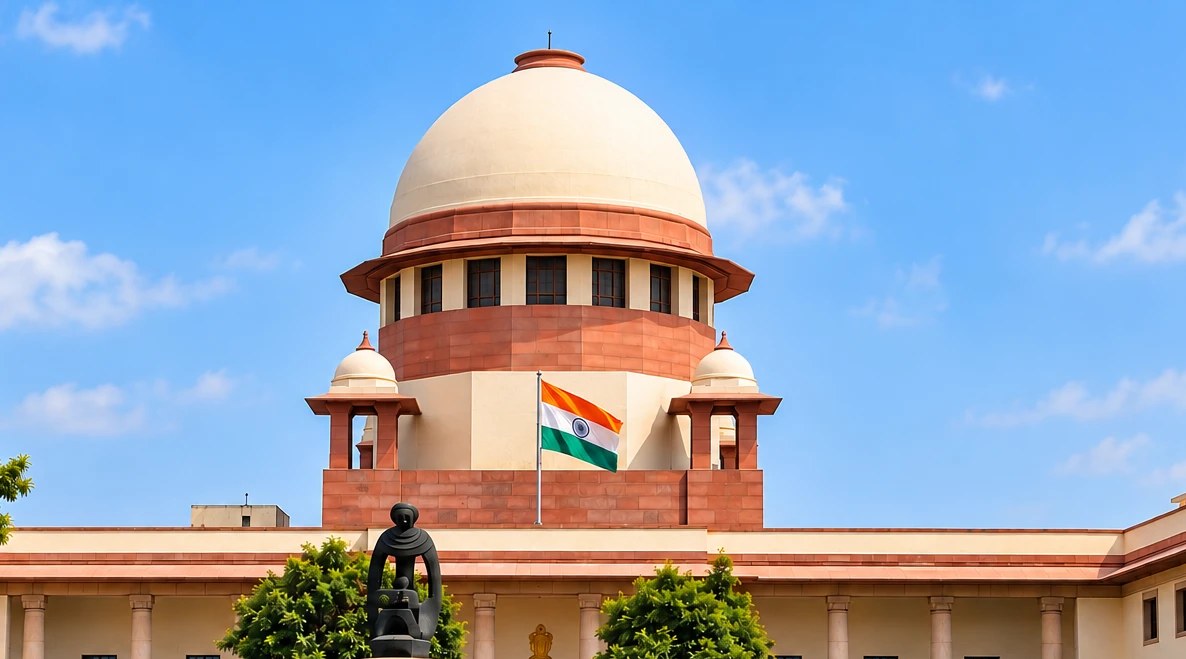
The Supreme Court struck down provisions of State prison manuals that allotted cleaning and sweeping to marginalised castes, let 'suitable' castes cook and segregated prisoners by caste or by 'habit', holding them violative of Articles 14, 15, 17, 21 and 23. It directed States and Union Territories to revise their manuals within three months, ordered deletion of caste columns in prison registers and took suo motu cognizance of discrimination inside prisons (paras 196, 231).
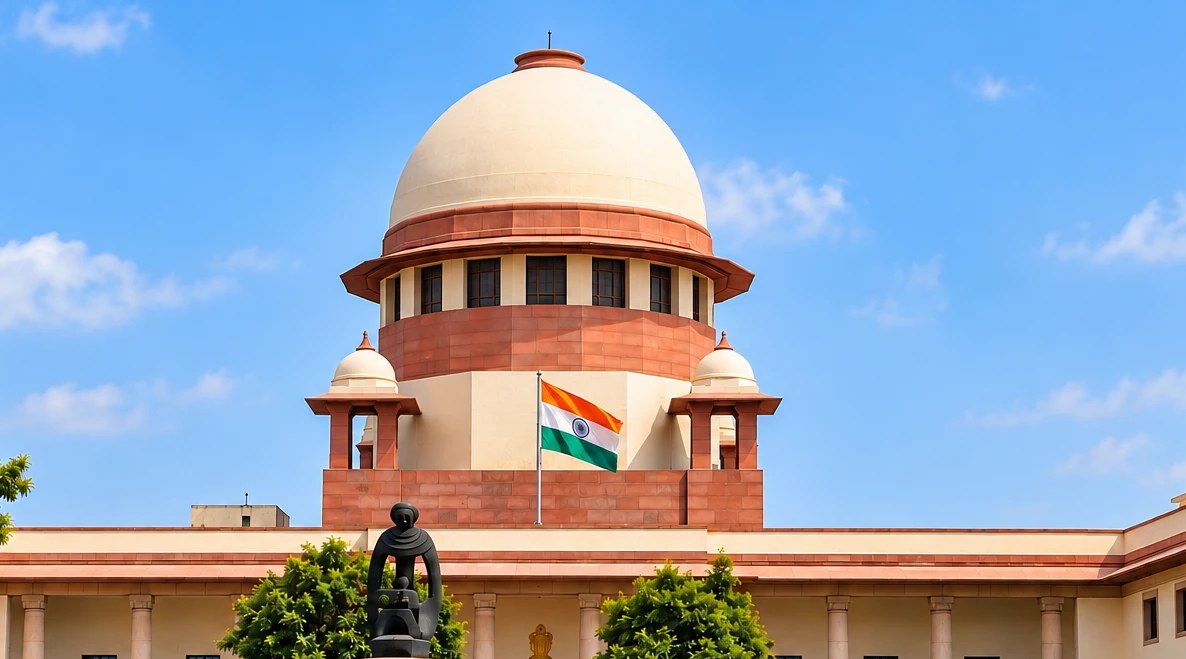
The Supreme Court granted bail to Tamil Nadu's former Transport Minister V. Senthil Balaji, in custody for over 15 months under the PMLA, though it could not say there was no prima facie case. Inordinate trial delay and a higher bail threshold cannot go together: Constitutional Courts may grant bail under Article 21 when the trial cannot end within a reasonable time, as with over 2000 accused and 600 witnesses here (paras 13, 14, 17, 25, 27, 29).