
Join our WhatsApp Group
Breaking
Saturday, October 10, 2026 Jaipur Edition
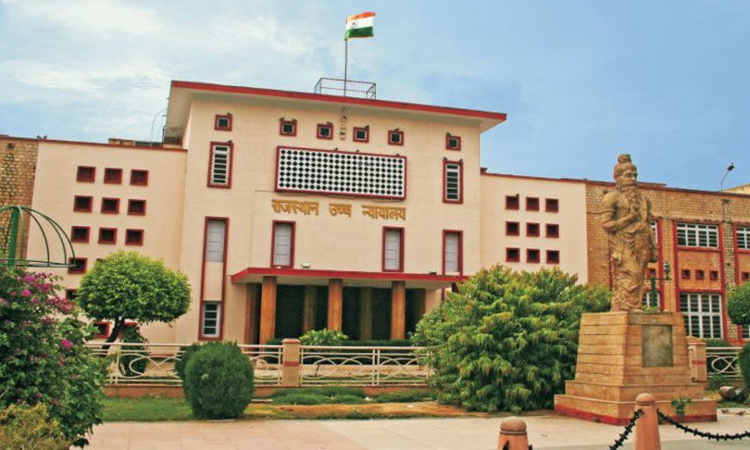
Rajasthan High Court
Constitutional Law

Pending Departmental Enquiry Is No Ground to Deny an Employee Permission to Travel Abroad: Rajasthan High Court

Published: · NyayVidhan

The Rajasthan High Court held that a pending departmental enquiry is no ground to refuse permission to travel abroad. Personal liberty under Article 21 includes the right to go abroad, and an employer that remains free to continue its enquiry can secure the employee's presence through conditions (paras 9-10, 14-15). The respondent was directed to permit a six-day visit to the petitioner's son in Singapore, on his undertaking to return and to join the enquiry (para 16).

Pending Departmental Enquiry Is No Ground to Deny an Employee Permission to Travel Abroad: Rajasthan High Court

Judgment Intelligence

Petition Allowed
Neeraj Saxena v. Rajasthan Electronics and Instruments Ltd.
2024:RJ-JP:44683
S.B. Civil Writ Petition No. 16380/2024
Court
Rajasthan High Court
Date of Decision
23 October 2024
Bench
Justice Anoop Kumar Dhand
Relevant Acts & Sections
Constitution of India — Article 21
Final Outcome

Petition disposed of. The respondent was directed to permit the petitioner to travel to Singapore from 30.10.2024 to 04.11.2024 on his undertaking to return by 06.11.2024, join the enquiry and visit no other country (paras 16-18). The enquiry may proceed in accordance with law (para 20).

Key holdings

  1. Personal liberty under Article 21 includes the right to go abroad, curtailable only by procedure prescribed by law (para 10).
  2. A charge-sheet or pending departmental enquiry is not by itself a reason to refuse permission to travel abroad (paras 9, 12, 14).
  3. The employer remains free to continue the departmental enquiry in accordance with law (paras 9, 20).
  4. Conditions such as an undertaking to return and join the enquiry protect the employer (paras 15-16).
  5. If the employee does not return in time, the employer may proceed against him in accordance with law (para 17).

Brief Facts

The petitioner's son lives in Singapore. On 26.09.2024 the petitioner applied to the respondent, Rajasthan Electronics and Instruments Ltd., for permission to travel there from 30.10.2024 to 04.11.2024. The application was not decided, and he filed a writ petition (paras 3, 8). The Court issued notice on 19.10.2024 and the respondent was served the same day; on 21.10.2024 it served a charge-sheet on him (para 9). The respondent's case was that, once a departmental enquiry had been initiated, he could not be allowed to travel abroad (para 6). The petitioner relied on Article 21 and on the Supreme Court's decision in Satish Chandra Verma v. Union of India (paras 4-5).

Court's Findings

The charge-sheet was served after the respondent received notice of the petition, to defeat its purpose (para 9). The petitioner was not involved in any criminal case. The respondent remained free to conduct a departmental enquiry in accordance with law, but that could not be a ground to deny him permission to travel abroad to meet his son, and the refusal violated his right to personal liberty under Article 21 (para 9). Under Maneka Gandhi, personal liberty includes the right to go abroad, and a person can be deprived of it only in accordance with the procedure prescribed by law (para 10). Satish Chandra Verma describes the right to travel abroad as an important basic human right that extends to family life, and holds that pending departmental proceedings cannot be a ground to prevent a person from travelling abroad (paras 11-12). Kent v. Dulles (US Supreme Court) was also cited (para 13). There was no reason to refuse permission merely because a charge-sheet had been served and an enquiry was pending (para 14). The balance is struck by conditions securing the employee's presence, with coercive action if they are breached (para 15).

Legal Principle

The pendency of a departmental enquiry, by itself, is not a ground to deny an employee permission to travel abroad. The right to go abroad is part of personal liberty under Article 21; the employer's interest in completing the enquiry is protected by conditions that secure the employee's return and participation (paras 9-10, 12, 14-15).

Precedents Relied Upon

  1. Satish Chandra Verma v. Union of India and Ors. Civil Appeal No. 3802/2019, decided on 09.04.2019
    Relied Upon Discussed at ¶ 5, 11, 12

    The right to travel abroad is an important basic human right that extends to private and family life; the pendency of departmental proceedings cannot be a ground to prevent a person from travelling abroad.

  2. Smt. Maneka Gandhi v. Union of India AIR 1978 SC 597
    Relied Upon Discussed at ¶ 10

    Personal liberty under Article 21 has a wide amplitude and includes the right to go abroad; a person cannot be deprived of it except in accordance with the procedure prescribed by law.

  3. Kent v. Dulles 357 US 116 1958
    Referred To Discussed at ¶ 13

    Freedom to go abroad is a basic human right of great significance, and the right to travel is part of the liberty of which a citizen cannot be deprived without due process of law (US Supreme Court).

NyayVidhan
Court Judgments · 3 min read
Decided: October 23, 2024 Justice Anoop Kumar Dhand
PDF
WhatsApp Telegram X / Twitter LinkedIn

✕

Popular: POCSO, IBC, Electoral Bond, Article 370, NDPS Act, Bail Conditions, SC Contempt