
Latest
Wednesday, October 21, 2026
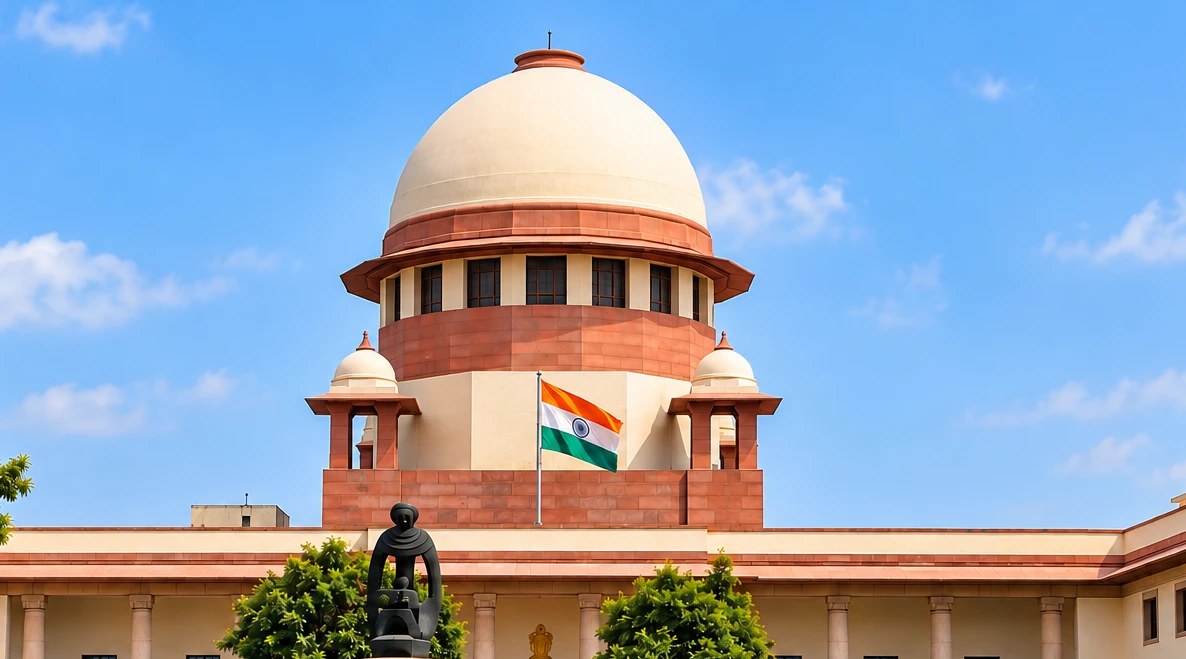
Supreme Court of India
Supreme Court

Quantified Disability Alone Cannot Bar MBBS Admission; Disability Boards Must Assess Ability to Pursue the Course

Published: · NyayVidhan

The Supreme Court held that a benchmark disability of 40% or more does not by itself make a candidate ineligible for the MBBS course. Disability Assessment Boards must record whether the disability will come in the way of pursuing the course, giving reasons for a negative opinion, and until an appellate body is created a negative opinion can be challenged in judicial review. The appellant's admission was confirmed (paras 48, 50, 53).

Quantified Disability Alone Cannot Bar MBBS Admission; Disability Boards Must Assess Ability to Pursue the Course

Judgment Intelligence

Petition Allowed
Omkar Ramchandra Gond v. The Union of India & Ors.
2024 INSC 775
Civil Appeal No. 10611 of 2024
Court
Supreme Court of India
Date of Decision
15 October 2024
Bench
Justice B.R. Gavai, Justice Aravind Kumar and Justice K.V. Viswanathan
Relevant Acts & Sections
Rights of Persons with Disabilities Act, 2016 - Sections 2(m), 2(r), 2(y), 3 and 32; Graduate Medical Education Regulations, 1997 - Appendix H-1 (notification dated 13.05.2019); Constitution of India - Articles 14, 21 and 41
Final Outcome

Appeal allowed: the High Court's order of 29.08.2024 was set aside, the appellant's admission confirmed as valid, and the pending writ petition disposed of in terms of the judgment, with no order as to costs (paras 53-54).

Source Supreme Court of India, www.sci.gov.in — judgment dated 15.10.2024

Key holdings

  1. Quantified disability per se does not disentitle a candidate with benchmark disability from admission (para 53).
  2. Disability Assessment Boards must record whether the disability will hinder the course and give reasons for a negative opinion (paras 48, 53).
  3. Until an appellate body exists, a negative opinion can be challenged in judicial review, with a reference to a premier medical institute (para 50).
  4. Reasonable accommodation under the RPwD Act is not limited to assistive devices (para 40).
  5. The NMC must act on the Ministry's communication of 25.01.2024 before the 2025-26 admission brochure (para 35).

Case explainer by NyayVidhan: an account of this judgment and the law it laid down, not the court's text. The judgment itself is the authoritative version.

Brief Facts

The appellant, who has a speech and language disability certified at 44-45%, qualified in NEET (UG) 2024 and sought admission to MBBS under the PwD and OBC categories (paras 2-5). The Disability Certification Centre at Sir JJ Group of Hospitals held him ineligible under NMC norms (para 6), because Appendix H-1, inserted in 2019 into the Graduate Medical Education Regulations, bars persons with 40% or more of this disability from the medical course (para 7). The Bombay High Court passed no interim order (para 9). This Court had a Medical Board examine him; it opined that his disability would not come in the way of pursuing MBBS (paras 11-12), and he was admitted by order of 18.09.2024 (para 14).

Court's Findings

Article 41 makes securing the right to education, including for persons with disabilities, a constitutional goal (para 16). Section 32 of the RPwD Act reserves at least 5% of seats in government and aided higher education institutions for persons with benchmark disabilities (paras 18-19). Read literally, Appendix H-1 left no candidate with this disability eligible for the reserved quota, an absurd result (para 20). A purposive reading means that quantified disability of 40% or more does not forfeit a candidate's claim, as a blanket bar treats unequals equally (para 21). Following Ambica Mills, lumping candidates who can pursue the course with those who cannot is over-inclusion that Article 14 forbids (para 22). The Court looked beneath facial equality and relied on Ravinder Kumar Dhariwal against a one-size-fits-all approach (paras 25, 28). Reasonable accommodation under Section 2(y) must be read broadly, as in Vikash Kumar (paras 40-41). Disability Assessment Boards cannot simply act on the certificate; they must decide whether the disability will hinder the course (para 46). The National Medical Commission must act on the Ministry's communication of 25.01.2024 before the 2025-26 brochure (para 35).

Legal Principle

Mere existence of a benchmark disability of 40% or more does not disqualify a candidate from the course applied for; the Disability Assessment Board must positively record whether the disability will or will not come in the way of the candidate pursuing the course, and state reasons if it finds the candidate ineligible (para 48).

Precedents Relied Upon

  1. State of Gujarat v. Ambica Mills Ltd., Ahmedabad (1974) 4 SCC 656
    Applied Discussed at ¶ 22

    An over-inclusive classification includes persons not similarly situated with respect to the purpose.

  2. Secretary, Ministry of Defence v. Babita Puniya (2020) 7 SCC 469
    Relied Upon Discussed at ¶ 24

    A blanket exclusion without individuated justification is not sustainable under Article 14.

  3. Khandige Sham Bhat v. Agricultural Income-tax Officer, Kasaragod AIR 1963 SC 591
    Relied Upon Discussed at ¶ 26

    A law that appears to treat a class alike may still offend equality by its uneven effect.

View all precedents (6)
  1. Ravinder Kumar Dhariwal v. Union of India (2023) 2 SCC 209
    Relied Upon Discussed at ¶ 28

    A one-size-fits-all approach cannot be used to identify the disability of a person.

  2. Vikash Kumar v. UPSC (2021) 5 SCC 370
    Relied Upon Discussed at ¶ 41

    Reasonable accommodation captures the positive obligation to support persons with disabilities.

  3. Avni Prakash v. National Testing Agency (2023) 2 SCC 286
    Relied Upon Discussed at ¶ 47

    The right to education is essentially a right to inclusive education.

NyayVidhan
Court Judgments · 3 min read
Decided: October 15, 2024 Justice B.R. Gavai, Justice Aravind Kumar and Justice K.V. V...
PDF
 Join our WhatsApp Group
✕

Try: POCSO, IBC, Electoral Bond, Article 370, NDPS Act, Bail Conditions, SC Contempt