

A Division Bench of the Rajasthan High Court held that no authority may approve the manufacture, sale, distribution or import of genetically modified (GM) food until regulations are framed under Section 22 of the Food Safety and Standards Act, 2006 (paras 46-47, 52). Finding that the regulatory vacuum violates the right to safe food under Article 21, it directed FSSAI and the Union to frame them, preferably within six months, and required ‘GM free’ certification for food imports (paras 43, 63).
The Rajasthan High Court quashed a 1993 Summary Court Martial that dismissed a Signalman for overstaying leave. The final charge-sheet was served on the day of trial, breaching the 96-hour interval in Rule 34 of the Army Rules; the officer who had declared him a deserter was nominated as his ‘friend of the accused’; and his plea of guilty lacked the Rule 115 safeguards (paras 9-12). He is deemed reinstated and continued in service till superannuation, with notional benefits and pension (paras 17-19).

The Supreme Court quashed two Rajasthan High Court orders: one recalling the High Court's own order of 16.01.2025 as a clerical mistake, the other transferring the investigation of two FIRs to the CBI. A criminal court cannot recall or review its own judgment; it may only correct clerical errors under Section 403 BNSS [Section 362 CrPC], and a petition under Section 528 BNSS [Section 482 CrPC] cannot revive the prayers of a writ petition withdrawn without liberty (paras 25-29).
The Rajasthan High Court allowed a NEET-UG 2025 candidate's writ petition. His allotted MBBS seat was treated as vacant because he paid the balance fee a day late; the great-grandmother who was his guardian had died the day before the deadline. The Court held the forfeiture of his Rs 5 lakh security deposit to be unjust enrichment (paras 7.4, 11) and let him take part in the third counseling round with his deposits adjusted (para 12). It said the order is not a precedent (para 14).

The Rajasthan High Court at Jaipur refused bail to an accused held by Customs at Jaipur International Airport with 18.534 kg of what the Court treated as hydroponic weed, put by the prosecution at about ₹18 crore, although the quantity was below the commercial threshold (paras 1-3, 5-6). The Court held that the drug's potency, its high value, the sophisticated import method and possible syndicate links outweighed the usual practice of granting bail for intermediate quantities once investigation is over (para 5).
The Rajasthan High Court granted bail under Section 483 of the BNSS to an accused booked under Sections 8/20, 8/21, 8/25 and 8/29 of the NDPS Act, from whom 6.91 grams of cocaine and 4.9 grams of hybrid foreign ganja were allegedly recovered (paras 1, 7). Following Akhlak @ Vilsan, it held that recoveries effected separately from three accused cannot be combined into commercial quantity, so Section 37 did not apply, contrary to the trial court's view (para 8).

The Supreme Court dismissed the State of Rajasthan's appeals against the High Court's 2011 acquittal of three accused in a 2006 murder-conspiracy case from Jodhpur. Call records without a Section 65-B certificate or proof of subscribers, last-seen witnesses silent for over a month, a recovery without blood grouping and an exaggerated threat proved neither motive nor conspiracy. With no perversity shown, the acquittal stood (paras 25-26, 31-32, 35-40).
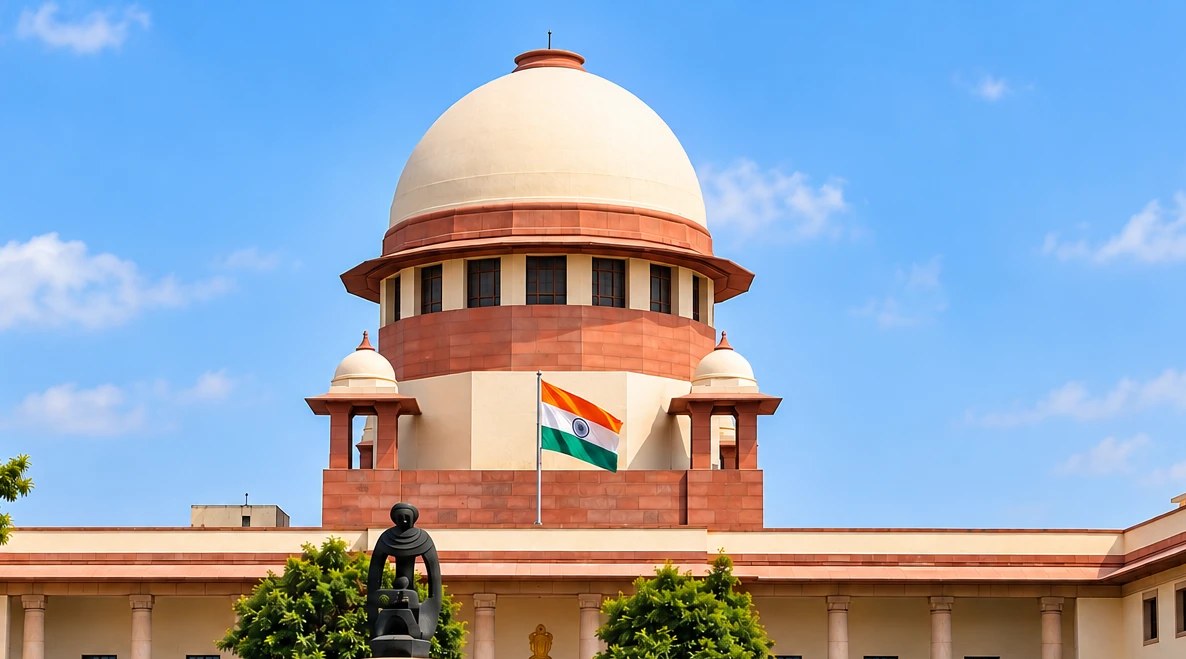
The Supreme Court restored a cheque-bounce conviction set aside by the Bombay High Court in revision, holding that once a cheque's execution is admitted the presumptions under Sections 118 and 139 of the NI Act arise, and that a cash loan above Rs. 20,000 in breach of Section 269SS of the Income Tax Act remains enforceable. It issued directions on dasti and electronic summons, online payment, a case synopsis and dashboards, and revised the compounding costs (paras 15, 20, 36, 38).

In September 2025 the Supreme Court quashed a Rajasthan notification of 09.03.2007 that exempted from VAT the sale of asbestos cement sheets and bricks containing 25% or more fly ash, but only if they were made in the State. The exemption favoured local manufacture rather than local fly ash, gave no reason beyond public interest, and was neither confined to new industries nor to a limited period, so it discriminated against goods from other States under Article 304(a) (paras 12.14-12.19).

The Supreme Court set aside a Kerala High Court order revoking the bail of five accused in a 2021 political murder, granted two years earlier (paras 2, 4, 32). Distinguishing cancellation of bail from revocation of a perverse bail order (para 17), it held that individual liberty and the interests of the victim and the community "could have been better balanced" through stringent conditions (para 21), which it imposed (para 26).

A Division Bench of the Rajasthan High Court at Jodhpur held that delayed deposit of tax deducted at source, standing alone, cannot found a prosecution against a company's employee where the breach was venial and not contumacious or dishonest (paras 15-17). Once insolvency proceedings began and an Interim Resolution Professional took charge, the employee could at most answer for the first ten days (para 6). The Court made the rule absolute and quashed any consequential action (paras 19-21).

The Supreme Court set aside a Bombay High Court order sending an NDPS ganja case back for retrial because the raid video was not explained by each witness, the chemical examiner was not examined and the seized ganja was not produced. Retrial is for exceptional cases; the video had a Section 65B certificate, the analyst's report is admissible under Section 293 CrPC, and non-production is not always fatal (paras 16-34).