
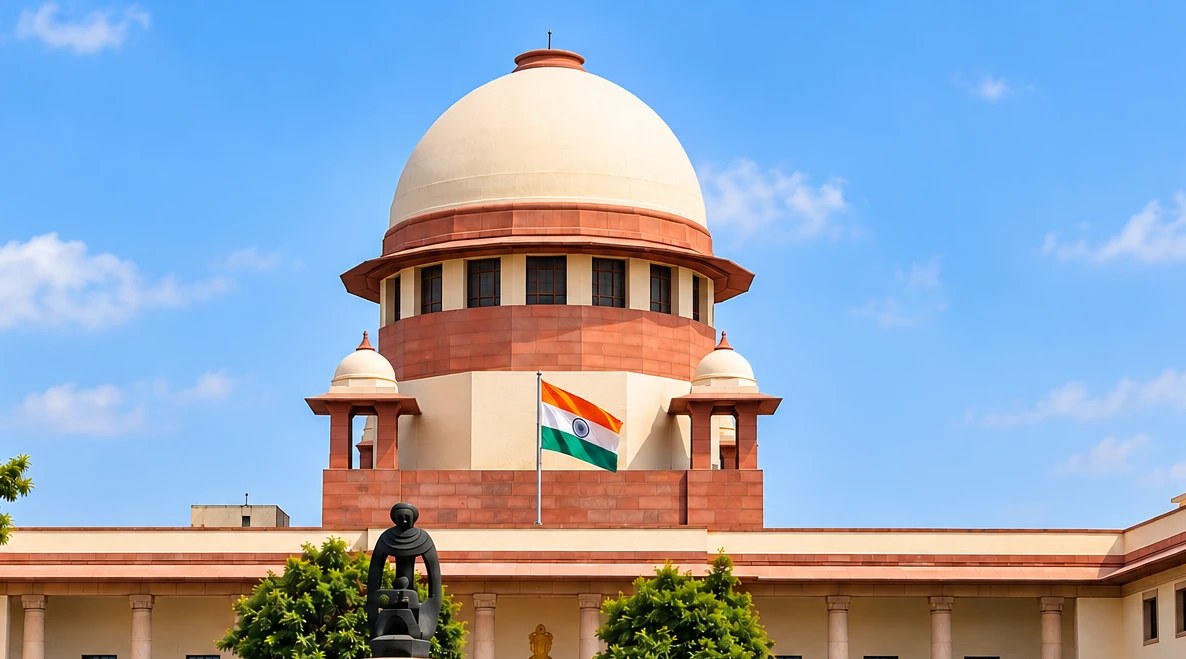
The Supreme Court restored the conviction of a husband and his mother for the 2001 dowry death of a young woman set on fire a day after a renewed demand for a colour TV, a motorcycle and Rs. 15,000. Holding that the High Court had misread the evidence, it called the eradication of dowry a constitutional imperative and issued directions on educational curricula, Dowry Prohibition Officers, training of police and judges, and the disposal of pending cases (paras 9, 24, 26).

The Rajasthan High Court set aside adverse remarks, and a direction to initiate disciplinary and legal proceedings, recorded against a police officer by the Special Judge, NDPS Cases, Jhalawar while acquitting the accused, because he was not heard before the remarks were made. On the principle of parity it gave the same relief to another individual named in the remarks who had not challenged them. The disciplinary authority may still examine the matter independently (paras 11, 14).

The Supreme Court dismissed a woman's appeal against her NDPS conviction for 23.5 kg of ganja. Drawing samples at the spot rather than before a Magistrate under Section 52A is not fatal where the seal, identity and chain of custody of the samples are intact, as held in Bharat Aambale, and the statutory minimum sentence for a commercial quantity left no room to reduce it (paras 23-32).

In the 2010 Jnaneshwari Express derailment case, the Supreme Court held that Section 436-A CrPC cannot apply where death is a possible punishment, as under Section 302 IPC and Section 16 UAPA, and that Article 21 cannot be the sole consideration where national security is involved. Yet, with the accused jailed for about twelve years, no misuse of bail and 28 witnesses still to be examined, it declined to cancel their bail and issued directions to speed up reverse-burden trials (paras 11, 16, 21-24).
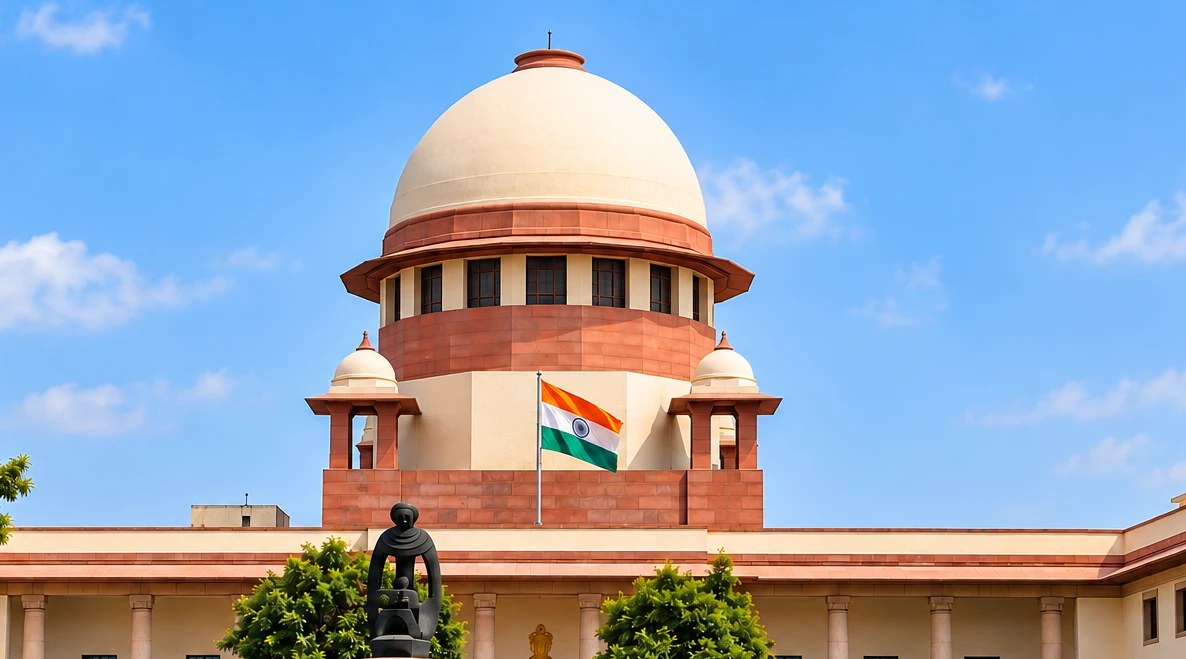
The Supreme Court held that the Internal Complaints Committee at the aggrieved woman's workplace can inquire into her sexual harassment complaint under the POSH Act even when the officer complained against works in a different government department. The words 'where the respondent is an employee' in Section 11 are a procedural trigger to apply his service rules, not a limit on jurisdiction, and his own employer then acts on the report (paras 44, 49, 59, 72).
The Rajasthan High Court quashed an order of the Superintendent of Police, Bharatpur opening a history sheet under Rule 4.9 of the Rajasthan Police Rules, 1965 against a man with a single conviction, because the order rested only on the registration of criminal cases and gave no reasons (para 15). Opening a history sheet requires a reasoned, speaking decision founded on a reasonable belief that the person is habitually addicted to crime; otherwise it is arbitrary and violates Articles 14 and 21 (paras 13-14).

The Rajasthan High Court held that a reserved-category candidate who availed no relaxation except a fee concession, and who scored above the last selected General candidate, must be placed in the General category (paras 7-9). As the OBC (Women) selectee had 61 marks against the General (Women) cut-off of 58, the Court declared her reserved-category selection illegal and ordered the petitioner, the only OBC (Women) candidate on the reserve list, to be appointed (paras 12-13).
On an interim application in a pending writ petition, the Rajasthan High Court directed Jaipur National University to release an MBBS student's original Class 12 Transfer and Migration Certificates by the next day (para 20). Documents deposited at admission serve only to verify eligibility and cannot be held as a tool to compel payment of the balance fee (para 17). Neither the information booklet nor the fee affidavits allowed such retention; the University may recover its fees by lawful means (paras 18-19).
The Rajasthan High Court dismissed an advocate's special appeal seeking quo warranto against the appointment of respondent No. 2 as Additional Advocate General for Supreme Court cases. The Division Bench held that, unlike the Advocate General under Article 165, an Additional Advocate General does not hold a public office (para 17). The Rajasthan State Litigation Policy, 2018 is only a guideline without statutory force, so a departure from its ten-year experience norm cannot found quo warranto (paras 22-23, 26-28).

The Rajasthan High Court at Jaipur refused bail to an accused held on a DRI complaint under the NDPS Act over about 15.740 kg of ‘Hydroponic Weed’ allegedly carried concealed through an airport, although the defence said the quantity was below the 20 kg commercial quantity for ganja (paras 4-6). The Court relied on the substance’s reported potency and value, the ongoing investigation, Karan Mehra and Supreme Court economic-offence rulings (para 7).

The Rajasthan High Court at Jaipur refused bail to an accused charged under the NDPS Act over about 11.410 kg of ‘Hydroponic Weed’ allegedly brought from Bangkok, a quantity the defence said was below the 20 kg commercial quantity for ganja (paras 1, 4-5). Having accepted the Commissioner of Customs’ explanation for not invoking the Customs Act, the Court relied on the drug’s reported potency and value, Karan Mehra and Supreme Court economic-offence rulings (paras 3, 7).

The Supreme Court later kept this judgment of 20 November 2025 in abeyance. On 29 December 2025, in a suo motu case, it put the Committee's recommendations and the judgment's findings and directions on hold until that case reaches finality (order of 29 December 2025, para 12). The judgment had treated a landform rising 100 metres or more above local relief as an Aravali Hill and two or more such hills within 500 metres as a Range, and barred new leases pending a mining plan (paras 29, 50).