
Join our WhatsApp Group
Breaking
Thursday, October 8, 2026 Jaipur Edition
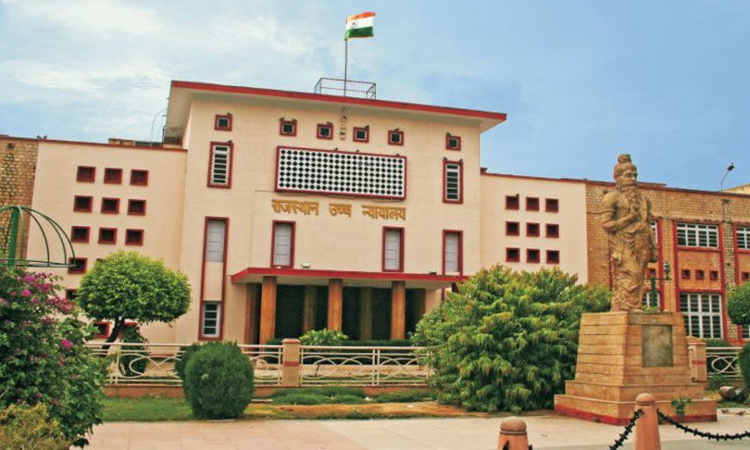
Rajasthan High Court
Labour Law

Summary Court Martial Without 96-Hour Notice and With Biased ‘Friend of Accused’ Vitiated: Rajasthan High Court

Published: · NyayVidhan

The Rajasthan High Court quashed a 1993 Summary Court Martial that dismissed a Signalman for overstaying leave. The final charge-sheet was served on the day of trial, breaching the 96-hour interval in Rule 34 of the Army Rules; the officer who had declared him a deserter was nominated as his ‘friend of the accused’; and his plea of guilty lacked the Rule 115 safeguards (paras 9-12). He is deemed reinstated and continued in service till superannuation, with notional benefits and pension (paras 17-19).

Summary Court Martial Without 96-Hour Notice and With Biased ‘Friend of Accused’ Vitiated: Rajasthan High Court

Judgment Intelligence

Petition Allowed
Sohan Lal v. Union of India & Ors.
2025:RJ-JP:35360-DB
D.B. Special Appeal Writ No. 1434/2011
Court
Rajasthan High Court
Date of Decision
13 October 2025
Bench
Acting Chief Justice Sanjeev Prakash Sharma and Justice Sanjeet Purohit (per Sanjeet Purohit, J.)
Relevant Acts & Sections
Army Act, 1950 — Sections 38, 39(b) and 164; Army Rules — Rules 22, 23, 34, 115 and 129; Constitution of India — Article 226
Final Outcome

Appeal allowed; the Single Judge's judgment of 24.03.2009 and the court martial and punishment order of 30.03.1993 were quashed. The appellant is deemed reinstated and in service till superannuation on notional pay without actual salary; pension and retiral benefits carry 6% interest on arrears, payable within three months (paras 17-19).

Key holdings

  1. A charge-sheet served on the day of a Summary Court Martial breaches the mandatory 96-hour interval in Rule 34 (para 9).
  2. An officer who declared the accused a deserter cannot fairly act as his ‘friend of the accused’ (para 10).
  3. A plea of guilty recorded without the Rule 115 explanations cannot support a punishment (para 11).
  4. Past conduct not in the charge-sheet cannot be used later to justify a dismissal (para 13).
  5. A one-line rejection of a Section 164 petition shows no application of mind (para 15).

Brief Facts

The appellant, enrolled as a Signalman in 1987, was granted casual leave from 19.12.1992 to 31.12.1992. His father fell ill, and on 30.12.1992 he sent a telegram and a letter seeking an extension. A Court of Inquiry declared him a deserter; he rejoined voluntarily on 16.03.1993 after overstaying 75 days and was kept in close arrest. A tentative charge-sheet under Section 38(1) of the Army Act was served on 22.03.1993. At the Summary Court Martial on 30.03.1993 he received a final charge-sheet under Section 39(b), his plea of guilty was recorded and he was dismissed (para 2). His statutory petition was rejected on 19.09.1996, and a Single Judge dismissed his writ petition on 24.03.2009 (paras 4-5).

Court's Findings

Rule 34(1) requires at least 96 hours between informing the accused of the charge and his arraignment. Following Ex-Sepoy Chander Singh and Union of India v. A.K. Pandey, the Court held the interval mandatory; serving the altered charge and deciding the case on the same day vitiated the trial (para 9). Rule 129 lets the accused choose a person to assist him. Instead, the authorities nominated the officer who had presided over the Court of Inquiry, with no consent on record; he gave no assistance, and his role gave rise to a reasonable likelihood of bias (para 10). The plea of guilty, recorded while the appellant was in close arrest and despite a defence of his father's illness, lacked the Rule 115 safeguards (para 11). A hearing of 25 minutes showed a pre-determined, mechanical procedure, and the Single Judge's view that substantial compliance with Rules 22 and 23 sufficed was erroneous (para 12). Past overstays, raised first in the reply, could not justify the penalty, and dismissal was shockingly disproportionate (paras 13-14). The one-line rejection of the statutory petition showed no application of mind (para 15).

Legal Principle

The 96-hour interval in Rule 34 of the Army Rules is mandatory, and an accused before a Summary Court Martial is entitled to an impartial friend of his own choice under Rule 129. Breach of these safeguards, causing prejudice, vitiates the court martial; substantial compliance is not enough (paras 9-10, 12).

Precedents Relied Upon

  1. Ex-Sepoy Chander Singh v. Union of India 1997 SCC OnLine Raj 165 : (1997) 2 RLW 1209
    Followed Discussed at ¶ 6, 9, 11

    The 96-hour interval in Rule 34 of the Army Rules is mandatory unless dispensed with by a declaration under Rule 36; its breach vitiates the summary court martial.

  2. Union of India v. A.K. Pandey (2009) 10 SCC 552
    Relied Upon Discussed at ¶ 9

    The ninety-six-hour interval in Rule 34 is absolute and mandatory; its non-observance vitiates the entire proceedings.

  3. Chief of the Army Staff v. M.Z.H. Khan 2006 SCC OnLine All 1465
    Relied Upon Discussed at ¶ 6, 10

    An accused is entitled to the assistance of a friend of the accused of his choice under Rule 129; thrusting one on him breaches the rule.

View all precedents (11)
  1. Union of India v. Sanjay Jethi (2013) 16 SCC 116
    Relied Upon Discussed at ¶ 10

    A reasonable apprehension or likelihood of bias makes the whole proceeding or order a nullity.

  2. Union of India v. Major A. Hussain (1998) 1 SCC 537
    Distinguished Discussed at ¶ 7, 12

    High Court interference with a court martial is limited, but is open where the accused is prejudiced or a mandatory provision is violated; the respondents' reliance on it was held misplaced.

  3. Mohinder Singh Gill v. The Chief Election Commissioner (1978) 1 SCC 405
    Applied Discussed at ¶ 13

    An authority cannot add or supplement new grounds at a later stage to justify its action.

  4. Ranjit Thakur v. Union of India (1987) 4 SCC 611
    Relied Upon Discussed at ¶ 6, 13

    A court martial sentence must not be so disproportionate to the offence as to shock the conscience; proportionality is part of judicial review.

  5. Central Industrial Security Force & Others v. Abrar Ali (2017) 4 SCC 507
    Followed Discussed at ¶ 6, 13, 19

    Dismissal for desertion was excessive; notional continuity of service was allowed for pension without salary and allowances for that period.

  6. S.N. Mukherjee v. Union of India (1990) 4 SCC 594
    Explained Discussed at ¶ 7, 15

    The authority confirming a court martial need not record reasons, but its order remains open to challenge under Article 32 or Article 226.

  7. Lt. Col. Prithi Pal Singh Bedi v. Union of India (1982) 3 SCC 140
    Referred To Discussed at ¶ 6

    Cited by the appellant.

  8. Mohd. Akram Ansari v. Chief Election Officer & Ors. (2008) 2 SCC 95
    Referred To Discussed at ¶ 7, 16

    Cited by the respondents against new grounds in appeal; the objection was rejected because the grounds had been pressed before the Single Judge.

NyayVidhan
Court Judgments · 3 min read
Decided: October 13, 2025 Acting Chief Justice Sanjeev Prakash Sharma and Justice Sanj...
PDF
WhatsApp Telegram X / Twitter LinkedIn

✕

Popular: POCSO, IBC, Electoral Bond, Article 370, NDPS Act, Bail Conditions, SC Contempt