
Join our WhatsApp Group
Breaking
Thursday, October 8, 2026 Jaipur Edition
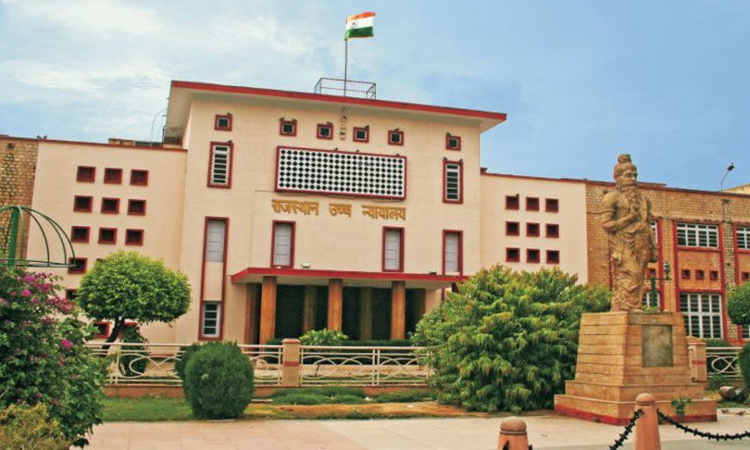
Rajasthan High Court
High Courts

University Cannot Retain MBBS Student's Original Certificates to Force Fee Payment: Rajasthan High Court

Published: · NyayVidhan

On an interim application in a pending writ petition, the Rajasthan High Court directed Jaipur National University to release an MBBS student's original Class 12 Transfer and Migration Certificates by the next day (para 20). Documents deposited at admission serve only to verify eligibility and cannot be held as a tool to compel payment of the balance fee (para 17). Neither the information booklet nor the fee affidavits allowed such retention; the University may recover its fees by lawful means (paras 18-19).

University Cannot Retain MBBS Student's Original Certificates to Force Fee Payment: Rajasthan High Court

Judgment Intelligence

Other
Eshita Gupta v. Jaipur National University & Anr.
S.B. Civil Writ Petition No. 7084/2024
Court
Rajasthan High Court
Date of Decision
3 December 2025
Bench
Justice Anuroop Singhi
Final Outcome

Application No. 1/2025 disposed of. The University was directed to release the petitioner's Class 12 Transfer Certificate and Migration Certificate forthwith, and not later than the next day, for submission to Pearl University by 05.12.2025; the writ petition was listed on 22.01.2026 (paras 20-22).

Key holdings

  1. A university cannot retain a student's original certificates as a tool to compel payment of balance fees (para 17).
  2. Originals taken at admission serve only to verify documents and eligibility, and nothing more (para 17).
  3. Admission-booklet clauses on the admission process do not authorise keeping documents after a student leaves (para 18).
  4. Fee affidavits permitting recovery steps give no unfettered right to hold documents to a student's prejudice (para 18).
  5. The ruling came on an interim application; the writ petition was listed again on 22.01.2026 (paras 1, 21-22).

Brief Facts

The petitioner took admission to the University's MBBS course in 2022 and deposited her original documents (para 2). She completed the first two years, and the fees for 2022-23, 2023-24 and 2024-25 were paid (paras 2, 19). She then stopped attending; her request to withdraw her admission was refused (para 3). Having joined a design course at Pearl University, Delhi, she needed her original Transfer and Migration Certificates for examinations beginning 05.12.2025, but the University refused to return them (paras 3-5). In her pending writ petition she moved application No. 1/2025 for their release (para 1). The University relied on the counselling information booklet, her and her parents' fee affidavits, and the loss caused by a vacant seat (paras 9-15).

Court's Findings

Justice Anuroop Singhi held that the student's claim to her documents and the University's claim to the balance fee for the fourth and fifth years do not overlap (para 17). A document deposited only to seek admission cannot be retained as a tool to compel payment; that would defeat its purpose, which is to verify the student's documents and eligibility "and nothing more" (para 17). The booklet, which says originals "may be kept with the institution till completion of the course" (para 10), concerns the admission process and nowhere empowers the University to keep them when a student wishes to leave (para 18). No document signed by the student made payment of the balance fee a precondition for their return (para 18). The affidavits allow the institution to take measures to recover fees, but give it no unfettered right to hold documents to the prejudice of the student's career (paras 11, 18). The Supreme Court decision cited by the University sets standards for collecting fees but nowhere authorises keeping originals to recover them (paras 12, 19). The University may recover its fees, but not by forcibly retaining documents (para 19).

Legal Principle

Original certificates deposited by a student at admission are taken only to verify her documents and eligibility. An educational institution cannot retain them as a tool to compel payment of outstanding fees; fee-recovery clauses in admission affidavits do not create such a right, and the institution must pursue its dues by lawful means (paras 17-19).

Precedents Relied Upon

  1. Islamic Academic Education v. The State of Karnataka (2003) 6 SCC 697
    Distinguished Discussed at ¶ 12, 19

    Relied on by the University on the collection of fees; the Court held that it sets standards for collecting fees but nowhere authorises an institution to keep a student's original documents to recover them.

  2. Sukhmanpreet Singh Cheema v. Union of India CWP No. 8900/2025 (Punjab and Haryana High Court, 12.11.2025)
    Referred To Discussed at ¶ 6

    Cited by the petitioner: a college has no legal right to retain medical students' original certificates for outstanding dues; it may recover lawful dues through legal proceedings, and release was directed.

  3. Monika v. Pt. B.D. Sharma, University of Health Sciences, Rohtak & Ors. CWP-10671-2022 (Punjab and Haryana High Court, 08.08.2022)
    Referred To Discussed at ¶ 6, 7

    Cited by the petitioner: a student's certificates are his or her individual property, and original documents cannot be retained as security for an amount demanded without lawful authority.

View all precedents (4)
  1. M. Kesavan v. Principal, Cheeran College of Pharmacy & Ors. WP No. 34541 of 2023 (Madras High Court, 21.03.2024)
    Referred To Discussed at ¶ 7

    Cited by the petitioner: an educational institution can claim no lien over a student's certificates and cannot withhold them for arrears of fees.

NyayVidhan
Court Judgments · 3 min read
Decided: December 3, 2025 Justice Anuroop Singhi
PDF
WhatsApp Telegram X / Twitter LinkedIn

✕

Popular: POCSO, IBC, Electoral Bond, Article 370, NDPS Act, Bail Conditions, SC Contempt