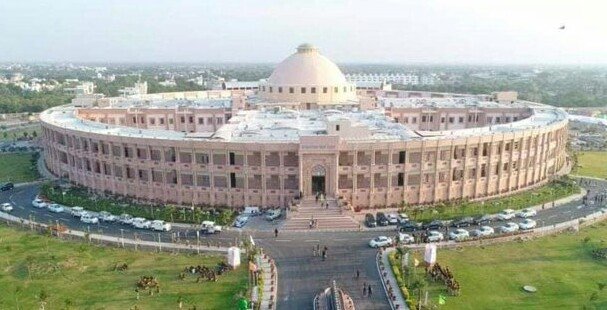
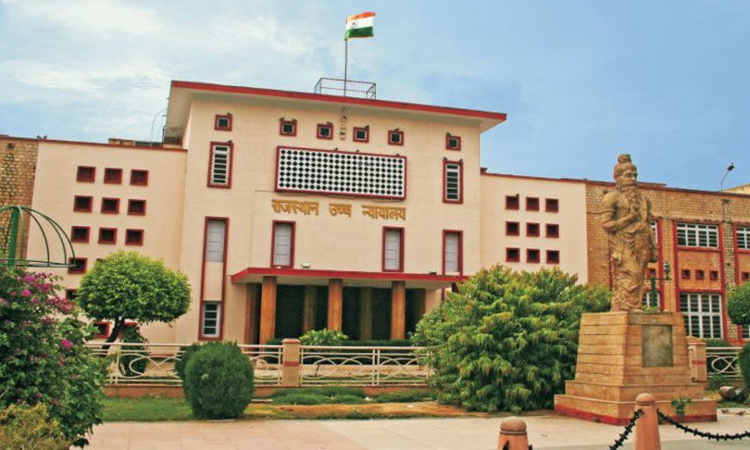
Photo: TrendSPLEND via Wikimedia Commons (CC BY-SA 4.0)
Judgment Intelligence
Petition Allowed
Kirti Chowdhary v. State of Rajasthan & Ors.
2025:RJ-JD:51773
S.B. Civil Writ Petition No. 2105/2018
- Court
- Rajasthan High Court
- Date of Decision
- 3 December 2025
- Bench
- Justice Farjand Ali
- Relevant Acts & Sections
- Constitution of India — Articles 14, 16, 226; Rajasthan Ground Water Service Rules, 1969
Final Outcome
Writ petition allowed. Treating the selectee as OBC (Women) was declared illegal; the consequential vacancy is to be filled from the reserve list by appointing the petitioner as Junior Hydro Geologist within six weeks, without back wages, with seniority from her immediate junior's appointment (paras 13-14).
Brief Facts
The Rajasthan Public Service Commission advertised Junior Hydro Geologist posts on 27.11.2014. In the 18.01.2018 select list, the only OBC (Women) selectee had 61 marks; the General (Women) cut-off was 58. The petitioner, with 56 marks, was the only OBC (Women) candidate on the reserve list (para 2). She contended that the selectee, having availed only a fee concession, belonged in the General category (para 3). The Commission relied on a circular of 26.07.2017, as the selectee had scored below the General cut-off in the screening test, and said all posts were filled (para 5). In reply, she cited a 09.02.2018 order making appointments subject to the petition, and the selectee's move to another post in March 2023 (para 6).
Court's Findings
The Court framed the question as whether a reserved-category candidate who availed no relaxation except in fees, and scored above the last selected General candidate, must be migrated to the General category (para 7). It treated the law as settled by Deepa E.V. v. Union of India and Bharat Sanchar Nigam Limited v. Sandeep Choudhary: merit migration is mandatory once such a candidate crosses the General cut-off without availing relaxations of age, qualification or other substantive criteria, because the General category is one of open merit (para 8). The screening-test explanation failed: the circular of 26.07.2017 was not shown to restrict merit migration, and an executive circular cannot override constitutional principles or binding precedent; what is relevant is final merit (para 9). With 61 marks against 58, the selectee had to be placed in the General (Women) category, and the failure vitiated the OBC (Women) selection (para 9). The no-vacancy objection also failed: the order of 09.02.2018 had made later appointments subject to the petition, and the selectee's departure in March 2023 left a consequential vacancy directly connected to the petitioner's claim (para 10). The migration does not disturb the General (Women) appointee (para 11).
Legal Principle
A reserved-category candidate who has availed no substantive relaxation, only a fee concession, and who secures more marks than the General category cut-off must be counted in the General category. An executive circular cannot restrict this merit migration, and placement turns on final merit, not screening-test marks (paras 8-9).
Precedents Relied Upon
Deepa E.V. v. Union of India (2017) 12 SCC 680
Relied Upon · Discussed at ¶ 4, 8, 9
As summarised by the High Court: a reserved-category candidate who has taken no benefit of reservation except a fee concession and who secures marks above the General category cut-off cannot be denied selection in the General category.
Bharat Sanchar Nigam Limited & Ors. v. Sandeep Choudhary & Ors. (2022) 22 SCC 779
Relied Upon · Discussed at ¶ 4, 8, 9
As summarised by the High Court: merit migration is mandatory once a reserved-category candidate secures marks above the General category cut-off without availing relaxations of age, qualification or other substantive criteria; administrative lapses cannot defeat constitutional equality.