
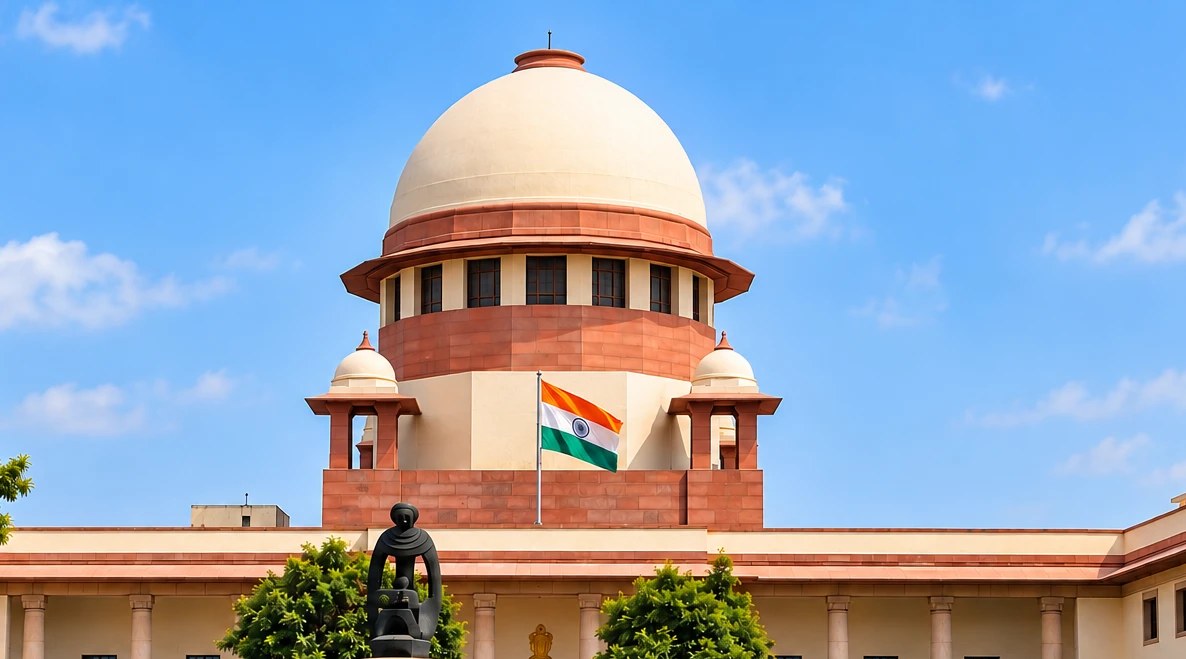
The Supreme Court set aside the result of the 30 January 2024 Chandigarh mayoral election after finding that the Presiding Officer had put his own ink marks on eight ballots cast for the appellant and then treated them as invalid (paras 27, 33). Invoking Article 142 to do complete justice, it counted those eight votes, declared Kuldeep Kumar elected with twenty votes against sixteen, and ordered a show-cause notice to the Presiding Officer under Section 340 CrPC (paras 37-41).

The Rajasthan High Court held that public hearings for the environmental clearance of two nearby limestone mine projects may be held at one common venue, at different times, when the venue is in close proximity to both sites (paras 11-13). The Notification of 14.09.2006 requires a hearing at the site or in its close proximity so that local concerns are heard, and residents cannot insist on a particular place (paras 11, 13). The writ petition was dismissed (para 15).
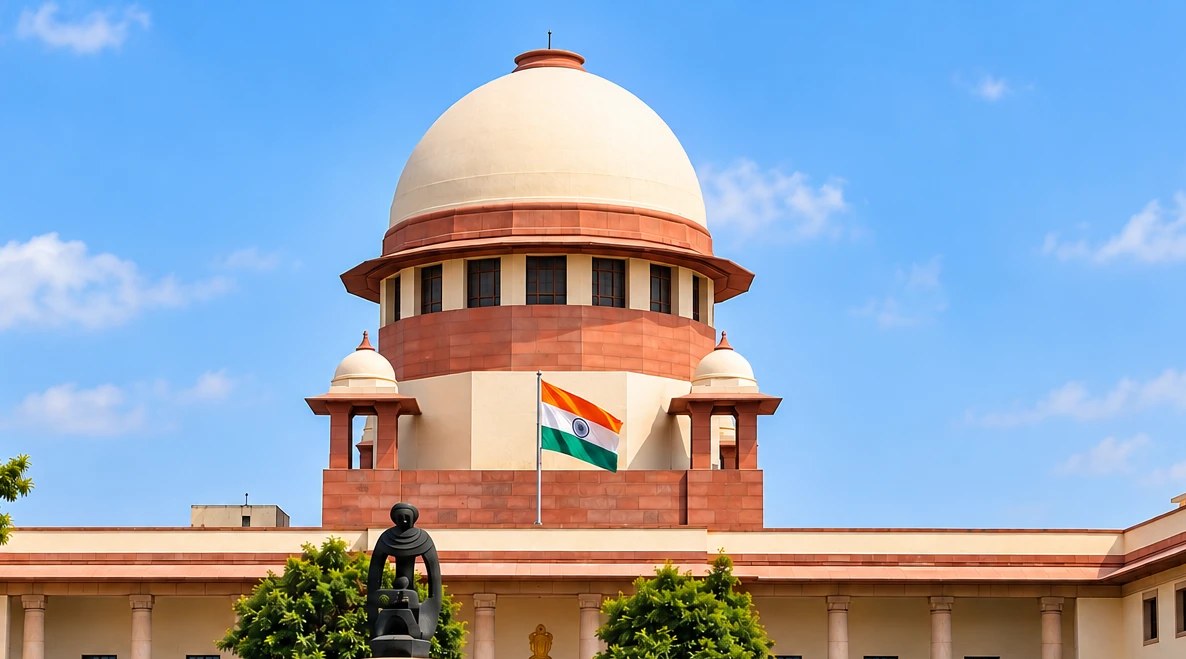
A five-Judge Constitution Bench unanimously struck down the Electoral Bond Scheme, 2018 and the Finance Act 2017 amendments that made political donations anonymous, holding that they violate voters' right to information under Article 19(1)(a), and that unlimited corporate donations are manifestly arbitrary. SBI was told to stop issuing bonds and give the Election Commission details of bonds bought and encashed since 12.04.2019, for publication (paras 104, 130, 215-216, 219).

A Division Bench of the Rajasthan High Court dismissed a father's habeas corpus petition for custody of his son, aged almost four, who lives with his maternal grandfather and maternal uncle after his mother's death. Custody issues that have existed for a long time may not be dealt with in habeas corpus except in extraordinary circumstances, and the child's welfare needs a detailed inquiry (paras 9, 13). The father may raise all custody issues before the competent court (para 16).

The Rajasthan High Court held that the State broke its promise under the ‘Jyoti Yojna’ of 19.08.2011, which offered free education and other benefits to women with one or two daughters who underwent sterilisation. A woman sterilised in reliance on the scheme and issued a Jyoti Card could not be denied its benefits because the scheme was later closed (paras 22-23). The State must refund her education expenses from Class X to the GNM course with 9% interest (para 24).

The Supreme Court set aside a Karnataka High Court judgment that had reversed an acquittal and convicted the appellants of a 1997 murder, and restored the Trial Court's acquittal (paras 1, 39). It held that "A decision of acquittal is not meant to be reversed on a mere difference of opinion. What is required is an illegality or perversity" (para 25), and summarised six principles for appeals against acquittal (para 36).

The Rajasthan High Court dismissed the State's appeal against a mandamus to appoint a hearing-impaired candidate from Uttar Pradesh to the single Assistant Professor (Mathematics) post reserved for that category. Nothing in the Rights of Persons with Disabilities Act, 2016 or the Rajasthan Rules of 2018 confines disability reservation to Rajasthan residents; a disability certificate is valid across the country under Section 58(3), and denial on the ground of residence offends Article 16(2) (paras 16-23).

The Rajasthan High Court held that when enough widow-category candidates are not available, divorcee candidates may be shifted to the unfilled widow-category posts, applying its earlier judgment in Nikhat Amin v. State of Rajasthan (paras 3-8). Under that ruling, a candidate so shifted is judged against the widow category's cut-off. Divorcee candidates left out of the 2022 Primary Teacher recruitment by a revised cut-off were to be considered for appointment, subject to vacancies and merit (para 10).

In Manoj v. State of Madhya Pradesh (Misc. Criminal Case No. 1973 of 2024), the Madhya Pradesh High Court held that 10 grams of MDMA, the quantity shown in the panchnama and the very figure the notification prescribes as commercial, is non-commercial quantity because Section 2(viia) of the NDPS Act requires a quantity greater than the notified one, so the Section 37 bar did not apply (para 6). The State's 10.01-gram weighing was left to evidence, and bail was granted (paras 7, 10-11).

The Rajasthan High Court held that the claim of a married daughter whose father died in service on 20.01.2021 was governed by the old definition of ‘dependent’ in Rule 2(c) of the Rules of 1996, as read by the Larger Bench in Priyanka Shrimali, and not by the 28.10.2021 amendment, which admits a married daughter only if no son or unmarried, widowed or divorced daughter is available (paras 7.1-9). It quashed the rejection and directed her appointment within three months (para 11).
The Rajasthan High Court quashed a Permanent Lok Adalat order directing the Jaipur Development Authority to seize and dismantle a Reliance Jio mobile tower. A dispute about installing a mobile tower is not a "public utility service" under Section 22A(b) of the Legal Services Authorities Act, 1987, so the Lok Adalat had no jurisdiction (paras 13, 22-23). The complaint was sent to the District Telecom Committee under clause 15(4) of the Government order of 06.02.2017 (para 26).
The Rajasthan High Court held that it could hear the Jaipur Development Authority's writ petition against orders of the National Consumer Disputes Redressal Commission (NCDRC), rejecting the objection that, as the NCDRC sits in Delhi, only the Delhi High Court could. The complaint was decided at Jaipur, where the State Commission later issued bailable warrants in contempt proceedings (paras 15, 17). Holding that a litigant should not suffer for its counsel's absence, the Court restored the appeal the NCDRC had dismissed in default (paras 7, 18).