
Latest
Tuesday, October 20, 2026
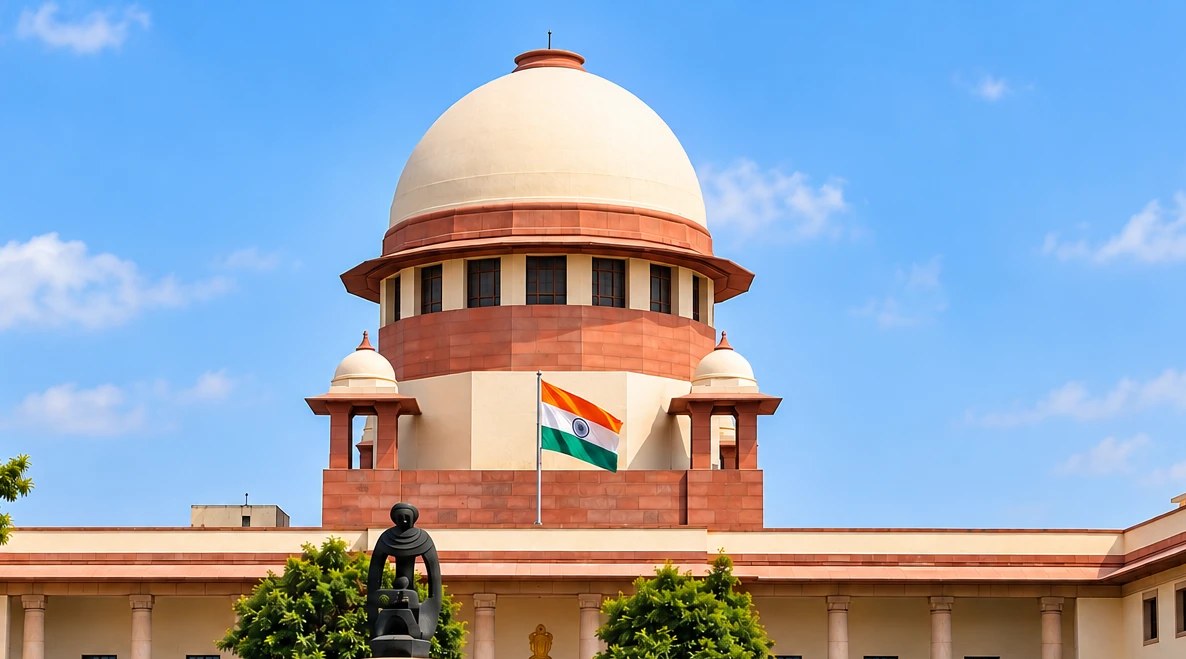
Supreme Court of India
Constitutional Law

Electoral Bond Scheme Struck Down: Constitution Bench Upholds Voters' Right to Know Who Funds Political Parties

Published: · NyayVidhan

A five-Judge Constitution Bench unanimously struck down the Electoral Bond Scheme, 2018 and the Finance Act 2017 amendments that made political donations anonymous, holding that they violate voters' right to information under Article 19(1)(a), and that unlimited corporate donations are manifestly arbitrary. SBI was told to stop issuing bonds and give the Election Commission details of bonds bought and encashed since 12.04.2019, for publication (paras 104, 130, 215-216, 219).

Electoral Bond Scheme Struck Down: Constitution Bench Upholds Voters' Right to Know Who Funds Political Parties

Judgment Intelligence

Petition Allowed
Association for Democratic Reforms & Anr. v. Union of India & Ors. (Electoral Bonds)
2024 INSC 113
Writ Petition (Civil) No. 880 of 2017 with Writ Petition (Civil) Nos. 59 of 2018, 975 of 2022 and 1132 of 2022
Court
Supreme Court of India
Date of Decision
15 February 2024
Bench
Chief Justice D.Y. Chandrachud, Justice Sanjiv Khanna, Justice B.R. Gavai, Justice J.B. Pardiwala and Justice Manoj Misra
Relevant Acts & Sections
Constitution of India - Articles 14 and 19(1)(a); Representation of the People Act, 1951 - Section 29C; Income Tax Act, 1961 - Section 13A; Companies Act, 2013 - Section 182; Reserve Bank of India Act, 1934 - Section 31; Finance Act, 2017; Electoral Bond Scheme, 2018
Final Outcome

Writ petitions disposed of: the Electoral Bond Scheme and the amendments struck down; SBI to stop issuing bonds and give the ECI bond details by 06.03.2024 for publication by 13.03.2024, and unencashed bonds to be refunded (paras 216, 219-220).

Source Supreme Court of India, www.sci.gov.in — judgment dated 15.02.2024

Key holdings

  1. Information on political funding is essential for voters to exercise their vote effectively (para 104).
  2. The Scheme was not the least restrictive means of curbing black money (paras 129-130).
  3. Donor privacy cannot justify total non-disclosure of political contributions (paras 163-165).
  4. Unlimited corporate donations under the amended Section 182 are manifestly arbitrary (para 215).
  5. SBI to disclose bond purchases and encashments since 12.04.2019 for publication by the ECI (para 219).

Case explainer by NyayVidhan: an account of this judgment and the law it laid down, not the court's text. The judgment itself is the authoritative version.

Brief Facts

Notified on 02.01.2018 under Section 31(3) of the RBI Act, the Electoral Bond Scheme let citizens and entities buy bearer bonds carrying no name of the buyer, for donation to political parties (para 24). Through the Finance Act 2017, the RBI Act, Section 29C of the Representation of the People Act, Section 13A of the Income Tax Act and Section 182 of the Companies Act were amended, exempting such donations from disclosure and removing the cap on corporate donations (paras 25, 216). The Association for Democratic Reforms and others challenged the Scheme and the amendments under Article 32 (para 25).

Court's Findings

Information about the funding of political parties is essential for voters to exercise their freedom to vote effectively, so anonymising contributions infringes Article 19(1)(a) (para 104). Curbing black money is a legitimate aim, but the Scheme was not the least restrictive means: electronic transfers for small donations and electoral trusts for larger ones served the purpose with less harm to the right to know (paras 105, 129-130). Donor privacy matters, since contributions may express political support, but under the double proportionality standard total non-disclosure was not justified when disclosure under Section 29C above twenty thousand rupees was a less restrictive alternative (paras 142, 163-165). Treating companies like individuals, and loss-making companies like profitable ones, while allowing unregulated corporate influence made the amended Section 182 manifestly arbitrary under Article 14 (paras 212-215). The interim order of 12.04.2019 required parties to give the ECI donor details in sealed cover, so the ECI must have collected them (paras 217-218). Sanjiv Khanna J. concurred, reaching the same result through his own proportionality analysis.

Legal Principle

Voters have a right under Article 19(1)(a) to information about the funding of political parties; a scheme of anonymous political donations fails proportionality where less restrictive means exist, and permitting unlimited corporate contributions to political parties is manifestly arbitrary under Article 14 (paras 104, 130, 215).

Precedents Relied Upon

  1. Union of India v. Association for Democratic Reforms and Another (2002) 5 SCC 294
    Relied Upon Discussed at ¶ 66

    Voters' right to know the antecedents of candidates flows from Article 19(1)(a); relied on for the right to information about political funding.

  2. People's Union of Civil Liberties (PUCL) and Another v. Union of India (2003) 4 SCC 399
    Relied Upon Discussed at ¶ 70-71

    Reaffirmed that the right of voters to information is part of the freedom of expression under Article 19(1)(a).

  3. Relied Upon Discussed at ¶ 131-132

    Nine-Judge Bench: privacy, including informational privacy, is a fundamental right; relied on for donor privacy.

View all precedents (4)
  1. Shayara Bano v. Union of India and Others (2017) 9 SCC 1
    Applied Discussed at ¶ 187

    Legislation can be struck down as manifestly arbitrary under Article 14.

NyayVidhan
Court Judgments · 2 min read
Decided: February 15, 2024 Chief Justice D.Y. Chandrachud, Justice Sanjiv Khanna, Justi...
PDF
 Join our WhatsApp Group
✕

Try: POCSO, IBC, Electoral Bond, Article 370, NDPS Act, Bail Conditions, SC Contempt