

The Rajasthan High Court dismissed eight writ petitions by makers of plastic-laminated paper used for paper cups and plates. It held that their product, 95% paper with a 5% LDPE layer, is a ‘single-use plastic commodity’ covered by the ban notified on 12.08.2021 under the Plastic Waste Management Rules, 2016, though not expressly listed (paras 47-48, 50-53). The Pollution Control Board's closure orders were within its jurisdiction, and the ban is a reasonable restriction under Article 19(6) (paras 60, 73, 77).
The Rajasthan High Court cancelled bail granted by a Special Judge to the alleged central figure in a tramadol and alprazolam racket. The Special Judge had treated the seized psychotropic substances as medicines, ignored commercial quantity and recorded no Section 37 satisfaction; after bail, two investigating officers were transferred or prosecuted, so tampering with the investigation could not be ruled out (paras 18-19, 24-27).
The Rajasthan High Court held that a government employee recorded as female at appointment, who later underwent gender reassignment surgery and identifies as male, is entitled to have his name and gender corrected in his service record (para 17). Reading the Transgender Persons (Protection of Rights) Act, 2019 as beneficial legislation, it held that Section 7 also covers persons who had surgery before the Act (para 15), and fixed time limits for the District Magistrate's certificate and the record change (para 19).
A five-Judge Constitution Bench upheld the 2017 Tamil Nadu, Maharashtra and Karnataka amendments to the Prevention of Cruelty to Animals Act, 1960 that permit Jallikattu, Bullock Cart Races and Kambala. Read with their Rules and Notification, the amendments relate to Entry 17 of List III, are not colourable legislation and substantially reduce the cruelty found in A. Nagaraja. The Court declined to recognise fundamental rights for animals and directed strict enforcement (paras 24, 30, 35, 37, 40-42).

The Rajasthan High Court refused bail to a government doctor accused of driving drunk inside the hospital where he worked, killing one person, causing a pregnant woman's miscarriage and injuring others. Relying on Sanjeev Nanda and Alister Anthony Pareira, it held prima facie that the doctor knew the consequences of driving under the influence of liquor, and that such cases cannot be compared with causing death by rash or negligent driving (paras 7-12).
A five-Judge Constitution Bench held that the Maharashtra Governor had no objective material to call on Chief Minister Uddhav Thackeray to face a floor test, but declined to restore his government because he resigned instead of facing the vote. It held that the political party, not the legislature party, appoints the Whip, found the Speaker's recognition of the Shinde faction's Whip illegal, left the disqualification petitions to the Speaker and referred Nabam Rebia to seven Judges (paras 193-194, 206).
A five-Judge Constitution Bench held that the National Capital Territory of Delhi has legislative and executive power over “services” under Entry 41 of the State List, except services relating to public order, police and land. Article 239AA(3)(a) excludes only Entries 1, 2 and 18, and the phrase “insofar as any such matter is applicable to Union Territories” cannot exclude more. The Lieutenant Governor is bound by the elected government's decisions on services (paras 160, 162, 164).
The Supreme Court held that every Central and State law applying to a State also applies to its Scheduled Areas unless the Governor, under Clause 5(1) of the Fifth Schedule, notifies that it will not apply or will apply with modifications. It rejected the claim that non-tribals cannot settle, vote or contest elections in the Scheduled Area of Sundargarh in Odisha, and dismissed the appeal without costs (paras 13-14, 16, 19-20).

The Supreme Court quashed a conviction for possessing poppy husk because the police officer drew samples from all the bags at the time of seizure, not in the presence and under the supervision of a Magistrate as Union of India v. Mohanlal requires under Section 52A of the NDPS Act (paras 8-9). This created a serious doubt whether the substance recovered was contraband, and the case was not proved beyond reasonable doubt (paras 9-10).
A Division Bench of the Rajasthan High Court dismissed a habeas corpus petition against a one-year preventive detention ordered by the District Magistrate, Sikar under the Rajasthan Prevention of Anti-Social Activities Act, 2006. The detenu received the order, its grounds and 238 pages of records and was told in writing of his right to make a representation, so Section 9 was met (paras 15, 18). Forwarding the grounds to the Advisory Board within three weeks satisfied Section 11 (para 23).

The Rajasthan High Court dismissed 23 special appeals over BDS admissions for 2016-17. It held that the State validly lowered the NEET percentile by 10, plus 5 in special exigency, under power delegated by the Union, but dental colleges could not relax it further on their own (paras 10.1, 13). Students admitted below that cut-off stand discharged, and each such college must pay ₹50 lakh in costs and ₹25 lakh compensation to each such student (para 18).
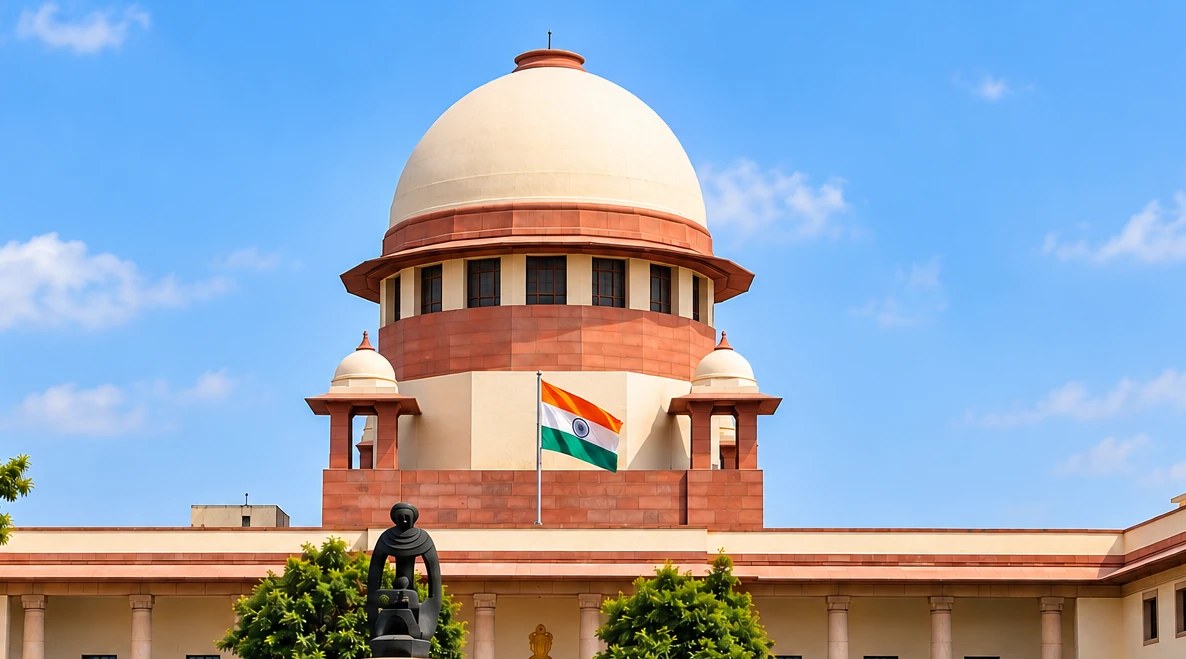
A Constitution Bench held that the Supreme Court, under Article 142(1), may dissolve a marriage on the ground of irretrievable breakdown even when one spouse opposes it, and may grant divorce by mutual consent without the six-month wait for the second motion under Section 13-B of the Hindu Marriage Act. This is a discretion, not a right, to be used with great care on established facts (paras 33, 42).