
Code of Criminal Procedure, 1973
Also known as CrPC.
Explained in Our Guides
- Guide Bail for Long Custody and Trial Delay: Article 21, Section 436-A and Special Statutes
- Guide Cancellation of Bail: Grounds, Parity and When Courts Set Aside a Bail Order
- Guide Quashing Criminal Cases Under Section 482 CrPC and Section 528 BNSS: When Courts Intervene
- Guide Appeal Against Acquittal: When Can an Appellate Court Reverse an Acquittal?
Sections
Key Judgments

The Supreme Court acquitted three men convicted under Sections 25A and 29 of the NDPS Act over 1,364 kg of ephedrine seized in Ahmedabad. The presumptions under Sections 35 and 54 arise only after the prosecution proves foundational facts, and a co-accused's statement to ATS officers at his arrest has no evidentiary value. The godown lessee's conviction was affirmed, but his sentence was cut to the 8 years and 10 months already served (paras 54-73).

The Supreme Court cancelled the bail granted by the Karnataka High Court to seven accused, including a film actor, in a 2024 murder case (paras 2, 26). It distinguished annulment of a perverse bail order from cancellation for post-bail misconduct (para 18) and held that "An unsustainable bail order does not become valid with the mere passage of time or the subsequent behaviour of the accused" (para 20).

The Delhi High Court granted regular bail to a woman accused under Sections 21, 25 and 29 of the NDPS Act, from whom 100 grams of heroin, an intermediate quantity, was allegedly recovered (paras 1, 14, 25). Despite the State's reliance on the total recovered from all the accused, the Court held that heroin recovered separately cannot be collectively attributed to her (para 25). Custody since 26.04.2024, a filed charge-sheet and co-accused on bail weighed for bail (paras 24-26).

The Supreme Court has acquitted a man convicted of possessing heroin, holding that two accused persons' individually recovered quantities cannot be clubbed into a 'commercial quantity' without proof of conspiracy, and that a complete failure to follow Section 52A sampling procedure left the FSL report unusable. It also held the High Court wrong to refuse the appeal over delay alone.

The Rajasthan High Court set aside a 10-year NDPS sentence in a 282 kg poppy husk case, holding that nothing linked the appellant to the vehicle or the contraband. A custodial statement by a person held in another case, which led to no fresh discovery, was barred by Sections 25 and 26 of the Evidence Act, and a police statement the witness did not repeat on oath was not evidence (paras 6.1-6.5, 7-8).
The Rajasthan High Court granted anticipatory bail to a woman accused of illicit opium poppy cultivation, holding that Section 37 of the NDPS Act does not apply because cultivation under Section 18(c) has no quantity threshold. The case rested only on her minor son's uncorroborated statement in custody, the land stood in another person's name, and she was covered by the first proviso to Section 437(1) CrPC (paras 6, 9-13, 22).

The Supreme Court refused regular bail to Harpreet Singh Talwar, accused of facilitating heroin imports concealed as Afghan talc through Mundra Port, holding that the material met the prima facie threshold under Section 43D(5) of the UAPA though nothing was recovered from his consignment. Dead and untraceable witnesses, antecedents and flight risk weighed against bail, but he may renew his plea after six months or on substantial progress of the trial (paras 23-35).

The Supreme Court held that dealing in a psychotropic substance listed in the Schedule to the NDPS Act is an offence under Section 8(c) even if it is not in Schedule I of the NDPS Rules, and that Sanjeev V. Deshpande, which settled this in 2014, applies retrospectively to pending cases. Once a charge is framed, Section 216 CrPC cannot be used to delete it or discharge the accused. Two buprenorphine prosecutions go back for trial (paras 156-163).

The J&K and Ladakh High Court granted bail to a driver allegedly found with 106.86 g of a heroin-like substance in his jeans pocket at a naka; 104.89 g was allegedly found on a rear-seat passenger (paras 2, 11). The State called the seizure commercial quantity (para 9). The Court held that any common intention among the accused had to be established at trial; the applicant's own intermediate quantity kept Section 37 out, and bail followed Section 437 CrPC principles (paras 12-14).
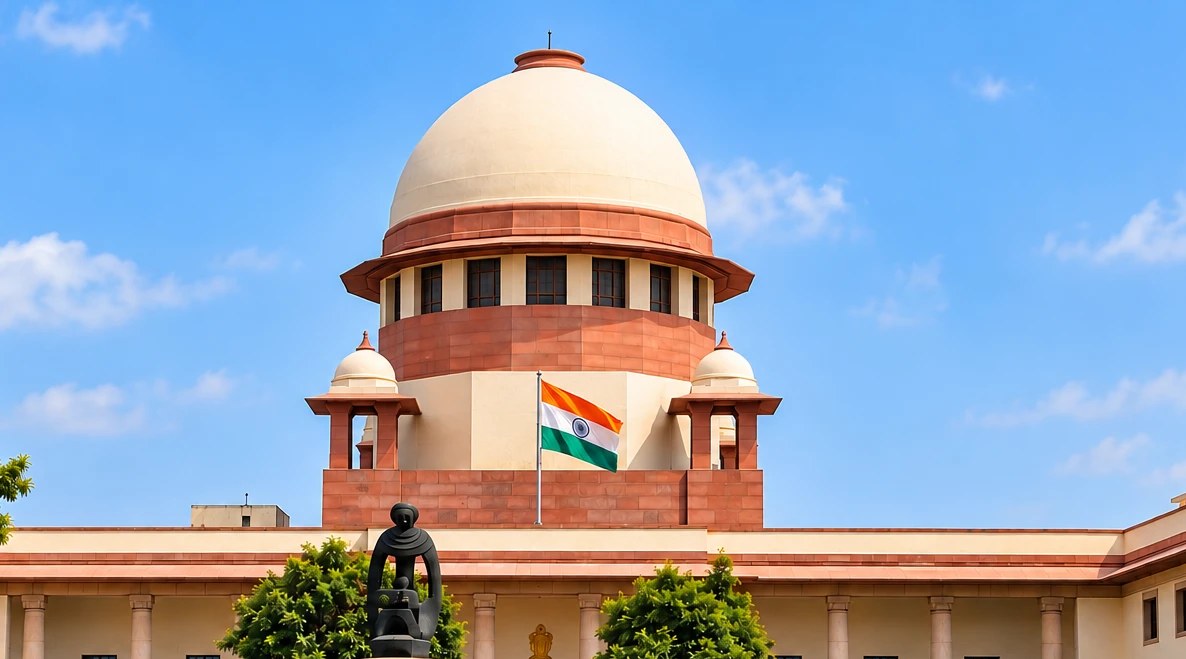
The Supreme Court held that an inquest under Section 174 CrPC only finds the apparent cause of death and cannot replace an FIR when a complaint discloses a cognizable offence. It directed the Delhi Police to register FIRs on the complaints of the families of two IIT Delhi students found dead in their hostel rooms in 2023, and constituted a National Task Force on the mental health of students in higher educational institutions (paras 27, 40, 48, 69).
The Rajasthan High Court quashed proceedings under Sections 107 and 151 CrPC against a law student who was detained after he allegedly raised his voice while accompanying a relative to a counselling session in a matrimonial dispute, and declared his arrest and detention illegal (paras 2-3, 28-29). The Executive Magistrate's half-printed proforma order showed non-application of mind (paras 6, 10). The Court called for a review of ACPs acting as Executive Magistrates and a mechanism within three months (paras 22, 26).
The Rajasthan High Court allowed a writ petition by prisoners at Central Jail, Jodhpur, who sought to attend their pending criminal trials by video conferencing (paras 1, 7). The order records that the petitioner faces 259 cases across districts; the Court held that an accused cannot be physically present at several places at once and that his absence leads to adjournments (paras 2-3). It directed the authorities to arrange video conferencing in the jail and asked the State to consider amending the CrPC (paras 6-8).