
Bombay High Court voices sharp displeasure at an 18-year delay in implementing a 2008 state policy promising ownership housing to Mumbai's municipal sanitation workers, holding the law does not permit discriminating against the "most exploited, marginalized" rung of the municipal workforce.
Madras High Court dismisses two writ petitions seeking inclusion of the OBC category in the House Listing Operation and Population Enumeration of the ongoing census, holding the Centre's decision to enumerate caste data only for Scheduled Castes and Scheduled Tribes is a policy decision beyond the court's remit.

The Supreme Court held that the power to confiscate a vehicle seized in an NDPS case under Section 63 of the NDPS Act vests in the trial court, not the Drug Disposal Committee, and ordered release of a lorry to its owner after all accused were acquitted amid serious lapses in the prosecution's case.
Supreme Court overturns a 2017 National Green Tribunal order that held the Art of Living Foundation liable for damaging the Yamuna floodplain during its 2016 World Culture Festival, finding no reliable evidence linking the festival to the site's ecological condition, and orders a ₹5 crore refund.
NGT directs Bhopal's Collector and Divisional Forest Officer to jointly survey and demarcate all recorded forest land using GIS/GPS and satellite imagery, and to remove illegal encroachments within three months where no lawful impediment exists.
The Supreme Court upheld a ten-year sentence under Section 15(c) of the NDPS Act for about 200 kg of poppy husk found in a car. It held that an officer who received a tip-off at a naka, recorded its substance in the ruqa sent to the police station before the search, and summoned the DSP to supervise it, substantially complied with Section 42. Section 50 did not apply because nothing was recovered from the personal search (paras 33, 36, 52).
Rajasthan High Court quashes an FIR filed nearly four years into a marriage alleging the husband used drugs and black magic to induce it, holding the marital-rape exception under IPC barred the core allegation and the delay pointed to changed circumstances, not a concealed crime.
The Supreme Court upheld a 1997 NDPS conviction for 100 grams of smack found in a water bottle, but reduced the sentence from 14 years to the 10-year minimum under the unamended Section 21. Section 50 did not apply to a search of a bottle the accused was carrying, and drawing samples without a Magistrate was only a procedural irregularity under Section 52A. The 2001 amendment did not help, as the trial had ended before it (paras 13, 15-16, 18-20).
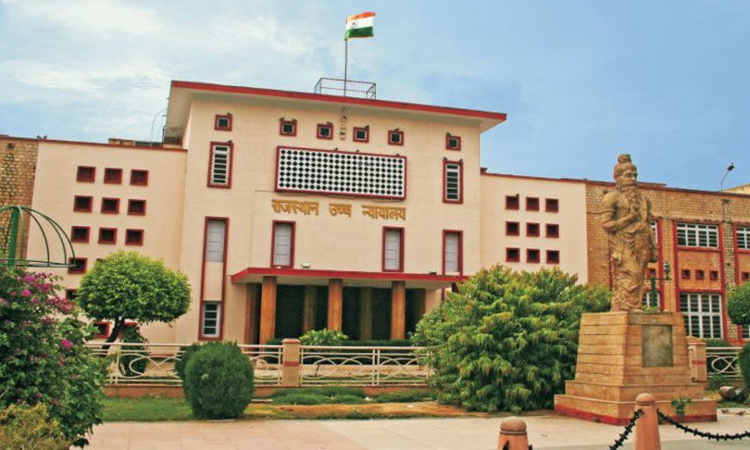
Granting suspension of sentence to a man convicted under the NDPS Act, the Rajasthan High Court flagged serious doubts over the prosecution's case — including a police constable shown present at two different medical-store raids at overlapping times — and directed the Director General of Police to independently inquire into the discrepancy.
The Supreme Court allowed an appeal against the Himachal Pradesh High Court's refusal of regular bail to an accused facing trial under Sections 20, 25 and 29 of the NDPS Act. The appellant said he had been in jail since September 2023, ten of twenty witnesses had been examined and two co-accused were on bail; the State stressed his distinct role and two other cases. The Court found a case for regular bail made out and directed release on conditions set by the trial court (paras 3, 7-10).
Rajasthan High Court quashes a dowry-harassment case against a husband and his family after the complainant accepted ₹20 lakh in permanent alimony and a mutual-consent divorce, holding that continuing the prosecution afterward was a weapon of harassment, not a pursuit of justice.
The Supreme Court dismissed the State of Himachal Pradesh’s appeal against an NDPS acquittal after examining doubts concerning the seizure and handling of the case property. The High Court had questioned the absence of independent witnesses on a busy highway and missing records of the property’s movement to and from court. The Supreme Court agreed that the prosecution had not proved its case beyond reasonable doubt. (Paras 3–6)