
Indian Penal Code (IPC)
Articles, judgments, and analysis on the Indian Penal Code — now being replaced by the BNS. Covering key sections, case law, and legislative history.
Key Judgments
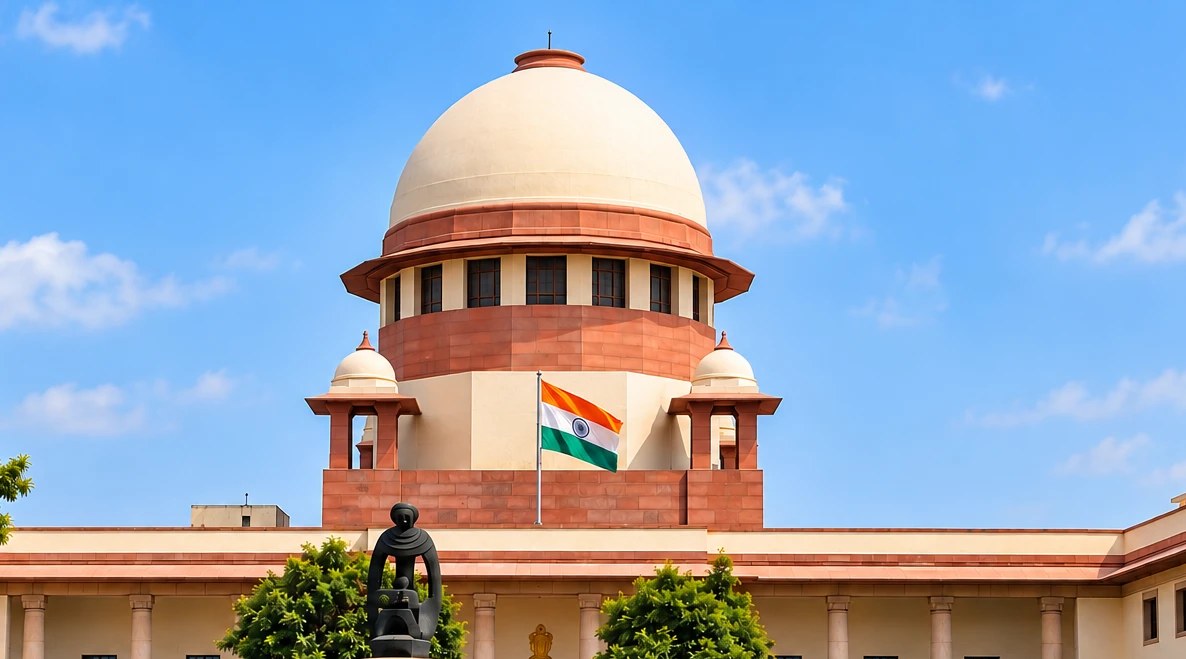
The Supreme Court upheld the refusal to let the Kerala government withdraw the prosecution of six former MLAs accused of damaging the Speaker's dais and equipment during the 2015 budget speech. Privileges and immunities under Article 194 protect legislative functions, not acts of destroying public property, and allowing the withdrawal would interfere with the normal course of justice for illegitimate reasons (paras 52, 56, 59, 85).

Answering a reference, a Division Bench of the Rajasthan High Court held that, unless the statute provides otherwise, an offence under a law other than the IPC punishable with imprisonment which may extend to three years falls in the second category of Part II of the First Schedule to the Cr.P.C. and is cognizable and non-bailable (para 25). The maximum punishment that may be awarded decides the category, not the minimum (para 21), and Pintu Dey does not lay down the correct law (para 24).

In Amish Devgan v. Union of India and Others (2020 INSC 682), the Supreme Court held that speech is hate speech only when its content, the speaker’s intent and its harm are all present, judged by a reasonable, strong-minded person, with regard to the speaker and the context (paras 48-52). Sections 153A and 295A IPC need deliberate and malicious intent, and likely means a real, not fanciful, chance (paras 31, 62, 67). Applying this to a television anchor’s remark about a revered Sufi saint, the Court refused to quash the FIRs, protected him from arrest while he cooperated in the investigation, and transferred the later FIRs to Ajmer, where the first was registered (paras 78-79, 85).

In Google India Private Limited v. M/s. Visakha Industries and Another (2019 INSC 1352), the Supreme Court held that Section 79 of the Information Technology Act, 2000, as it stood before its substitution with effect from 27.10.2009, exempted an intermediary only from liability under that Act, its rules and regulations, and did not protect it against defamation under Sections 499 and 500 of the IPC, for which the Act has no provision of its own (paras 62, 96, 155). Whether the appellant or its parent was the intermediary was left for trial, the High Court's findings on the notice to remove were set aside, and the Magistrate was to proceed (paras 155-156).
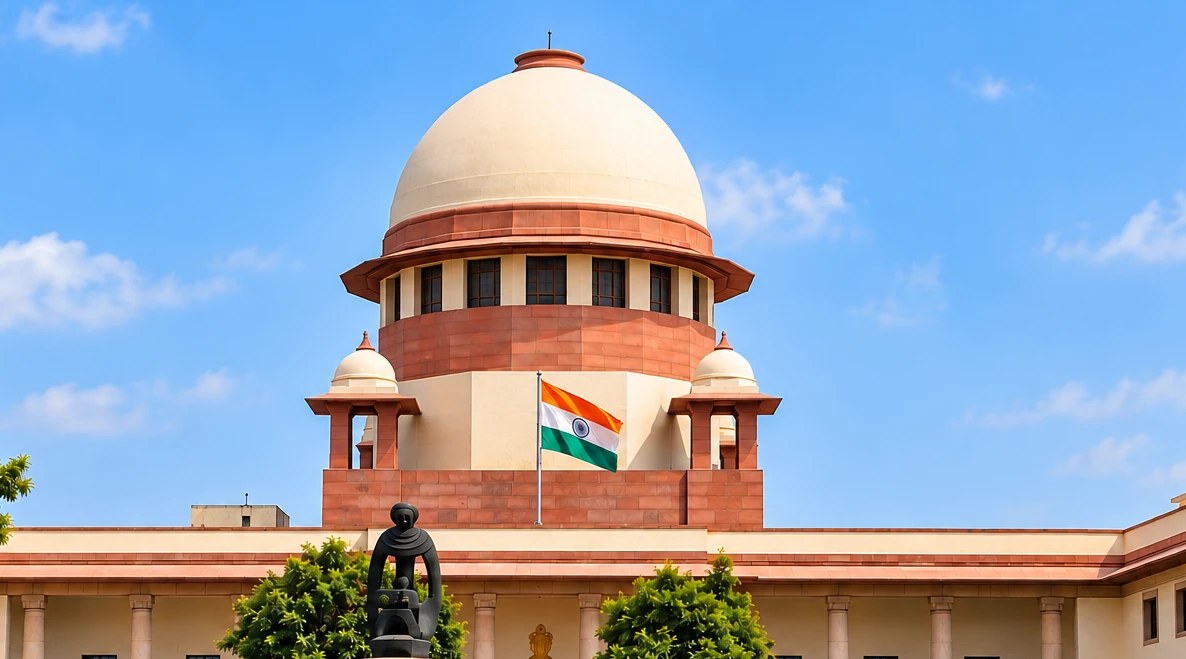
A Constitution Bench unanimously struck down Section 497 IPC, which punished only a man for sex with another man's wife without the husband's consent, as manifestly arbitrary, discriminatory and destructive of women's dignity and autonomy. Adultery may remain a civil wrong and a ground for divorce, but not a crime (Misra CJI, paras 23, 41-42, 55; Chandrachud J., para 67).

The Supreme Court granted bail to a man in judicial custody since April 2017 in a cheating case, holding that the trial judge and the High Court ought to have granted it because he was never arrested during seven months of investigation (paras 12, 17-18). Restating that "the grant of bail is the general rule" (para 2), the Court said that where the investigating officer did not arrest an accused, "a strong case should be made out" for judicial custody after the charge sheet (para 4).

In Sharat Babu Digumarti v. Govt. of NCT of Delhi (2016 INSC 1131), the Supreme Court held that where an alleged obscenity offence relates to an electronic record, the Information Technology Act, a special law, governs it, and the accused cannot be proceeded against under Section 292 IPC instead. The two-Judge Bench, speaking through Dipak Misra J., read Sections 67, 67A and 67B as a complete code and held that, Section 81 giving the Act overriding effect, the protection of Section 79 cannot be ignored once an offence has a nexus with an electronic record. It quashed the Section 292 prosecution of an intermediary's senior manager (paras 28, 32, 34-35).

In Mohan Lal v. State of Rajasthan (Criminal Appeal No. 1393 of 2010), the Supreme Court held that a man who had concealed stolen opium before the NDPS Act came into force, and remained in possession of it when the Act took effect, committed the offence under Section 18; Article 20(1) had no application (paras 16-17). Possession under Section 18 needs animus and may consist of dominion and control through concealment (para 16). The Court also rejected the objections based on Sections 42 and 57 and on Section 27 of the Evidence Act (paras 25, 29-30).

The Supreme Court held that Section 304B IPC must receive a fair, pragmatic and common-sense interpretation, declared that Appasaheb and Vipin Jaiswal do not state the law correctly, and ruled that money demanded at any time that is reasonably connected to a married woman's death is in connection with the marriage (para 20). ‘Soon before’ her death is a relative expression and not ‘immediately before’ (paras 23, 25). The husband's conviction was upheld (para 26).

The Supreme Court set aside an Allahabad High Court order granting bail on parity to a murder accused who was a history-sheeter, holding that "it was not a case of parity" and the order "clearly exposes the non-application of mind" (para 17). It explained that setting aside an unjustified grant of bail is different from cancelling bail for supervening circumstances (para 13).

In Arnesh Kumar v. State of Bihar (Criminal Appeal No. 1277 of 2014), the Supreme Court held that the police may not arrest a person accused of an offence punishable with imprisonment up to seven years merely because the offence is cognizable and non-bailable. Under Section 41(1)(b) of the Code of Criminal Procedure the officer must also be satisfied that arrest is necessary for a listed purpose and record reasons, and a Magistrate must scrutinise them before authorising detention (paras 8-9). Its directions cover all such offences, not only Section 498-A cases (paras 13-14).

In the Akshardham temple attack case, the Supreme Court acquitted all six accused, three of whom had been sentenced to death. The sanction under Section 50 of POTA was void for non-application of mind, the confessions were recorded without the Section 32 safeguards, accomplice statements came a year late, and Urdu letters said to be found on the attackers' bloodied bodies were spotless (paras 77, 90, 97, 102-103). No independent evidence remained (paras 121, 135).