
This document has passed NyayVidhan's own editorial verification process — see our Editorial Policy.
- Twin conditions under Section 37(1)(b)(ii) NDPS Act are mandatory for bail in commercial-quantity cases.
- A bail order that omits considering the twin conditions cannot be sustained.
- 1 year 7 months of custody, against a 20-year maximum sentence, did not amount to 'prolonged incarceration' under Article 21.
- The broader Article 21/prolonged-incarceration question has been referred to a larger bench in Tasleem Ahmed v. State (NCT of Delhi).
Facts of the Case
Issues Raised
- Whether the High Court's order granting bail was consistent with the settled law on Section 37 of the NDPS Act, 1985, particularly the twin conditions under Section 37(1)(b)(ii).
- Whether 1 year 7 months of incarceration amounted to 'prolonged incarceration' attracting relief under Article 21.
Arguments
Court's Analysis
Final Decision & Outcome
Full Judgment Text
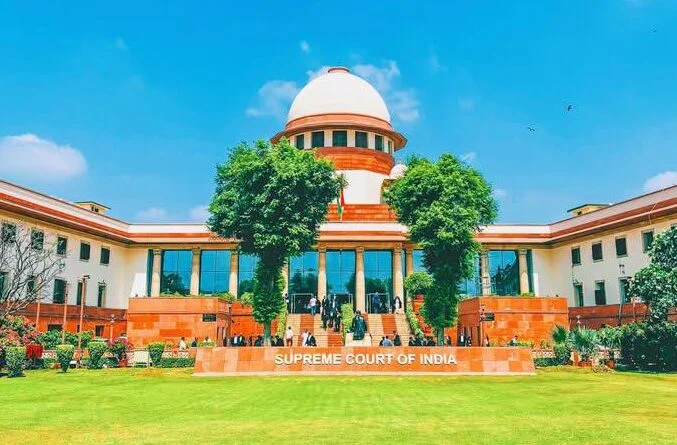
The Supreme Court has set aside the bail granted by the Punjab and Haryana High Court to Balraj Singh @ Billa, an accused alleged to have run a heroin-trafficking network from inside Central Jail, Goindwal Sahib, using illegal mobile phones. The judgment dated 2 June 2026 in State of Punjab v. Balraj Singh @ Billa (Criminal Appeal arising out of SLP (Crl.) No. 896 of 2026, 2026 INSC 618) was delivered by a Bench of Justice Sanjay Karol and Justice N. Kotiswar Singh, with Justice Karol authoring the opinion.
The case arose from FIR No. 06 of 10 January 2024, registered at a check-point on Canal Road, Village Veeram, where police intercepted a Mahindra XUV 300 and recovered 1.465 kg of heroin from two occupants, Gurjit Singh @ Geetu and Sukhwinder Singh @ Gora. On a disclosure made the next day, the respondent—lodged in jail at the time—was arrayed as the alleged controller of the consignment and prosecuted under Sections 21(c), 29, 61 and 85 of the NDPS Act, 1985. The High Court had released him on regular bail on 15 October 2025, citing the period of custody and the likely length of trial.
The Supreme Court framed a single question: whether the High Court's order was consistent with the settled law on Section 37 of the NDPS Act. Reviewing Lalrintluanga Sailo, Ahmadalieva Nodira, B. Ramu, Ajay Kumar Singh and Namdeo Ashruba Nakade, the Bench reiterated that in cases involving commercial quantity, the twin conditions under Section 37(1)(b)(ii)—reasonable grounds for believing the accused is not guilty, and that he is not likely to commit any offence while on bail—are sine qua non for the grant of bail. On a bare perusal, the impugned order contained no such consideration at all, and could not be sustained. Applying the test itself, the Court noted the respondent's three antecedents of similar nature under the NDPS Act, which made the second condition impossible to satisfy.
On the High Court's reliance on the length of custody, the Bench held that 1 year 7 months of incarceration, against a possible maximum sentence of twenty years, did not amount to the "prolonged incarceration" that would trigger Article 21 relief. Crucially, the judgment candidly acknowledged that the Court's own jurisprudence on what counts as "prolonged incarceration" has not been uniform, tabulating seven recent decisions where similarly-situated accused received differing outcomes. The Bench recorded that the larger question of how Article 21, prolonged incarceration and statutory restrictions intersect has already been referred to a larger bench in Tasleem Ahmed v. State (NCT of Delhi), and declined to expand on it.
In a strongly worded coda, the Court observed that where the sovereignty of the country and personal liberty conflict, the former must prevail—"particularly when a war is waged against the nation, be it in the form of supply of drugs, which vitally affects the national economy and health of the people."
Cases Cited & References
- 1. Lalrintluanga Sailo
- 2. Ahmadalieva Nodira
- 3. B. Ramu
- 4. Ajay Kumar Singh
- 5. Namdeo Ashruba Nakade
- 6. Tasleem Ahmed v. State (NCT of Delhi)