
Code of Criminal Procedure, 1973
Also known as CrPC.
Explained in Our Guides
- Guide Bail for Long Custody and Trial Delay: Article 21, Section 436-A and Special Statutes
- Guide Cancellation of Bail: Grounds, Parity and When Courts Set Aside a Bail Order
- Guide Quashing Criminal Cases Under Section 482 CrPC and Section 528 BNSS: When Courts Intervene
- Guide Appeal Against Acquittal: When Can an Appellate Court Reverse an Acquittal?
Sections
Key Judgments

The Supreme Court restored the acquittal of two men whom the Himachal Pradesh High Court had convicted for possessing 1.5 kg of charas (paras 1, 3, 11). The High Court had reappraised the evidence without dealing with the reasons that weighed with the Trial Court, although an acquittal reinforces the presumption of innocence and an appellate court must be "extremely slow" to interfere where two views are possible (paras 7-8).

The Rajasthan High Court allowed a criminal revision by two heroin accused and directed their release on bail under Section 167(2) CrPC (para 16). The Additional Sessions Judge had treated separate recoveries from four accused as joint possession of 760 grams, a commercial quantity (para 6). The High Court held that separate recoveries cannot be clubbed, so 200 grams each attracted the 60-day charge-sheet limit, and that the later charge-sheet did not defeat the right already exercised (paras 9-13).

In a revision by one of four heroin accused, the Rajasthan High Court set aside, as regards him, a Bhadra trial-court order refusing default bail and directed his release (para 16). The trial court had pooled what was found in the four accused's pockets and called the 760-gram total commercial (para 6). The High Court counted only the 200 grams found on the petitioner, applied the 60-day charge-sheet limit and held that the later charge-sheet did not defeat his claim (paras 9-13).

The Rajasthan High Court refused to quash an Anti Corruption Bureau FIR against a Patwari under Sections 7 and 8 of the Prevention of Corruption Act. Section 17A bars only enquiry, inquiry or investigation without approval, not registration of an FIR, and demanding and accepting a bribe are not acts relatable to official recommendations or decisions (paras 5-6, 9). The FIR, based on conversations found on phones seized in an earlier trap case, concerned separate bribe transactions and was not a second FIR (paras 8-9).

The Rajasthan High Court refused to cancel the bail of an accused whose 21 earlier cases were not before the Sessions Court. The bail order recorded no claim by him that he had no criminal record; the Sessions Court had relied on the case diary, and the investigating officer had neglected his duty to attach a list of the pending cases. The alleged threats were unsubstantiated, and cancelling bail is a harsh step (paras 5-6, 8-10).

On a reference from the Sessions Judge, Pali, a Division Bench of the Rajasthan High Court held that a maintenance claimant may file one consolidated application for the previous 12 months' arrears under Section 125(3) CrPC. The Magistrate treats it as 12 separate claims, issues a warrant for each month and may impose up to one month's imprisonment for each month's default. Shahada Khatoon bars only more than one month for a single default (paras 9, 11-12).
The Rajasthan High Court disposed of 847 petitions seeking release of vehicles seized for illegal mining. To keep parity with vehicles seized by the Mining Department, vehicles seized by the police are to be released only after the owner deposits the compounding fee, the compensation determined by the NGT and the cost of mineral, and undertakes not to repeat the offence, because release on mere surety would encourage illegal mining (paras 5-6, 18-20).
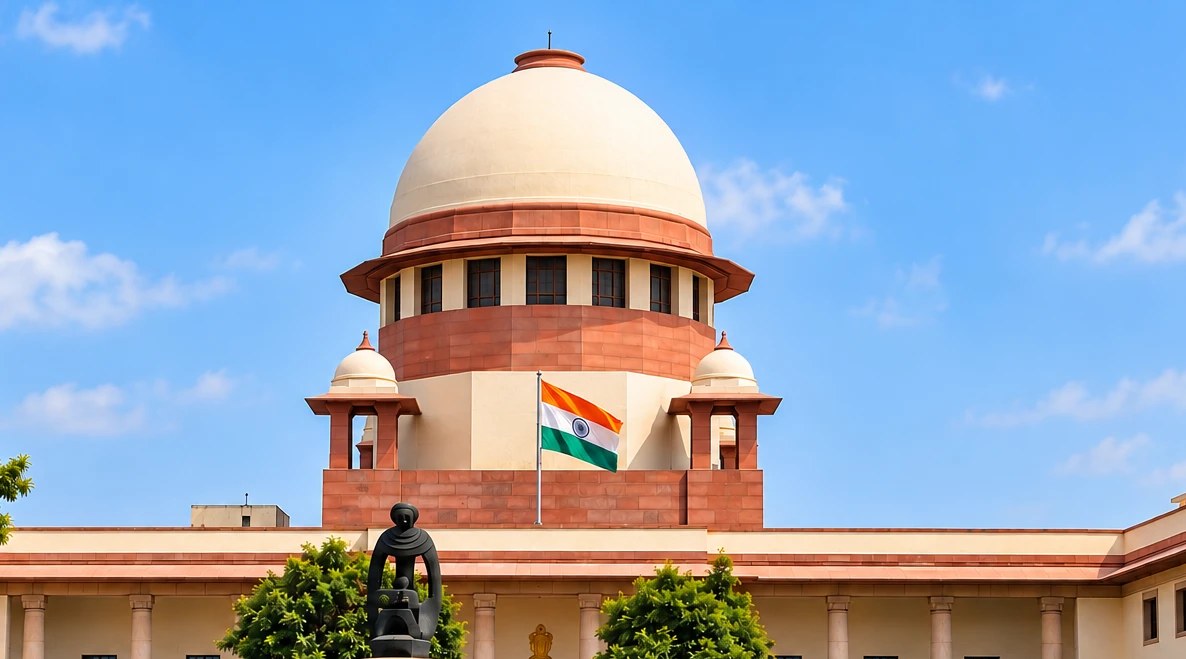
The Supreme Court upheld the refusal to let the Kerala government withdraw the prosecution of six former MLAs accused of damaging the Speaker's dais and equipment during the 2015 budget speech. Privileges and immunities under Article 194 protect legislative functions, not acts of destroying public property, and allowing the withdrawal would interfere with the normal course of justice for illegitimate reasons (paras 52, 56, 59, 85).

The Rajasthan High Court held that a bail application under Section 439 CrPC is not maintainable against an Additional Sessions Judge’s order rejecting an application for default bail under Section 167(2) CrPC (para 7). Bail under Section 439 is a co-extensive power that does not test the lower court’s order, while an order on default bail must be examined for its legality in revisional or inherent jurisdiction (paras 6-7). The second bail application was converted into a criminal revision petition (para 8).
The Rajasthan High Court dismissed a life convict's writ petition seeking amendment of Rule 10B of the Rajasthan Prisoners Release on Parole Rules, 1958 so that prisoners on emergent parole would also get the Covid-19 extension of parole to 30.06.2021. The Division Bench held that regular parole under Rule 9 and emergent parole under Rule 10A rest on distinct criteria, so the two classes are not similarly placed and Rule 10B is not discriminatory (paras 16-17). It also declined to direct amendment of a statutory rule (paras 19-21).

Answering a reference, a Division Bench of the Rajasthan High Court held that, unless the statute provides otherwise, an offence under a law other than the IPC punishable with imprisonment which may extend to three years falls in the second category of Part II of the First Schedule to the Cr.P.C. and is cognizable and non-bailable (para 25). The maximum punishment that may be awarded decides the category, not the minimum (para 21), and Pintu Dey does not lay down the correct law (para 24).
The Rajasthan High Court held that a complainant-victim who alleges that the police recorded his Section 161 CrPC statement wrongly cannot go straight to a Magistrate to have his statement recorded under Section 164 CrPC. Following Jogendra Nahak v. State of Orissa, it held that a Magistrate has no power to record the statement of a person not sponsored by the investigating agency, and that this applies to complainants and victims too (para 16). The petition was dismissed (para 17).