
Join our WhatsApp Group
Breaking
Wednesday, October 7, 2026 Jaipur Edition
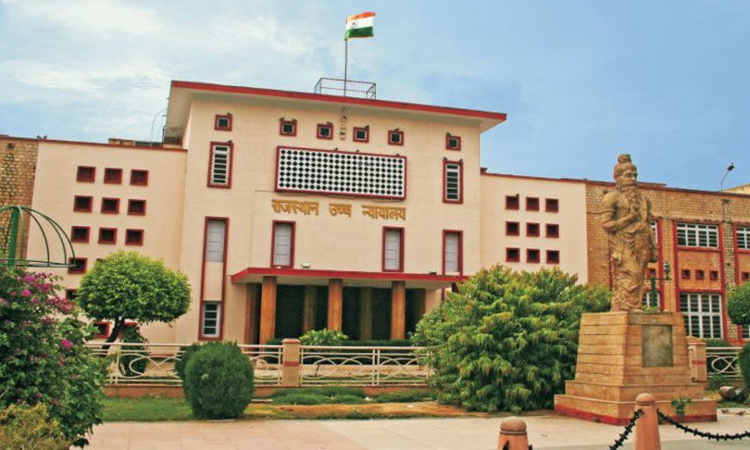
Rajasthan High Court
High Courts

RTI Act's 20-Year Rule Requires Disclosure, Not Refusal: Rajasthan High Court Quashes Information Commission Order

Published: · NyayVidhan

The Rajasthan High Court held that Section 8(3) of the RTI Act is a sunset clause that lifts most exemptions after twenty years, not a ground to deny old information (paras 10-11, 13). It quashed an Information Commission order refusing a citizen the joining and retirement records of a college lecturer, deprecated the Commission for weaponizing the provision, and directed that the information be supplied within 60 days (paras 18, 20-21).

RTI Act's 20-Year Rule Requires Disclosure, Not Refusal: Rajasthan High Court Quashes Information Commission Order

Judgment Intelligence

Petition Allowed
Dr. Mahipal Singh Sihag v. State Public Information Officer-cum-Commissioner & Anr.
2026:RJ-JP:16358
S.B. Civil Writ Petition No. 5616/2022
Court
Rajasthan High Court
Date of Decision
21 April 2026
Bench
Justice Sameer Jain
Relevant Acts & Sections
Right to Information Act, 2005 — Sections 6, 8(1)(j), 8(3), 11; Constitution of India — Article 227
Final Outcome

Petition allowed. The Information Commission's order of 18.12.2021 was quashed, and the authorities were directed to supply the information sought, in terms of Section 8, within 60 days (paras 20-22).

Key holdings

  1. Section 8(3) of the RTI Act is a sunset clause that lifts exemptions after twenty years; it is not a ground for denial (paras 10, 13).
  2. After twenty years only the exemptions for sovereignty and security, parliamentary privilege and cabinet papers survive (para 11).
  3. Where information about a third party may be confidential, the Section 11 notice and balancing procedure is mandatory (paras 14-16).
  4. An appellate authority cannot act as a proxy defender of a third party’s privacy without hearing that party (para 14).
  5. The Court deprecated a cavalier reading of the Act that forced the citizen to approach a constitutional court (para 18).

Brief Facts

In February 2020 the petitioner sought the dates of joining and retirement of a lecturer in the Department of College Education, with the related office orders and note-sheets (para 2). The Joint Director refused, saying the information concerned events more than twenty years old and a third party, citing Sections 8(3) and 11 (para 2). The First Appellate Authority and then, on 18.12.2021, the State Information Commission dismissed his appeals on the third-party ground (para 2). He challenged the Commission's order under Article 227 (para 1). The State argued that he had shown no larger public interest and relied on Girish Ramchandra Deshpande (para 4).

Court's Findings

The Commission's order rested on two pillars, both legally infirm (para 8). On the first, whether service dates are "personal information" under Section 8(1)(j) had to be examined (para 9). On the second, Section 8(3) is "a sunset clause intended to lift exemptions": information about events twenty years old must be provided, subject only to clauses (a), (c) and (i) of Section 8(1) (paras 10-11). Relying on CBSE v. Aditya Bandopadhyaya, the Court held that it is not a standalone ground for denial, and the authorities never claimed the records were unavailable (paras 12-13). The Commission also bypassed Section 11: it must notice the third party and balance privacy against public interest in a reasoned order, as the Constitution Bench held in Subhash Chandra Agarwal (paras 14-16). Girish Ramchandra Deshpande did not help the petitioner, but it too requires a reasoned decision on public interest (para 17). The Court deprecated the Commission's "cavalier and ill-founded" approach (para 18).

Legal Principle

Section 8(3) of the RTI Act operates to facilitate disclosure: information about events twenty years old must be provided, and only the exemptions in clauses (a), (c) and (i) of Section 8(1) survive. It cannot be used as a ground to refuse. Where third-party information may be confidential, the Section 11 notice and balancing procedure is mandatory (paras 10-16).

Precedents Relied Upon

  1. Central Board of Secondary Education & Anr. v. Aditya Bandopadhyaya & Ors. (2011) 8 SCC 497
    Relied Upon Discussed at ¶ 12

    Under Section 8(3), the protection of clauses (b), (d) to (h) and (j) of Section 8(1) ceases after twenty years for records required to be preserved that long; only clauses (a), (c) and (i) survive.

  2. Central Public Information Officer, Supreme Court of India v. Subhash Chandra Agarwal (2020) 5 SCC 481
    Relied Upon Discussed at ¶ 15, 16

    The Section 11 procedure is a mandatory safeguard: the PIO must weigh the benefits of disclosure against possible harm to the third party in a reasoned decision.

  3. Girish Ramchandra Deshpande v. Central Information Commissioner & Others (2013) 1 SCC 212
    Explained Discussed at ¶ 3, 4, 17

    Service records such as memos and show-cause notices are personal information under Section 8(1)(j); relied on by the petitioner but held to support the respondents more, though it too leaves disclosure in the larger public interest to a reasoned decision of the authority.

NyayVidhan
Court Judgments · 2 min read
Decided: April 21, 2026 Justice Sameer Jain
PDF
WhatsApp Telegram X / Twitter LinkedIn

✕

Popular: POCSO, IBC, Electoral Bond, Article 370, NDPS Act, Bail Conditions, SC Contempt