Join our WhatsApp Group
Breaking
Friday, October 2, 2026 Jaipur Edition
Rajasthan High Court
Criminal Law

Sealed Bank Return Memo as Fresh Exhibit Is Not Filling a Lacuna in Cheque Case: Rajasthan High Court

The Rajasthan High Court upheld a Pali magistrate's order allowing the complainant in a cheque dishonour case to exhibit a bank return memo bearing the bank's seal and signature as Exhibit-9, although an unsigned computer-generated memo had already been marked Exhibit-2. This corrected an inadvertent error and did not fill a lacuna (para 8.4). Marking a document as an exhibit is not proof of it, and the accused can still cross-examine and object to its admissibility (paras 9.3, 12).

Sealed Bank Return Memo as Fresh Exhibit Is Not Filling a Lacuna in Cheque Case: Rajasthan High Court
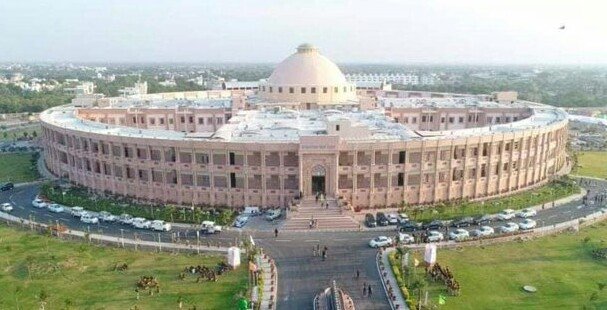
Photo: TrendSPLEND via Wikimedia Commons (CC BY-SA 4.0)

Judgment Intelligence

Petition Dismissed
Gulam Mohd. v. Gopal Traders & Anr.
2026:RJ-JD:43648
S.B. Criminal Miscellaneous (Petition) No. 4345/2026
Court
Rajasthan High Court
Date of Decision
18 September 2026
Bench
Justice Sunil Beniwal
Relevant Acts & Sections
Negotiable Instruments Act, 1881 — Section 138; Code of Criminal Procedure, 1973 — Section 311; Bharatiya Nagarik Suraksha Sanhita, 2023 — Section 528; Bharatiya Sakshya Adhiniyam, 2023
Final Outcome

Petition dismissed. The orders of the magistrate and the Sessions Judge, Pali allowing the return memo to be marked Exhibit-9 were upheld; the trial court must permit the petitioner to cross-examine the complainant on it and raise objections to its admissibility (paras 11-13).

Key holdings

  1. A lacuna is an inherent weakness in a party's case, not an oversight in producing evidence, which courts may allow to be corrected (paras 8.1, 8.4).
  2. A complainant may exhibit a bank return memo bearing the bank's seal and signature after an unsigned computer-generated memo was marked earlier (para 8.4).
  3. Marking a document as an exhibit only identifies it; its proof and admissibility are decided separately in accordance with law (paras 9, 9.3).
  4. The absence of a formal Section 311 CrPC application does not vitiate the marking without substantial prejudice to the accused (paras 10, 10.4).
  5. The trial court must let the accused cross-examine on the new exhibit and raise all objections to its admissibility (para 12).

Brief Facts

Gopal Traders filed a complaint under Section 138 of the Negotiable Instruments Act against Gulam Mohd., alleging that a cheque issued to repay a loan of Rs 3,90,000 was dishonoured for insufficient funds (para 2). On 4 March 2020 the complainant produced a bank return memo without the bank's seal or signature, marked Exhibit-2 (para 2.1). After this was questioned in cross-examination, the complainant produced a memo bearing the seal and an authorised signature, marked Exhibit-9 on 9 February 2026 (paras 2.1, 7). The magistrate rejected the accused's objection on 10 February 2026, and the Sessions Judge, Pali dismissed his revision on 24 March 2026 (paras 1, 2.2-2.3).

Court's Findings

The question was whether a return memo already exhibited as Exhibit-2 could be exhibited again, with the bank's endorsement, as Exhibit-9 (para 6). Relying on Rajendra Prasad, P. Chhaganlal Daga and Fatehsinh Mohansinh Chauhan, the Court held that correcting an oversight is not filling a lacuna, which means an inherent weakness in a party's case (paras 8-8.3). The first memo was a computer-generated slip; producing an authenticated one when its admissibility was questioned was "only correction of an inadvertent error" (para 8.4). Following Ram Pal Singh Bisen and S. Sangeetha, it held that marking a document as an exhibit is only for identification: it does not make the document admissible or dispense with its proof in accordance with law (paras 9-9.3). The absence of a formal application under Section 311 CrPC did not vitiate the marking, since under Willie Slaney a procedural lapse matters only if it causes substantial prejudice or a failure of justice (paras 10-10.3). As the petitioner could still cross-examine on the document, no such prejudice was shown (para 10.4).

Legal Principle

Producing an authenticated version of a document already exhibited, once its defect is pointed out, corrects an inadvertent error and is not filling a lacuna. Marking a document as an exhibit does not prove it or make it admissible, and a procedural lapse without substantial prejudice does not vitiate the trial (paras 8.4, 9.3, 10.3).

Precedents Relied Upon

  1. Rajendra Prasad v. Narcotic Cell (1999) 6 SCC 110
    Relied Upon Discussed at ¶ 8

    A lacuna in the prosecution is an inherent weakness in its case, not an oversight in producing evidence; courts should allow such mistakes to be rectified.

  2. P. Chhaganlal Daga v. M. Sanjay Shaw (2003) 11 SCC 486
    Relied Upon Discussed at ¶ 8

    Power under Section 311 to receive evidence may be exercised even after evidence is closed; the accused may seek to cross-examine on the new material.

  3. U.T. of Dadra & Nagar Haveli v. Fatehsinh Mohansinh Chauhan (2006) 7 SCC 529
    Relied Upon Discussed at ¶ 8

    Recalling or re-examining a witness to find the truth is not filling a lacuna unless it causes serious prejudice to the accused.

View all precedents (9)
  1. Mohanlal Shamji Soni v. Union of India 1991 CriLJ 1521
    Referred To Discussed at ¶ 8

    Quoted through P. Chhaganlal Daga: Section 311 power may be exercised even if evidence on both sides is closed.

  2. Ram Chander v. State of Haryana 1981 CriLJ 609
    Referred To Discussed at ¶ 8

    Quoted through P. Chhaganlal Daga: Section 311 confers the widest range of power on the court.

  3. LIC of India v. Ram Pal Singh Bisen (2010) 4 SCC 491
    Relied Upon Discussed at ¶ 9

    Mere marking of an exhibit on a document does not dispense with its proof in accordance with law.

  4. S. Sangeetha & Ors. v. Tmt. P. Ponni 2026 INSC 813
    Followed Discussed at ¶ 9

    Reaffirmed Ram Pal Singh Bisen: the contents of documents marked as exhibits must still be proved in accordance with law.

  5. Bipin Shantilal Panchal v. State of Gujarat (2001) 3 SCC 1
    Referred To Discussed at ¶ 9

    Quoted through S. Sangeetha: an objected document may be marked tentatively as an exhibit, with the objection decided in the final judgment.

  6. Willie (William) Slaney v. State of Madhya Pradesh AIR 1956 SC 116
    Applied Discussed at ¶ 10

    Procedural mistakes do not vitiate a trial unless substantial prejudice is shown; some provisions are vital and others are curable.
Nyay Vidhan
Court Judgments · 3 min read
Decided: September 18, 2026 Justice Sunil Beniwal
PDF
WhatsApp Telegram X / Twitter LinkedIn

✕

Popular: POCSO, IBC, Electoral Bond, Article 370, NDPS Act, Bail Conditions, SC Contempt