
Latest
Tuesday, October 20, 2026
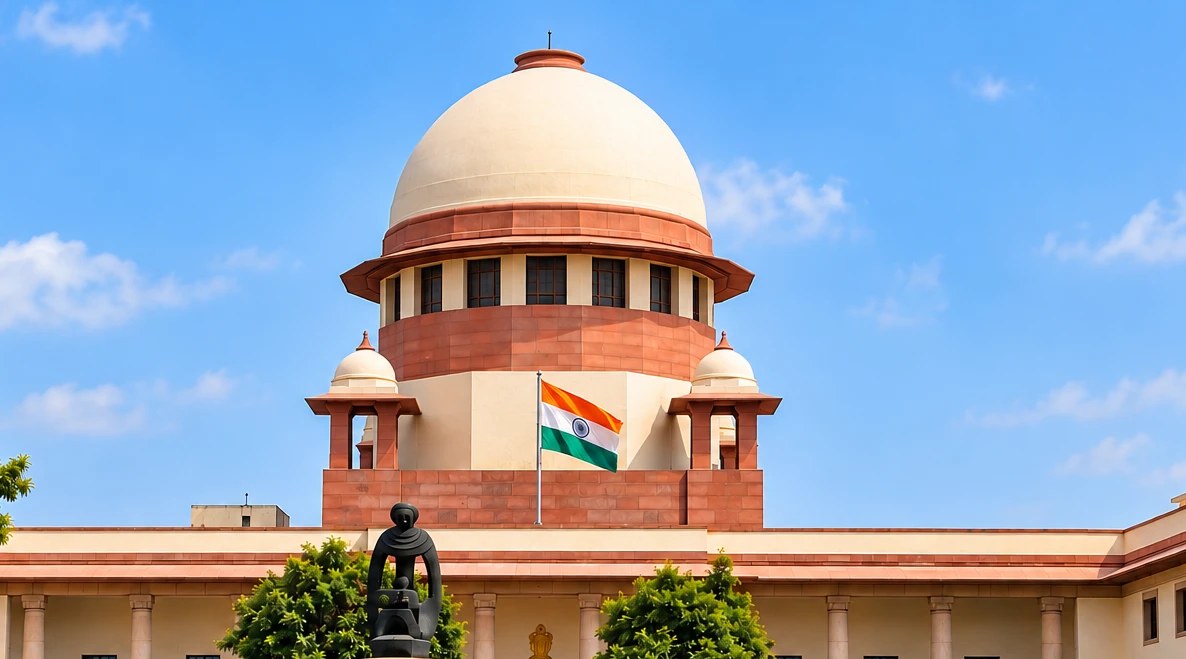
Supreme Court of India
Constitutional Law

Supreme Court Upholds 2016 Demonetisation by 4:1; Justice Nagarathna Dissents on Section 26(2) RBI Act

Published: · NyayVidhan

By a 4:1 majority the Supreme Court upheld the 8 November 2016 notification demonetising Rs 500 and Rs 1,000 notes. The majority held that Section 26(2) of the RBI Act permits demonetising all series, is not excessive delegation, and that the decision-making, proportionality and 52-day exchange window were lawful. Justice Nagarathna held the notification unlawful because the proposal came from the Centre, but only prospectively (majority, para 304; Nagarathna J., para 21).

Supreme Court Upholds 2016 Demonetisation by 4:1; Justice Nagarathna Dissents on Section 26(2) RBI Act

Judgment Intelligence

Reference Answered
Vivek Narayan Sharma v. Union of India
2023 INSC 2
Writ Petition (Civil) No. 906 of 2016 with connected matters
Court
Supreme Court of India
Date of Decision
2 January 2023
Bench
Justice S. Abdul Nazeer, Justice B.R. Gavai, Justice A.S. Bopanna, Justice V. Ramasubramanian and Justice B.V. Nagarathna
Relevant Acts & Sections
Reserve Bank of India Act, 1934 - Section 26(2); Specified Bank Notes (Cessation of Liabilities) Act, 2017 - Sections 3 and 4; Constitution of India - Articles 14, 19, 300A, 141 and 142
Final Outcome

Reference answered by majority on all six questions, upholding the notification; matters to be placed before the appropriate Benches through the Chief Justice, other contentions kept open (majority, paras 304-305).

Source Supreme Court of India, www.sci.gov.in — judgment dated 02.01.2023

Key holdings

  1. 'Any series' in Section 26(2) of the RBI Act includes all series of bank notes (majority, para 304).
  2. The Central Board recommendation is an inbuilt safeguard against excessive delegation (majority, para 304).
  3. The 52-day exchange period was not unreasonable (majority, paras 287-288).
  4. The RBI cannot accept demonetised notes beyond the notified period on its own (majority, para 303).
  5. Nagarathna J.: a Centre-initiated demonetisation needs legislation; her declaration is prospective (para 21).

Case explainer by NyayVidhan: an account of this judgment and the law it laid down, not the court's text. The judgment itself is the authoritative version.

Brief Facts

On 8 November 2016 the Central Government, acting under Section 26(2) of the RBI Act, declared that the existing Rs 500 and Rs 1,000 notes would cease to be legal tender from 9 November 2016; an Ordinance and the 2017 Act followed (majority, paras 1, 6, 8). Many writ petitions were filed here and in High Courts, and this Court barred other courts from hearing such challenges (majority, paras 2, 4). A three-judge Bench framed questions on 16 December 2016 and referred the batch of writ petitions to a Constitution Bench, which reframed six questions (majority, paras 3, 95).

Court's Findings

The majority read 'any' series in Section 26(2) to include all series; earlier demonetisations by statute did not limit the power (paras 158, 304). The power is not excessive delegation, because it is exercised on the recommendation of the RBI's Central Board, an expert body (paras 203-211). The matter was under consultation between the RBI and the Centre for six months, and a proposal from the Centre does not vitiate the process (paras 240, 262). Curbing fake currency, black money, drug trafficking and terror financing had a proper relation to the restrictions, the right in the notes was not taken away, and a 52-day exchange window was reasonable compared with three days in 1978 (paras 276-278, 287-288). The RBI has no independent power to accept notes after the notified period (para 303). Nagarathna J. held that Section 26(2) applies only to a proposal initiated by the Central Board; a demonetisation initiated by the Centre needs an Ordinance or Act, and the RBI's opinion, given within a day, must be independent (Nagarathna J., paras 16, 21).

Legal Principle

Under Section 26(2) of the RBI Act, the Central Government may, on the recommendation of the RBI's Central Board, demonetise all series of bank notes; the power carries an inbuilt safeguard, is not excessive delegation, and its exercise in 2016 met the tests of process, proportionality and reasonableness (majority, para 304).

Precedents Relied Upon

  1. Jayantilal Ratanchand Shah v. Reserve Bank of India (1996) 9 SCC 650
    Relied Upon Discussed at ¶ 285-287

    Upheld the 1978 demonetisation law with a three-day exchange window; the 52-day window in 2016 could not be unreasonable.

  2. Harakchand Ratanchand Banthia v. Union of India (1969) 2 SCC 166
    Distinguished Discussed at ¶ 204

    A provision struck down for excessive delegation under the Gold (Control) Act; Section 26(2) has an inbuilt safeguard in the Central Board recommendation.

  3. State of Gujarat v. Justice R.A. Mehta (Retired) (2013) 13 SCC 1
    Relied Upon Discussed at ¶ 243

    Meaning of effective consultation between authorities.

View all precedents (5)
  1. Modern Dental College and Research Centre v. State of Madhya Pradesh (2016) 7 SCC 353
    Applied Discussed at ¶ 266, 268, 270

    The four-pronged proportionality test.

  2. K.S. Puttaswamy (Retired) v. Union of India (Aadhaar) (2019) 1 SCC 1
    Distinguished Discussed at ¶ 279

    Aadhaar ruling on less restrictive alternatives distinguished on its facts.

NyayVidhan
Court Judgments · 2 min read
Decided: January 2, 2023 Justice S. Abdul Nazeer, Justice B.R. Gavai, Justice A.S. Bo...
PDF
 Join our WhatsApp Group
✕

Try: POCSO, IBC, Electoral Bond, Article 370, NDPS Act, Bail Conditions, SC Contempt