
Latest
Wednesday, October 21, 2026
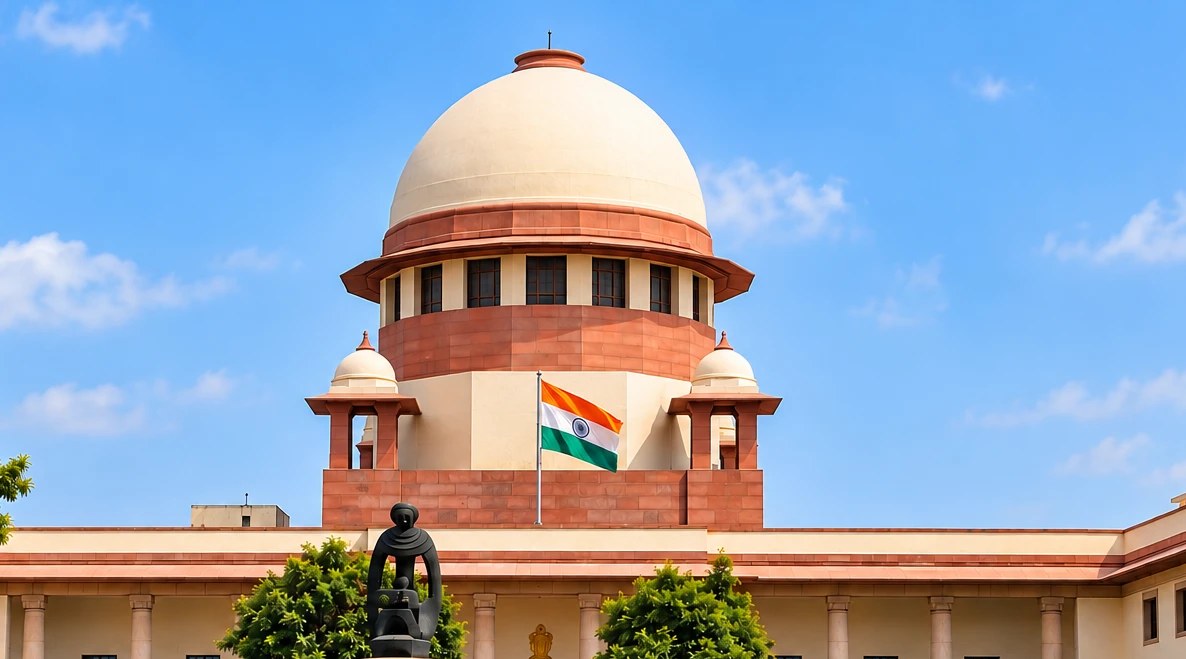
Supreme Court of India
Constitutional Law

Domicile-Based Reservation in PG Medical Seats Violates Article 14: Supreme Court in Tanvi Behl

Published: · NyayVidhan

A three-Judge Bench of the Supreme Court held that domicile or residence-based reservation in admission to PG medical courses within the State quota is constitutionally impermissible because it violates the equality guarantee of Article 14. Institutional preference to a reasonable extent remains valid, and the other State quota seats must be filled on merit in the all-India examination. Residence-based admissions already made in the case were protected (paras 5, 31, 33-34).

Domicile-Based Reservation in PG Medical Seats Violates Article 14: Supreme Court in Tanvi Behl

Judgment Intelligence

Disposed Of
Dr. Tanvi Behl v. Shrey Goel & Ors.
2025 INSC 125
Civil Appeal No. 9289 of 2019 with Civil Appeal Nos. 9290 and 9291 of 2019 and Writ Petition (C) No. 1183 of 2020
Court
Supreme Court of India
Date of Decision
29 January 2025
Bench
Justice Hrishikesh Roy, Justice Sudhanshu Dhulia and Justice S.V.N. Bhatti
Relevant Acts & Sections
Constitution of India - Articles 5, 14, 15 and 16
Final Outcome

Appeal disposed of: the High Court's finding that the 32 UT Chandigarh pool seats were wrongly filled on residence upheld, admissions already made protected, and the connected appeals and writ petition decided in the same terms (paras 33-35).

Source Supreme Court of India, www.sci.gov.in — judgment dated 29.01.2025

Key holdings

  1. Domicile or residence-based reservation in PG medical courses is constitutionally invalid (para 5).
  2. Institutional preference to a reasonable extent in PG admissions remains permissible (paras 16, 33).
  3. There is only one domicile in India; a provincial or State domicile is a misconception (para 24).
  4. Residence-based reservation to a certain degree is still permissible in MBBS admissions (paras 13, 31).
  5. The ruling does not disturb residence-based admissions already granted, including the appellants' (para 34).

Case explainer by NyayVidhan: an account of this judgment and the law it laid down, not the court's text. The judgment itself is the authoritative version.

Brief Facts

Chandigarh's only Government Medical College had 64 State quota PG seats: half for its own MBBS graduates and half for a 'UT Chandigarh pool' open to candidates who had studied there for 5 years, whose parents had resided there, or whose family held property there (para 2). The Punjab and Haryana High Court struck down the residence clauses under Article 14 and directed that the seats be filled by NEET merit (paras 3-4). This Court granted an ad-interim stay on 09.05.2019, keeping admissions already made subject to the outcome, and a Division Bench referred the questions to a larger Bench (paras 4-5).

Court's Findings

The question was settled: Jagadish Saran allowed institutional preference, Pradeep Jain held residence-based reservation in PG seats violative of Article 14, and the Constitution Bench in Saurabh Chaudri followed Pradeep Jain (paras 7-9). Saurabh Chaudri does say Article 15 does not bar residence-based reservation, but that is not a complete reading of it (para 11). At PG level merit cannot be compromised, though some residence-based reservation is permissible for MBBS (paras 13-14). Such reservation runs counter to the idea of citizenship and equality (para 15). Domicile is a legal concept tied to personal law; States often misuse it to mean residence, and there is only one domicile, the domicile of India (paras 19-20, 24). Even though Article 15 does not name residence, a classification between residents and others must still pass Article 14 (para 28). A State may favour residents in MBBS seats given its expense and local needs, but for specialist PG courses such reservation denies equality before the law (paras 29, 31). Later decisions, including Neil Aurelio Nunes, followed Pradeep Jain (para 32).

Legal Principle

Reservation of PG medical seats on the basis of domicile or residence in a State or Union Territory violates Article 14; apart from a reasonable number of institution-based seats, State quota seats must be filled strictly on merit in the all-India examination (paras 5, 31, 33).

Precedents Relied Upon

  1. Jagadish Saran v. Union of India (1980) 2 SCC 768
    Relied Upon Discussed at ¶ 6, 7

    Institutional preference in PG medical admissions is permissible to a reasonable extent, with merit decisive at higher levels.

  2. Dr. Pradeep Jain v. Union of India (1984) 3 SCC 654
    Relied Upon Discussed at ¶ 8, 29

    Residence-based reservation in PG medical seats violates Article 14, though permissible to a degree for MBBS.

  3. Saurabh Chaudri v. Union of India (2003) 11 SCC 146
    Explained Discussed at ¶ 9, 16

    The Constitution Bench followed Pradeep Jain on residence-based PG reservation while upholding institutional preference.

View all precedents (6)
  1. Magan Mehrotra and Ors. v. Union of India (UOI) and Ors. (2003) 11 SCC 186
    Referred To Discussed at ¶ 32

    One of the decisions that followed Pradeep Jain on residence-based reservation.

  2. Neil Aurelio Nunes (OBC Reservation) and Others v. Union of India and Others (2022) 4 SCC 1
    Referred To Discussed at ¶ 32

    One of the decisions that followed Pradeep Jain on residence-based reservation.

  3. D.P. Joshi v. State of Madhya Pradesh AIR 1955 SC 334
    Referred To Discussed at ¶ 28

    'Place of birth' in Article 15 and 'residence' are different concepts.

NyayVidhan
Court Judgments · 2 min read
Decided: January 29, 2025 Justice Hrishikesh Roy, Justice Sudhanshu Dhulia and Justice...
PDF
 Join our WhatsApp Group
✕

Try: POCSO, IBC, Electoral Bond, Article 370, NDPS Act, Bail Conditions, SC Contempt