
Latest
Wednesday, October 21, 2026
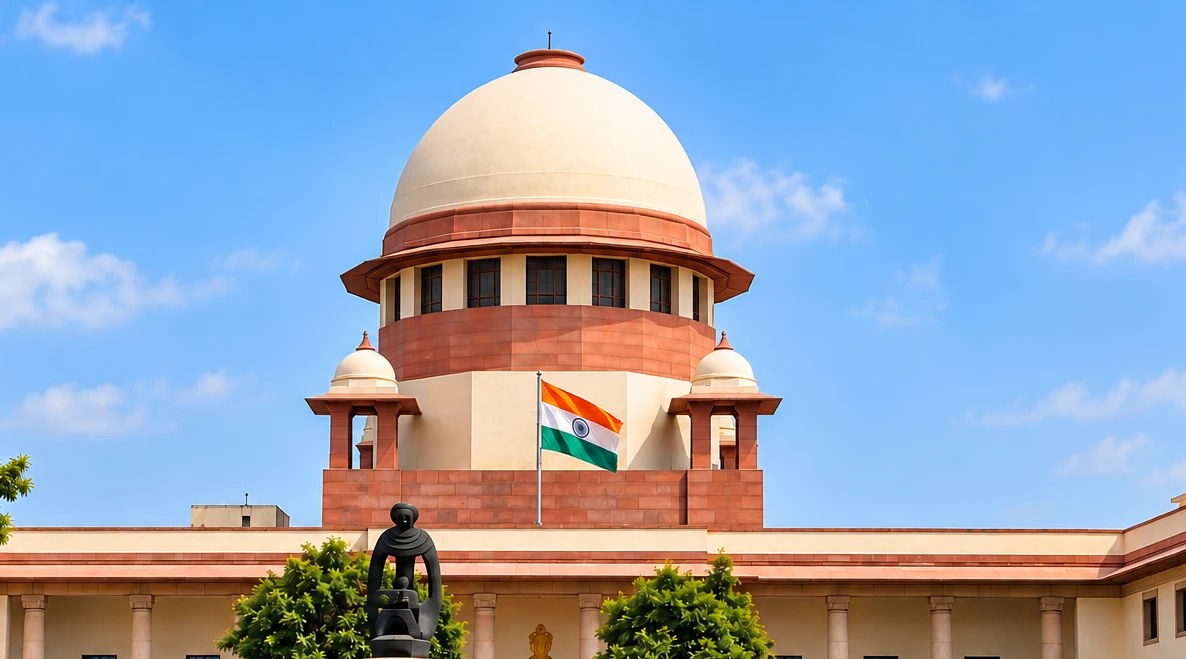
Supreme Court of India
Constitutional Law

Expulsion of a Legislator Is Open to Judicial Review for Proportionality: Supreme Court Reinstates Bihar MLC

Published: · NyayVidhan

The Supreme Court held that Article 212(1) shields only the procedure of proceedings in a Legislature, not its decisions, so an Ethics Committee's recommendation to expel a member is open to judicial review, including review of whether the punishment is proportionate. Finding the expulsion of a Bihar MLC for remarks against the Chief Minister excessive, the Court used Article 142, treated the almost seven months of expulsion undergone as suspension and ordered his reinstatement (paras 23, 62, 77, 82, 85-86).

Expulsion of a Legislator Is Open to Judicial Review for Proportionality: Supreme Court Reinstates Bihar MLC

Judgment Intelligence

Petition Allowed
Dr. Sunil Kumar Singh v. Bihar Legislative Council (Through Secretary) and Ors.
2025 INSC 264
Writ Petition (Civil) No. 530 of 2024
Court
Supreme Court of India
Date of Decision
25 February 2025
Bench
Justice Surya Kant and Justice Nongmeikapam Kotiswar Singh
Relevant Acts & Sections
Constitution of India - Articles 14, 21, 32, 142, 208 and 212; Bihar Vidhan Parishad - Rules of Procedure and Conduct of Business - Rule 10, Chapter 36
Final Outcome

Writ petition allowed and disposed of: the report and notification set aside only as to the punishment, the period undergone deemed suspension, the petitioner reinstated without remuneration for that period, and the bye-election Press Note of 30.12.2024 quashed (paras 88-89).

Source Supreme Court of India, www.sci.gov.in — judgment dated 25.02.2025

Key holdings

  1. Article 212(1) protects only proceedings in the Legislature from challenge for irregularity of procedure (para 15).
  2. An Ethics Committee's expulsion recommendation is administrative and open to judicial review (paras 17, 19).
  3. There is no absolute bar on courts examining the proportionality of a punishment imposed by the House (para 62).
  4. Courts may weigh obstruction caused, disrepute, remorse, prior conduct and lesser measures (para 64).
  5. The expulsion already undergone was treated as suspension and as sufficient punishment (para 86).

Case explainer by NyayVidhan: an account of this judgment and the law it laid down, not the court's text. The judgment itself is the authoritative version.

Brief Facts

The petitioner, an RJD member of the Bihar Legislative Council and the party's Chief Whip there, and another member were accused of raising slogans against and mocking the Chief Minister in the House on 13.02.2024 (para 2). The other member appeared before the Ethics Committee and expressed regret; the petitioner sought repeated exemptions and, on first appearing on 12.06.2024, questioned the Committee's authority (para 2). The Committee preponed the next hearing without notice and recommended his expulsion, and two days' suspension for the other member (para 2). The House accepted this on 26.07.2024 and a bye-election was later announced (para 2).

Court's Findings

Article 212(1) bars inquiry only into proceedings in the Legislature for irregularity of procedure and does not oust judicial review of its decisions for illegality or unconstitutionality (paras 11, 15). The Ethics Committee's recommendation was an administrative act enforcing discipline under Rules framed under Article 208, not a legislative function (para 17). Following Ashish Shelar, such action is reviewable if unconstitutional, grossly illegal, irrational or arbitrary (para 19). Proportionality is a settled ground across service, administrative, constitutional and criminal law (paras 28-45). Expulsion is a grave measure, as Raja Ram Pal cautioned, and leaves the constituency unrepresented (paras 57-58). The Court listed indicative factors, including the obstruction caused, previous and subsequent conduct, and lesser measures available (para 64). The petitioner's conduct was abhorrent and his defiance of the Committee egregious (para 68). Yet the House should show magnanimity, and its Rules permit censure, reprimand or suspension (paras 71, 74). Expulsion was therefore excessive and disproportionate (para 77). As a remand would be protracted and his term ends in 2026, Article 142 was invoked to substitute the penalty (paras 82-85).

Legal Principle

Disciplinary action by a House against its member, such as expulsion on an Ethics Committee's recommendation, is not protected by Article 212(1); courts may test whether the punishment is proportionate, ordinarily remitting the penalty to the authority, though this Court may itself substitute it under Article 142 (paras 23, 62, 79-81).

Precedents Relied Upon

  1. Ashish Shelar and Ors. v. Maharashtra Legislative Assembly and Anr. (2022) 12 SCC 273
    Relied Upon Discussed at ¶ 19, 56

    A House's disciplinary measure against a member is open to judicial review if unconstitutional, grossly illegal, irrational or arbitrary.

  2. Raja Ram Pal v. The Hon’ble Speaker of Lok Sabha & Ors. (2007) 3 SCC 184
    Relied Upon Discussed at ¶ 57

    The Legislature may expel a member, but expulsion is a grave measure that should not normally be taken.

  3. Dev Singh v. Punjab Tourism Development Corporation Ltd. & Anr. (2003) 8 SCC 9
    Referred To Discussed at ¶ 30

    A dismissal for losing an official file was reduced as disproportionate to the misconduct.

View all precedents (6)
  1. Modern Dental College & Research Centre & Ors. v. State of M.P. & Ors. (2016) 7 SCC 353
    Referred To Discussed at ¶ 34

    The proportionality test used to judge the vires of legislative and executive action.

  2. Ranjit Thakur v. Union of India & Ors. (1987) 4 SCC 611
    Referred To Discussed at ¶ 75

    Punishment disproportionate to the offence violates Articles 14 and 21.

  3. B.C. Chaturvedi v. Union of India and Ors. 1995 (6) SCC 749
    Relied Upon Discussed at ¶ 81

    This Court may itself substitute a disproportionate punishment where the facts so warrant.

NyayVidhan
Court Judgments · 3 min read
Decided: February 25, 2025 Justice Surya Kant and Justice Nongmeikapam Kotiswar Singh
PDF
 Join our WhatsApp Group
✕

Try: POCSO, IBC, Electoral Bond, Article 370, NDPS Act, Bail Conditions, SC Contempt