
Judgment Intelligence
Petition AllowedSubhash Saini v. State of Rajasthan & Anr.
S.B. Criminal Writ Petition No. 51/2016
- Court
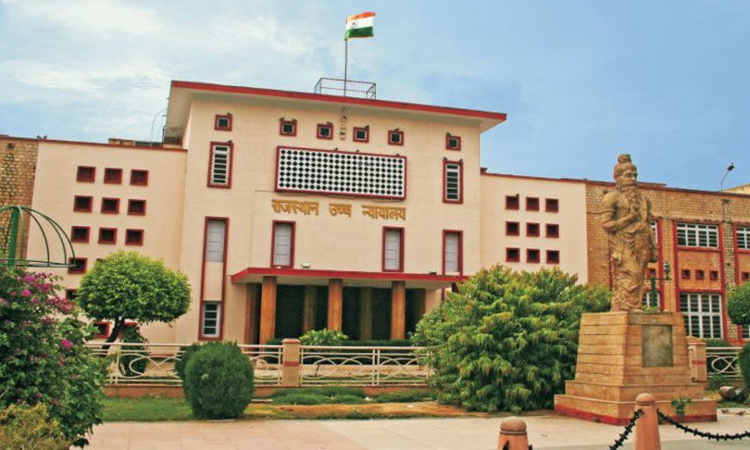
- Rajasthan High Court
- Date of Decision
- 12 March 2026
- Bench
- Justice Anoop Kumar Dhand
- Relevant Acts & Sections
- Constitution of India — Articles 20(3), 21; Indian Penal Code, 1860 — Sections 363, 366 (offences in the FIR)
Final Outcome
Writ petition allowed. The Judicial Magistrate's order of 18.05.2015 permitting the narco-analysis test and the order of 09.07.2015 refusing withdrawal of consent were both quashed and set aside; pending applications were disposed of (paras 19-20).
Key holdings
- No one may be forcibly subjected to narco-analysis; even consented test results are not admissible as evidence (para 10).
- Consent must be free, informed and voluntary, and under the Selvi/NHRC guidelines it is recorded before a Judicial Magistrate (paras 3, 10).
- A suspect has the full right to deny consent before or during the recording (paras 15-16).
- Consent once given is not irrevocable; refusing its withdrawal amounts to a forced test that violates Articles 20(3) and 21 (para 18).
- Even an accused who seeks a narco test has no indefeasible right to it; the court must weigh free consent and safeguards (paras 13-14).
Brief Facts
An FIR (No. 375/2014) was registered at Police Station Chirawa, District Jhunjhunu, under Sections 363 and 366 IPC. The investigating officer asked the Judicial Magistrate, Chirawa, for permission to conduct a narco-analysis test on the petitioner, who consented. On 18.05.2015 the Magistrate allowed the application and directed him to appear for the test on 23.05.2015 (para 6). On 06.07.2015 he applied to withdraw his consent, saying he could not be compelled to be a witness against himself; it was rejected on 09.07.2015 (paras 5, 7). The Public Prosecutor argued that consent, once given, could not be revoked (para 8). The question was whether consent to the test can be withdrawn before it is administered (para 4).
Court's Findings
The order opens with a discussion of the right to remain silent, rooted in the maxim "nemo debet prodere ipsum" and guaranteed by Article 20(3) (opening paragraphs). Consent to a narco test must be free, informed and voluntary (para 3). Under the larger-bench ruling in Selvi, no one may be forcibly subjected to these techniques, and even the results of a consented test cannot be admitted in evidence; the Court reproduced Selvi's conclusions with the NHRC guidelines, which require consent to be recorded before a Judicial Magistrate (para 10). The Magistrate had refused the withdrawal not on merits but on the technical ground that the petitioner had consented himself (para 11). Under Amlesh Kumar v. State of Bihar, even an accused who seeks a narco test has no indefeasible right to it; the court must weigh free consent and safeguards (paras 12-14). A suspect has the full right to deny consent before or during the recording, so the test cannot be conducted against his will (paras 15-16). An involuntary test suppresses free will, and anything obtained from it is inadmissible (para 17). Refusing the withdrawal would therefore amount to a forced test (para 18).
Legal Principle
Consent to a narco-analysis test is not irrevocable. An accused who agreed to the test may withdraw that consent before it is administered and cannot then be compelled to undergo it; conducting it against his will would violate the right against self-incrimination under Article 20(3) and personal liberty under Article 21 (paras 16-18).
Precedents Relied Upon
- Smt. Selvi & Ors. v. State of Karnataka AIR 2010 SC 1974
No individual may be forcibly subjected to narco-analysis, polygraph or brain-mapping techniques; even results of a consented test are not admissible as evidence, and the NHRC guidelines (consent recorded before a Judicial Magistrate, access to a lawyer) must be followed.
- Amlesh Kumar v. The State of Bihar Special Leave to Petition (Criminal) No.5392/2024, decided on 09.06.2025
An accused may voluntarily undergo a narco-analysis test at an appropriate stage, but has no indefeasible right to it; the court must consider the totality of circumstances, such as free consent and appropriate safeguards.
