Join our WhatsApp Group
Breaking
Sunday, October 11, 2026 Jaipur Edition
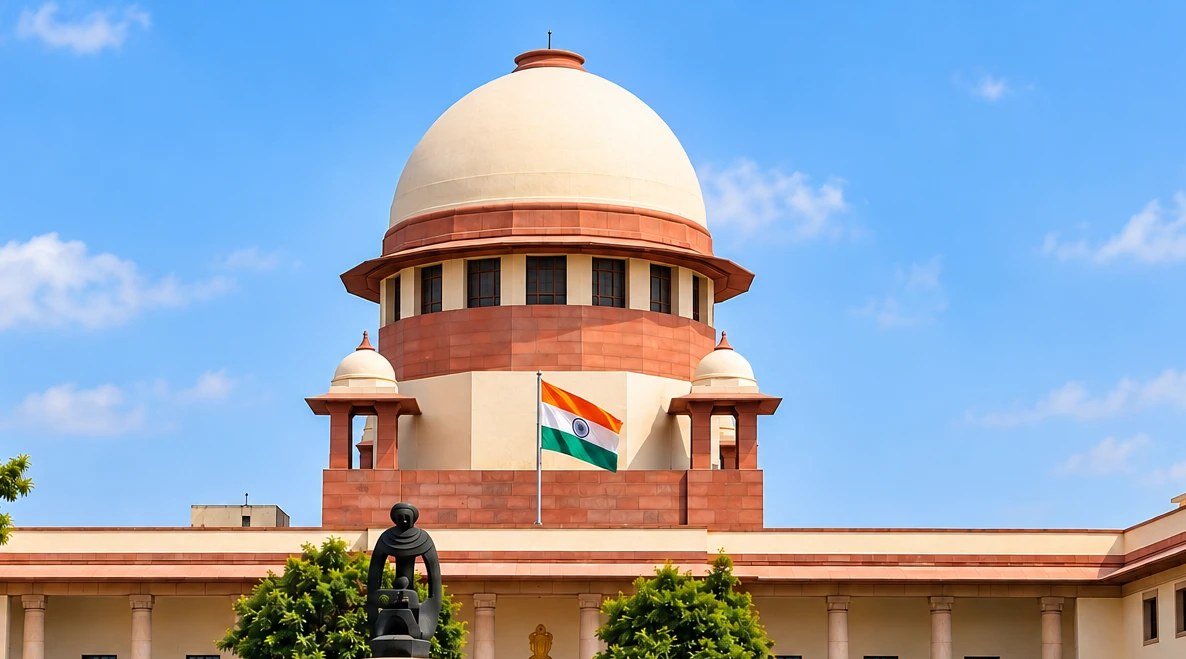
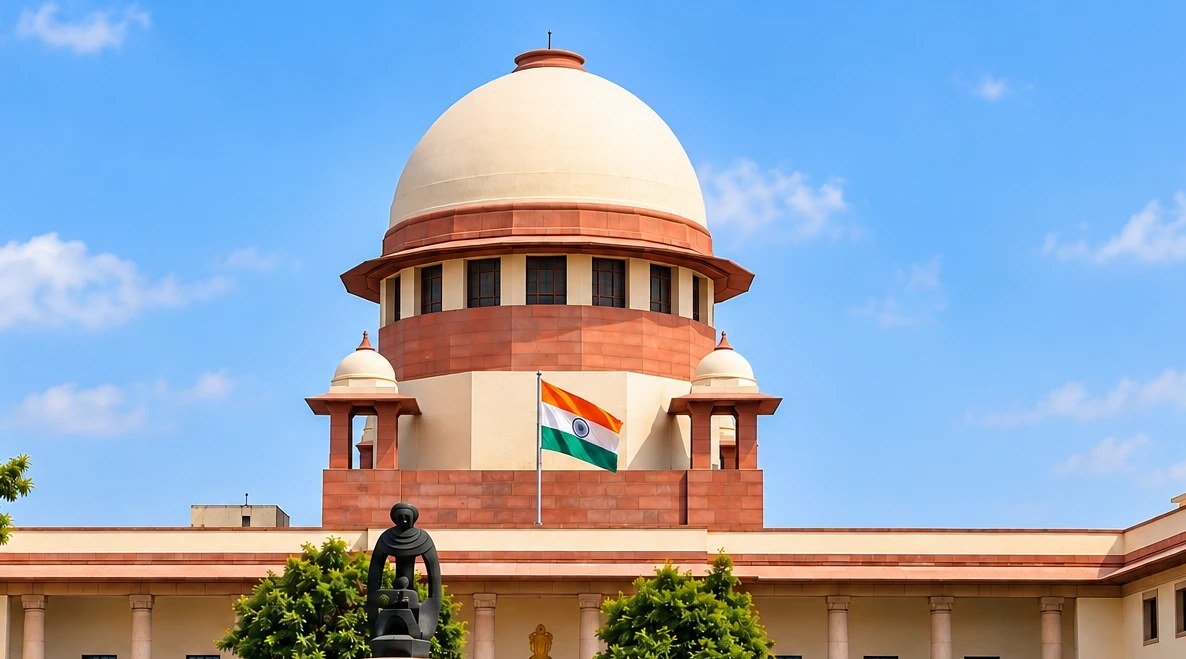
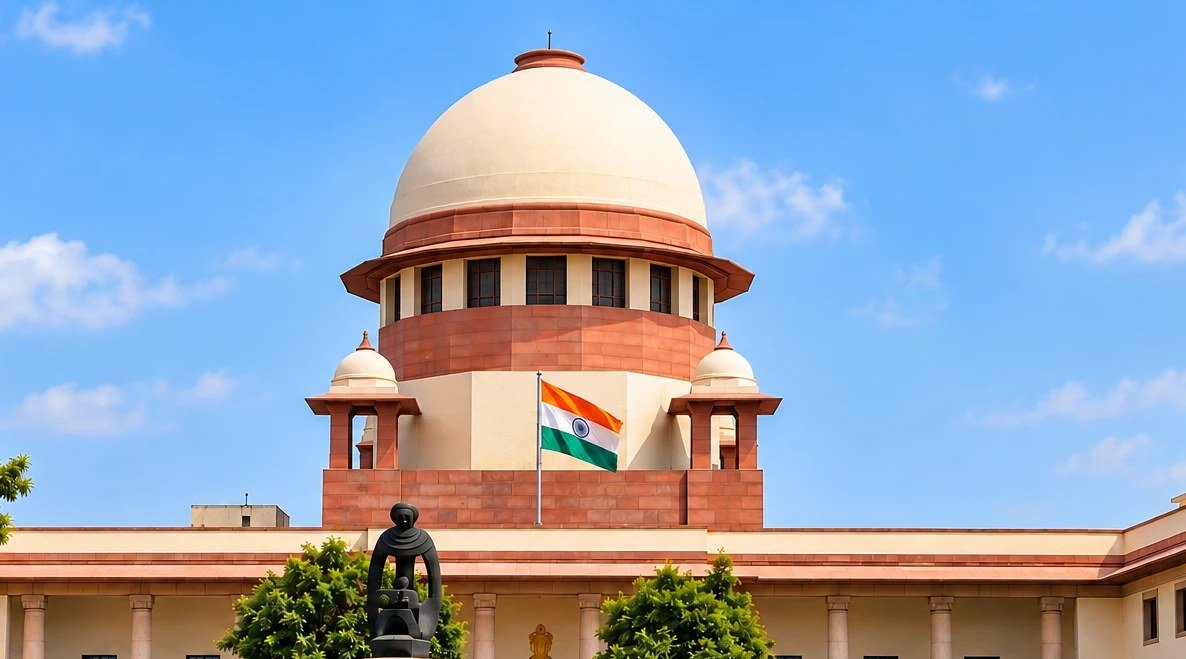
Supreme Court of India
Criminal Law

Investigation in Breach of Section 5A PC Act Vitiates Trial Only on Prejudice: Supreme Court

Published: · NyayVidhan

The Supreme Court restored a booking clerk's conviction under Section 5(2) of the Prevention of Corruption Act, 1947. A Sub-Inspector had investigated before getting a magistrate's permission under Section 5A, but a fresh investigation followed and no prejudice was shown; "there must be a sufficient nexus, either established or probabilized, between the conviction and the irregularity in the investigation" (paras 10-12). Justice Mudholkar held the preliminary enquiry was not investigation at all (para 16).

Investigation in Breach of Section 5A PC Act Vitiates Trial Only on Prejudice: Supreme Court

Judgment Intelligence

Acquittal Set Aside
The State of Uttar Pradesh v. Bhagwant Kishore Joshi
Criminal Appeal No. 171 of 1961; reported as AIR 1964 SC 221 and [1964] 3 SCR 71
Court
Supreme Court of India
Date of Decision
17 April 1963
Bench
Justices K. Subba Rao, Raghubar Dayal and J.R. Mudholkar
Relevant Acts & Sections
Prevention of Corruption Act, 1947 — Sections 5(1)(c), 5(2), 5A; Code of Criminal Procedure, 1898 — Sections 4(1), 154, 156, 157, 537
Final Outcome

The appeal was allowed, the High Court's order was set aside, and the respondent was convicted under Section 5(2) of the Act and sentenced to one year's rigorous imprisonment (paras 12-13).

Key holdings

  1. An officer in charge of a police station may begin investigation on information or otherwise; receiving information is not a condition precedent (para 8).
  2. Going to the spot on precise information and checking records to detect the crime is investigation within Section 4(1) of the 1898 Code (paras 8-9).
  3. Section 5A safeguards must be strictly complied with, but a breach at the first stage, followed by a fresh investigation after permission, does not invalidate the trial without prejudice (paras 9-11).
  4. To set aside a conviction there must be a sufficient nexus between the irregularity in investigation and the conviction, or the accused must have been hampered in his defence (para 11).
  5. Justice Mudholkar: preliminary enquiries to check information from an anonymous or doubtful source are not investigation (para 16).

Brief Facts

The respondent, a railway booking clerk, was alleged to have misappropriated Rs. 49/1/0 between October 1955 and May 1956 (para 2). On a source report, a Sub-Inspector of the Special Police Establishment checked railway records and reported the information correct; only later did he obtain the Additional District Magistrate's permission under Section 5A, which bars officers below Deputy Superintendent from investigating without a magistrate's order (paras 7, 9). The Special Judge convicted the respondent and sentenced him to one year's rigorous imprisonment; the Allahabad High Court acquitted him, holding that the earlier unauthorised investigation had seriously prejudiced him (paras 1-2). The State appealed (para 2).

Court's Findings

Justice Subba Rao, for himself and Justice Dayal, held that an officer in charge of a police station can start investigation "either on information or otherwise" (para 8). Going to the spot on precise information and checking records was investigation under Section 4(1) CrPC, so the Sub-Inspector investigated before obtaining permission (paras 8-9). The Section 5A safeguards "must be strictly complied with" (para 9), but after permission he "started practically a fresh investigation" (para 10). The question "is not whether in investigating an offence the police have disregarded the provisions of the Act, but whether the accused has been prejudiced by such disregard in the matter of his defence at the trial" (para 11). The accused must raise a reasonable doubt that the evidence was shaped by the irregularity, or show he was prevented from putting forward his defence (para 11). The High Court ignored Section 537 CrPC; the trial was fair (paras 11-12). Justice Mudholkar agreed on the result and on prejudice, but held that preliminary enquiries to check information were not investigation, so Section 5A was not violated (paras 13, 16).

Legal Principle

An investigation made in breach of a statutory safeguard such as Section 5A of the Prevention of Corruption Act does not by itself vitiate the trial. Under Section 537 of the 1898 Code a conviction is set aside only if the accused shows prejudice, linking the irregularity to the conviction or to his defence (paras 11-12).

Precedents Relied Upon

  1. H.N. Rishbud and Inder Singh v. The State of Delhi [1955] 1 S.C.R. 1150
    Applied Discussed at ¶ 8, 16

    Investigation under Chapter XIV of the Code generally consists of proceeding to the spot, ascertaining the facts, discovering and arresting the offender, collecting evidence and forming an opinion on whether to file a charge-sheet.

  2. In re Nanumuri Anandayya A.I.R. 1915 Mad. 312
    Distinguished Discussed at ¶ 8

    Cited for the State: an informal enquiry on a vague telegram was not investigation under Section 157; held wide of the mark where the information was precise.

  3. In re Rangarajulu A.I.R. 1958 Mad. 368
    Distinguished Discussed at ¶ 8

    Cited for the State: describes the stages before first information is recorded and investigation starts; restates that vague information or rumour is not information under Section 154.

View all precedents (5)
  1. The State of Kerala v. M.J. Samuel I.L.R. 1960 Kerala 783
    Distinguished Discussed at ¶ 8

    Cited for the State: not every vague, indefinite or unauthenticated piece of information must be recorded as the First Information; decided on Section 154, not on whether an investigation was made.

  2. The State of Madhya Pradesh v. Mubarak Ali [1959] Supp. 2 S.C.R. 201
    Relied Upon Discussed at ¶ 9

    Section 5A was inserted to protect public servants against harassment and victimisation; its safeguards must be strictly complied with as a guarantee against frivolous and vexatious prosecution.
NyayVidhan
Court Judgments · 3 min read
Decided: April 17, 1963 Justices K. Subba Rao, Raghubar Dayal and J.R. Mudholkar
PDF
WhatsApp Telegram X / Twitter LinkedIn

✕

Popular: POCSO, IBC, Electoral Bond, Article 370, NDPS Act, Bail Conditions, SC Contempt