
Latest
Wednesday, October 21, 2026
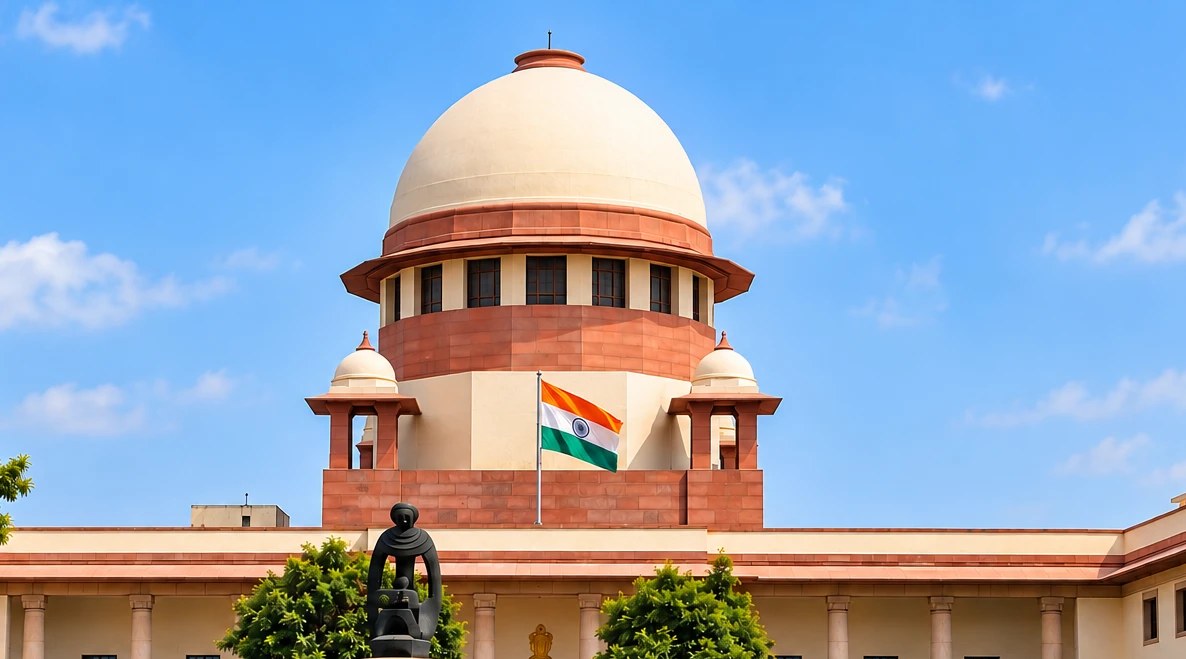
Supreme Court of India
Criminal Law

SC/ST Act Bar on Anticipatory Bail Applies Only If Complaint Makes Out Prima Facie Offence: Supreme Court

Published: · NyayVidhan

The Supreme Court held that Section 18 of the SC/ST (Prevention of Atrocities) Act does not absolutely bar anticipatory bail: it applies only where the complaint prima facie discloses every ingredient of an offence under the Act. An insult to a Scheduled Caste member is an offence under Section 3(1)(r) only if it is because of caste, and the Court granted pre-arrest protection to a YouTube channel editor (paras 41, 48, 60, 88-89).

SC/ST Act Bar on Anticipatory Bail Applies Only If Complaint Makes Out Prima Facie Offence: Supreme Court

Judgment Intelligence

Bail Granted
Shajan Skaria v. The State of Kerala & Anr.
2024 INSC 625
Criminal Appeal No. 2622 of 2024
Court
Supreme Court of India
Date of Decision
23 August 2024
Bench
Justice J.B. Pardiwala and Justice Manoj Misra
Relevant Acts & Sections
Scheduled Castes and Scheduled Tribes (Prevention of Atrocities) Act, 1989 - Sections 3(1)(r), 3(1)(u) and 18; Code of Criminal Procedure, 1973 - Sections 41, 60A and 438; Kerala Police Act - Section 120(o)
Final Outcome

Appeal allowed and the High Court's order set aside; if arrested in FIR No. 899 of 2023, the appellant is to be released on bail on terms the Investigating Officer may impose (paras 88-89).

Source Supreme Court of India, www.sci.gov.in — judgment dated 23.08.2024

Key holdings

  1. Section 18 is not an absolute bar; courts must first see whether a prima facie case exists (paras 41, 48).
  2. A vendetta plea against a complaint that does disclose an offence lies under Section 482 CrPC or Article 226, not Section 438 (para 49).
  3. Where the complaint rests on online videos, courts may also read that material (para 52).
  4. Knowledge that the victim belongs to a Scheduled Caste does not by itself attract Section 3(1)(r) (para 80).
  5. Section 3(1)(u) targets enmity against Scheduled Castes or Tribes as a group, not attacks on one individual (para 77).

Case explainer by NyayVidhan: an account of this judgment and the law it laid down, not the court's text. The judgment itself is the authoritative version.

Brief Facts

The appellant, editor of the online news channel Marunandan Malayali, published a YouTube video on 24.05.2023 levelling allegations against a Kerala MLA elected from a seat reserved for the Scheduled Castes (paras 2-3). The MLA complained that the video was meant to humiliate him as a member of the Pulaya community, and FIR No. 899 of 2023 was registered under Sections 3(1)(r) and 3(1)(u) of the Act and the Kerala Police Act (paras 3-5). The Special Judge refused anticipatory bail, holding that the bar of Section 18 applied, and the Kerala High Court affirmed that order on 30.06.2023 (paras 6-7).

Court's Findings

Section 18 excludes anticipatory bail because offenders may intimidate victims, and its validity was upheld in Ram Krishna Balothia (paras 24, 27). Yet it is no absolute fetter: it bars the remedy only where a valid arrest could be made under Section 41 read with Section 60A CrPC, which needs prima facie material (paras 41, 46). If a first reading of the complaint does not disclose the ingredients of an offence under the Act, the bar does not apply (paras 47-48). Courts must decide that with an independent judicial mind, not swayed by the provisions named in the FIR (para 50). Section 3(1)(r) needs intentional insult or intimidation, with intent to humiliate, in public view (para 55). Such insult is punishable only when it is on the ground of caste, tied to untouchability or notions of caste superiority (paras 58, 60-61). The video targeted the MLA alone and was at best defamation (paras 74, 77). Mere knowledge of the victim's caste is not enough, unlike clauses that say so expressly (paras 79-80). The High Court never asked whether the insult was because of caste (para 81).

Legal Principle

Section 18 of the SC/ST Act excludes anticipatory bail only where the complaint, read with the material it relies on, prima facie discloses all ingredients of an offence under the Act; an insult or intimidation is an offence under Section 3(1)(r) only if it is aimed at the victim because of caste (paras 48, 52, 60).

Precedents Relied Upon

  1. Prathvi Raj Chauhan v. Union of India (2020) 4 SCC 727
    Relied Upon Discussed at ¶ 32, 35

    The bar of Sections 18 and 18-A does not apply where the complaint makes out no prima facie case under the Act.

  2. Vilas Pandurang Pawar and Another v. State of Maharashtra and Others (2012) 8 SCC 795
    Relied Upon Discussed at ¶ 37, 38

    Despite the Section 18 bar, courts must verify the complaint to see whether an offence is prima facie made out.

  3. Hitesh Verma v. State of Uttarakhand (2020) 10 SCC 710
    Relied Upon Discussed at ¶ 59

    Insult or intimidation is an offence under Section 3(1)(r) only if it is on account of the victim's caste.

View all precedents (5)
  1. Ramesh Chandra Vaishya v. State of Uttar Pradesh & Anr. 2023 SCC OnLine SC 668
    Relied Upon Discussed at ¶ 73

    An insult attracts the provision only if it is laced with casteist remarks.

  2. State of Madhya Pradesh v. Ram Krishna Balothia (1995) 3 SCC 221
    Referred To Discussed at ¶ 25

    Section 18 does not violate Articles 14 and 21 of the Constitution.

NyayVidhan
Court Judgments · 3 min read
Decided: August 23, 2024 Justice J.B. Pardiwala and Justice Manoj Misra
PDF
 Join our WhatsApp Group
✕

Try: POCSO, IBC, Electoral Bond, Article 370, NDPS Act, Bail Conditions, SC Contempt