
Join our WhatsApp Group
Latest
Saturday, October 17, 2026
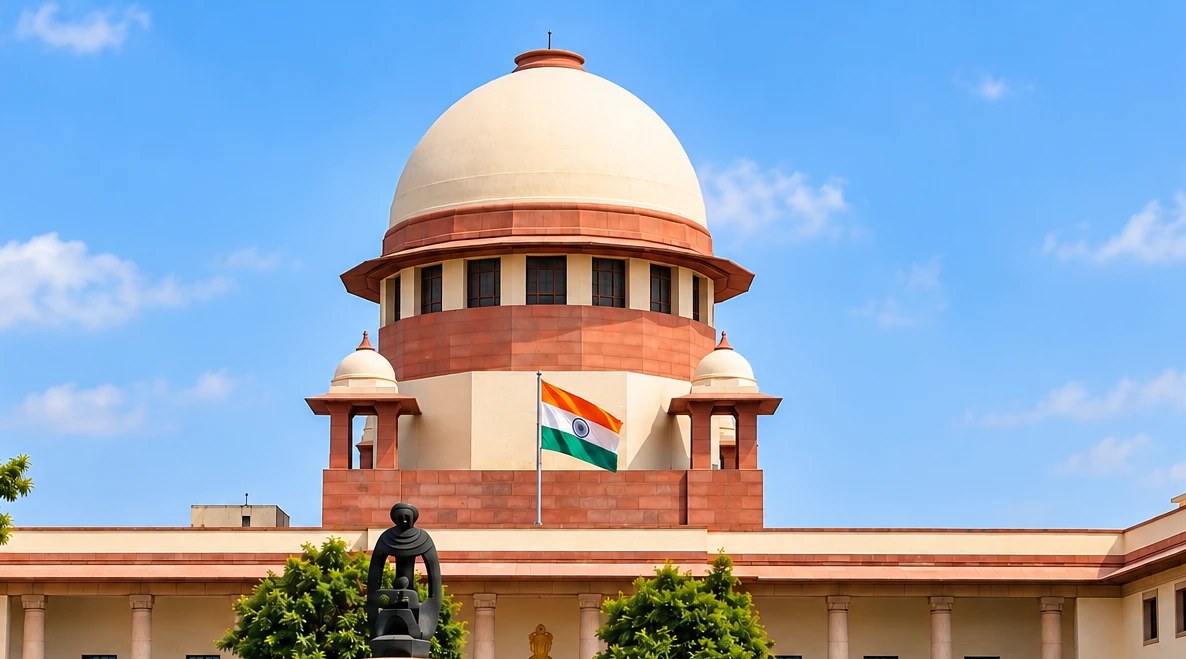
Supreme Court of India
Supreme Court

Chandigarh Could Cancel Auction Before Conveyance to Get Better Price: Supreme Court Orders Fresh E-Auction

Published: · NyayVidhan

The Supreme Court held that an auction of public land creates no enforceable contract until the conveyance deed is executed, so the Chandigarh Administration could cancel Bedi Hospital's Rs.12.58 crore winning bid for a nursing home site after the identical adjacent site fetched Rs.18.25 crore. It set aside the High Court's order reviving the bid but, because the High Court's interim order had muddled matters, directed a fresh e-auction within three months (paras 19-20, 24, 27-28).

Chandigarh Could Cancel Auction Before Conveyance to Get Better Price: Supreme Court Orders Fresh E-Auction

Judgment Intelligence

Petition Allowed
Satinder Pal Singh & Ors. v. Bedi Hospital & Ors. (with the Chandigarh Administration's appeal)
2026 INSC 1142
Civil Appeal No. 13855 of 2026 (arising out of SLP No. 33791 of 2025) with Civil Appeal arising out of SLP No. 33793 of 2025
Court
Supreme Court of India
Date of Decision
16 October 2026
Bench
Justices Pamidighantam Sri Narasimha and Alok Aradhe
Relevant Acts & Sections
Chandigarh Estate Rules, 2007 — Rule 5; Capital of Punjab (Development and Regulation) Act, 1952 — Sections 3, 22; Indian Contract Act, 1872 — Section 2(h)
Final Outcome

Appeals allowed and the High Court's judgment of 01.04.2025 set aside. The Chandigarh Administration must hold a fresh e-auction of Site No. 4, Sector 33C, under the Chandigarh Estate Rules, 2007, starting and ending within three months; no costs (paras 28-29).

Key holdings

  1. An agreement to sell under Rule 5(iv) of the Chandigarh Estate Rules, 2007 is not an enforceable contract; the contract is concluded on execution of the conveyance deed (para 19).
  2. Before the contract is concluded, a public authority may revisit an auction to maximise the price, a substantially lower bid being a relevant consideration (para 20).
  3. Cancellation with stated reasons, full refund and an invitation to bid again is neither arbitrary nor a breach of natural justice (para 21).
  4. A court that permits a re-auction by an interim order must weigh the rights that re-auction creates when it finally decides the case (para 24).

Judgment digest by NyayVidhan: a summary of the court's judgment, not its text. The judgment itself is the authoritative version.

Brief Facts

In an October 2022 e-auction of two nursing home sites in Sector 33C, Chandigarh, each of 744.44 sq. yards with a reserve price of Rs.6.91 crore, the appellant won Site No. 3 at Rs.18.25 crore and Bedi Hospital Site No. 4 at Rs.12.58 crore (paras 3-4). Bedi Hospital paid the full price, but on 27.01.2023 the Administration cancelled its bid as not reflecting the market trend, refunded the money and later cancelled the agreement to sell (paras 5-9). The High Court let a re-auction proceed; the appellant won it at Rs.18.30 crore, Bedi Hospital not bidding, yet the High Court then quashed the cancellations (paras 10, 12).

Court's Findings

Rule 5 of the Chandigarh Estate Rules, 2007 and the auction terms let the Estate Officer withdraw a site and reject the highest bid without reasons (paras 15-17). An agreement to sell under Rule 5(iv) is not an enforceable contract; the contract is concluded only when the conveyance deed is executed, so until then the Administration may cancel (para 19). Its only limit is the public-law duty not to act arbitrarily; revisiting an auction to maximise the price of public property is justified, and a substantially lower price is a relevant consideration (para 20). Shishir Realty, on cancelling executed leases, and Golden Food Products, on cancellation without intimation, were distinguished: here reasons were given, the money refunded the same day and Bedi Hospital invited to bid again (para 21). But the High Court's interim permission for a re-auction, followed by a final order that ignored it, opened a second phase of litigation, and the Rs.6 crore difference could not be ignored (paras 24-25).

Legal Principle

In an auction of public property, no enforceable contract arises until the conveyance deed is executed. Until then the authority may, without acting arbitrarily, cancel the highest bid and re-auction to secure a better price, since maximising the price of public property is a legitimate public purpose (paras 19-20).

Precedents Relied Upon

  1. Chairman and Managing Director, SIPCOT, Madras v. Contromix Pvt. Ltd. (1995) 4 SCC 595
    Relied Upon Discussed at ¶ 20

    In the sale of public property the dominant consideration is to secure the best price, through maximum public participation.

  2. Vice-Chairman and Managing Director, City and Industrial Development Corporation of Maharashtra Ltd. v. Shishir Realty Pvt. Ltd. (2022) 16 SCC 527
    Distinguished Discussed at ¶ 21

    Relied on by the High Court; it concerned unilateral cancellation of executed lease deeds for violations that were not found, not an auction recalled before the contract was concluded.

  3. Golden Food Products India v. State of Uttar Pradesh
    Distinguished Discussed at ¶ 21

    An auction has sanctity and the highest bid can be discarded only for valid reasons; there the allotment was cancelled without intimation, in breach of natural justice and transparency (cited in the judgment as "2026 SCC OnLine 24").

NyayVidhan
Court Judgments · 2 min read
Decided: October 16, 2026 Justices Pamidighantam Sri Narasimha and Alok Aradhe
PDF
WhatsApp Telegram X / Twitter LinkedIn

✕

Try: POCSO, IBC, Electoral Bond, Article 370, NDPS Act, Bail Conditions, SC Contempt