
Join our WhatsApp Group
Breaking
Wednesday, October 7, 2026 Jaipur Edition
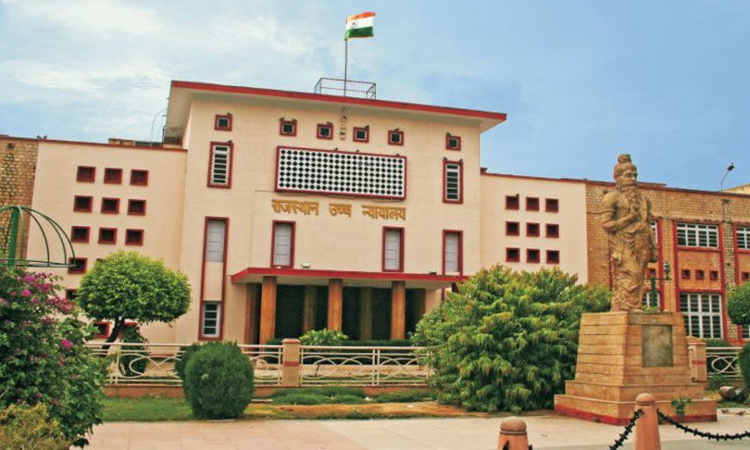
Rajasthan High Court
Labour Law

Rajasthan High Court Upholds Cancellation of 2021 Sub-Inspector Exam Over Systemic Paper Leak

Published: · NyayVidhan

A Division Bench of the Rajasthan High Court upheld a Single Judge's cancellation of the Rajasthan Police Sub-Inspector/Platoon Commander Examination, 2021, dismissing 17 appeals, including the State's (para 117). Paper leaks through organised gangs and RPSC members, dummy candidates and missing safeguards showed a systemic breach, and two years of investigation had not separated tainted from untainted candidates (paras 95-108). Clearing the physical test and interview did not save selected candidates (paras 109-110).

Rajasthan High Court Upholds Cancellation of 2021 Sub-Inspector Exam Over Systemic Paper Leak

Judgment Intelligence

Petition Dismissed
Dr. Sangeeta Arya v. State of Rajasthan & Ors. (and connected appeals)
2026:RJ-JP:10630-DB
D.B. Special Appeal Writ No. 1364/2025 and connected matters
Court
Rajasthan High Court
Date of Decision
4 April 2026
Bench
Acting Chief Justice Sanjeev Prakash Sharma and Justice Sangeeta Sharma
Relevant Acts & Sections
Constitution of India — Articles 14, 16, 226, 315, 320; Rajasthan Police Subordinate Service Rules, 1989; Rajasthan Public Examination (Measures for Prevention of Unfair Means in Recruitment) Act, 2022 — Section 8
Final Outcome

All 17 special appeals dismissed. The Single Judge's judgment of 28.08.2025 is upheld as to cancelling the examination and its directions, which must now be implemented (para 117). The suo motu PIL was dismissed (para 118), and candidates must be given age relaxation (para 119).

Key holdings

  1. Non-disclosure of an earlier petition withdrawn without liberty is not fatal unless it is material to the dispute (paras 85-86).
  2. Systemic leaks, insider involvement and the impossibility of segregation justify cancelling the whole examination (paras 104-108).
  3. Clearing the physical test and interview does not protect candidates selected on a compromised written examination (paras 109-110).
  4. RPSC members were not entitled to a hearing before adverse observations; the Bench urged the Legislature to set criteria for selecting Commission members (paras 112-116).
  5. A PIL does not lie in service matters, so the suo motu PIL registered on the Single Judge’s direction was dismissed (para 118).

Brief Facts

The RPSC advertised 859 posts in February 2021, and 3,83,728 candidates sat the written examination held over three days in September 2021 (paras 6-7). After a physical test and interviews, 3,064 candidates qualified in June 2023 and appointments followed (para 9). After two RPSC members were arrested in 2024, the Advocate General and the SOG recommended cancellation, but in June 2025 a Committee of Ministers found cancellation premature (paras 12-13, 17-18). On 28.08.2025 a Single Judge cancelled the whole process and directed a fresh examination with consideration of age relaxation (paras 2, 18). The State, selected candidates and RPSC members appealed (paras 1, 5, 72-73).

Court's Findings

The Bench rejected the preliminary objections. Not disclosing an earlier petition withdrawn in 2022 was not material suppression (paras 85-86). The SOG report of 13.08.2024 could be considered even if irregularly obtained, since relevance decides admissibility (paras 87-89). Expert and committee reports assist but do not bind the Court (paras 90-93). Applying the Vanshika Yadav tests, it found that papers were leaked by organised gangs and circulated on social media, that RPSC members were actively involved, and that there was no internet shutdown, biometrics, jammers or effective videography (paras 94-100, 108). With 138 arrests, including 51 trainee Sub-Inspectors, and investigation still pending, meaningful segregation was not feasible (paras 104-105, 108). Relying on Baishakhi Bhattacharya and Tanvi Sarwal, it held that cancelling a systemically compromised examination is warranted (paras 102, 106-107). Passing later stages could not cure a tainted written examination (paras 109-110). The Bench also observed that the Chairman's role "apparently seems to be dubious" (para 111).

Legal Principle

Where a recruitment examination is shown to be systemically compromised through organised paper leaks, insider involvement and impersonation, and the beneficiaries cannot reliably be segregated, cancelling the entire process is warranted. Later stages such as a physical test or interview cannot cure a tainted written examination (paras 104-110).

Precedents Relied Upon

  1. Vanshika Yadav v. Union of India (2024) 10 SCC 641
    Applied Discussed at ¶ 36, 61, 94, 97, 99, 107

    Before ordering a re-test, the court asks whether the breach was systemic, whether it affected the integrity of the whole examination and whether beneficiaries can be segregated; once shared on social media, a leak is exceedingly difficult to trace.

  2. State of West Bengal v. Baishakhi Bhattacharya (Chatterjee) & Ors. 2025 SCC OnLine SC 719
    Relied Upon Discussed at ¶ 36, 56, 61, 74, 102

    Where systemic irregularities undermine the whole selection, it should be cancelled in its entirety; reasonable certainty of systemic malaise suffices, and purity of the selection process is paramount.

  3. Tanvi Sarwal v. CBSE (2015) 6 SCC 573
    Relied Upon Discussed at ¶ 106

    Withholding results only of identified beneficiaries is no solution where the process itself is vitiated, given the lurking possibility of unidentified beneficiaries.

View all precedents (11)
  1. State (NCT of Delhi) v. BSK Realtors LLP (2024) 7 SCC 370
    Relied Upon Discussed at ¶ 78, 85

    Suppression of facts is fatal only if material, that is, if it would render the decision unjust or distort the decision-making process.

  2. Yashwant Sinha & Ors. v. Central Bureau of Investigation (2019) 6 SCC 1
    Relied Upon Discussed at ¶ 87

    Relevant documents are not shut out of judicial consideration merely because of the manner in which they were procured.

  3. Singrauli Super Thermal Power Station v. Ashwani Kumar Dubey (2023) 8 SCC 35
    Relied Upon Discussed at ¶ 91, 92

    An expert committee report only assists the adjudicator; it cannot by itself be made the basis of directions.

  4. K.D. Sharma v. Steel Authority of India Ltd. & Ors. (2008) 12 SCC 481
    Referred To Discussed at ¶ 21, 22

    Cited by the Advocate General: a writ petitioner must come with clean hands and may be thrown out for suppressing material facts.

  5. Daryao v. State of U.P. AIR 1961 SC 1457
    Referred To Discussed at ¶ 80

    Cited by the respondents: dismissal of a writ petition as withdrawn, without a decision on merits, does not bar a later petition as res judicata.

  6. Joginder Pal & Ors. v. State of Punjab & Ors. (2014) 6 SCC 644
    Referred To Discussed at ¶ 69

    Cited by the appellants for protecting untainted candidates once the State itself chose to continue them.

  7. State of Assam & Ors. v. Arabinda Rabha & Ors. Civil Appeal No. 2350/2025
    Referred To Discussed at ¶ 70

    Cited by the appellants: cancelling an entire selection despite the possibility of segregation can be disproportionate and irrational.

  8. Dattaraj Nathuji Thaware v. State of Maharashtra AIR 2005 SC 540
    Referred To Discussed at ¶ 37

    Cited by the Advocate General: a PIL is not maintainable in service matters.

NyayVidhan
Court Judgments · 2 min read
Decided: April 4, 2026 Acting Chief Justice Sanjeev Prakash Sharma and Justice Sang...
PDF
WhatsApp Telegram X / Twitter LinkedIn

✕

Popular: POCSO, IBC, Electoral Bond, Article 370, NDPS Act, Bail Conditions, SC Contempt