

Join our WhatsApp Group
Breaking
Thursday, October 8, 2026 Jaipur Edition
Rajasthan High Court
Constitutional Law

Suppressing Earlier PILs Breaches Rule 385-F: Rajasthan High Court Dismisses Five PILs With Costs

Published: · NyayVidhan

A Division Bench of the Rajasthan High Court at Jodhpur dismissed five public interest petitions filed by one petitioner, appearing in person, on statues, court canteens, dress codes, liquor sales and the reporting of case citations. It held that they were not genuine PILs and that concealing his five earlier PILs violated Rule 385-F of the High Court Rules. It imposed a nominal cost of ₹11,000 for each PIL and a one-year leave condition on future PILs (paras 12-14).

Suppressing Earlier PILs Breaches Rule 385-F: Rajasthan High Court Dismisses Five PILs With Costs
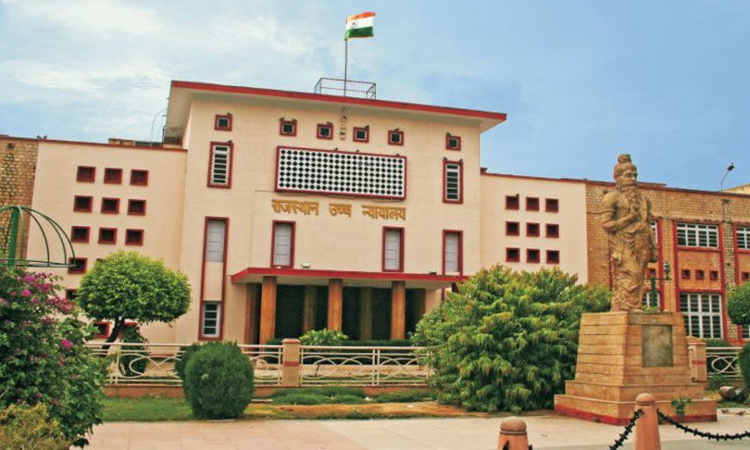
Photo: TrendSPLEND via Wikimedia Commons (CC BY-SA 4.0)

Judgment Intelligence

Petition Dismissed
Ramniwas Daga v. State of Rajasthan & Ors.
2025:RJ-JD:40845-DB
D.B. Civil Writ Petition No. 17201/2025 (with D.B. Civil Writ Petitions Nos. 16622/2025, 16744/2025, 16805/2025 and 17157/2025)
Court
Rajasthan High Court
Date of Decision
12 September 2025
Bench
Justices Pushpendra Singh Bhati and Sandeep Taneja
Relevant Acts & Sections
Rajasthan High Court Rules, 1952 — Rule 385-F
Final Outcome

Dismissed. Declining exemplary costs, the Court imposed a nominal cost of ₹11,000 on the petitioner in respect of each of the PILs filed by him, and restrained him for one year from filing or insisting upon any PIL without first seeking leave of the appropriate Bench (paras 13-14).

Key holdings

  1. A PIL must disclose the petitioner’s antecedents, finances, personal interest and other litigation under Rule 385-F (para 6).
  2. Concealing five earlier PILs, at least one of which deprecated his conduct, struck at the root of his bona fides (para 12).
  3. Not every perceived grievance must be brought to the High Court as a PIL (para 12).
  4. Such ‘Publicity Interest Litigation’ cannot be countenanced in writ jurisdiction (para 13).
  5. Nominal cost of ₹11,000 for each PIL; no PIL for one year without the appropriate Bench’s leave (para 14).

Brief Facts

In five writ petitions filed as public interest litigation, the petitioner sought directions to maintain statues of national figures across Rajasthan; to set up ₹8-a-plate Indira/Annapurna Rasoi canteens at all court campuses; to enforce dress codes and name plates for the respondents' staff; to stop liquor sales from 8 pm to 10 am, ban them on dry days and move towards total prohibition; and to make the media publish case citations and numbers when reporting judgments (para 1). Counsel for the respondents called him a compulsive litigant abusing the PIL forum (para 2) who had disclosed none of five earlier PILs, as Rule 385-F requires (paras 7-8).

Court's Findings

The petitioner asked the Court to show tolerance on the disclosure requirement and to view his repeated PILs sympathetically as genuine public-interest efforts (para 11). The Bench declined, citing the Supreme Court's PIL law and the admitted breach of Rule 385-F (para 11). That Rule requires a PIL to disclose, among other things, the petitioner's antecedents, finances, personal interest and other litigation (para 6). The Court found that the petitioner appeared to be a compulsive litigant who had repeatedly projected his grievances as PILs even when they did not deserve that status, a casual and adventuristic approach inconsistent with the law governing PILs (para 12). Even if some issues merited attention, not every grievance must come to the Court as a PIL (para 12). His five earlier PILs had been dismissed by coordinate benches, at least one expressly deprecating his conduct, and concealing them struck at the root of his bona fides (para 12). The litigation was a ‘Publicity Interest Litigation’, and such adventurism with suppression of material facts could not be countenanced in writ jurisdiction (para 13). Following Ashok Kumar Pandey and the caution in Dr. B. Singh, the Bench imposed nominal costs, refraining from exemplary costs (paras 13-14).

Legal Principle

A public interest petition must come from a bona fide petitioner and must disclose the particulars listed in Rule 385-F of the High Court Rules, including earlier litigation. Concealing earlier PILs strikes at the petitioner's bona fides, and petitions that serve publicity rather than a genuine public interest may be dismissed with costs and a leave condition (paras 6, 12-14).

Precedents Relied Upon

  1. Ashok Kumar Pandey v. State of W.B. (2004) 3 SCC 349
    Followed Discussed at ¶ 4, 5, 14

    A petition styled as public interest litigation that is a camouflage for personal disputes or publicity must be thrown out; a PIL petitioner must come with clean hands, a clean heart and a clean objective, and frivolous petitions may be dismissed with exemplary costs.

  2. Dr. B. Singh v. Union of India and Ors. (1996) 5 SCC 530
    Followed Discussed at ¶ 9, 14

    There must be a real and genuine public interest involved in a litigation; it should not be an adventure of a knight errant borne out of wishful thinking.

  3. Janata Dal v. H.S. Chowdhary & Ors. Criminal Appeal No. 304 of 1991, decided on 28.08.1992
    Relied Upon Discussed at ¶ 3, 11

    Courts must not allow the PIL process to be abused by a busybody, meddlesome interloper or officious intervener acting for personal gain, private profit or other oblique consideration; only a person acting bona fide with sufficient interest has locus standi.

View all precedents (4)
  1. Shri Ishwar Prasad v. State of Rajasthan (D.B. Civil Writ Petition No. 5313/2024) Decided on 03.12.2024 (Rajasthan High Court)
    Referred To Discussed at ¶ 9

    Cited by counsel for the respondents: relying on Dr. B. Singh, a coordinate Bench reiterated that a PIL must involve a real and genuine public interest.
NyayVidhan
Court Judgments · 3 min read
Decided: September 12, 2025 Justices Pushpendra Singh Bhati and Sandeep Taneja
PDF
WhatsApp Telegram X / Twitter LinkedIn

✕

Popular: POCSO, IBC, Electoral Bond, Article 370, NDPS Act, Bail Conditions, SC Contempt