

Join our WhatsApp Group
Breaking
Thursday, October 8, 2026 Jaipur Edition
Rajasthan High Court
Family Law

Maintenance Tribunal Can Evict a Son to Protect a Senior Citizen Father: Rajasthan High Court

Published: · NyayVidhan

A Division Bench of the Rajasthan High Court at Jodhpur dismissed a son's intra-court appeal against his eviction from his father's house. It held that a Maintenance Tribunal under the Maintenance and Welfare of Parents and Senior Citizens Act, 2007 has an implicit, discretionary power to order eviction where needed to protect a senior citizen (paras 9-10). The father's ownership, the harassment and the criminal case between them justified the order (paras 8, 11-13).

Maintenance Tribunal Can Evict a Son to Protect a Senior Citizen Father: Rajasthan High Court
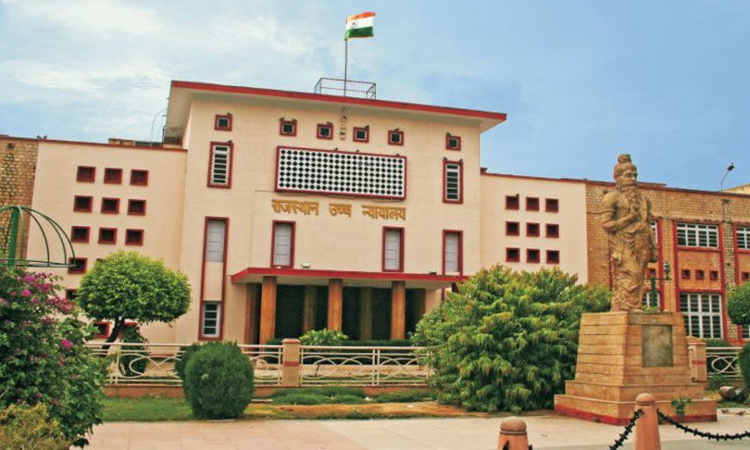
Photo: TrendSPLEND via Wikimedia Commons (CC BY-SA 4.0)

Judgment Intelligence

Petition Dismissed
Ramesh Kumar Soni v. Sampat Raj Soni
2026:RJ-JD:21183-DB
D.B. Special Appeal Writ No. 552/2026
Court
Rajasthan High Court
Date of Decision
5 May 2026
Bench
Justices Arun Monga and Sandeep Shah
Relevant Acts & Sections
Maintenance and Welfare of Parents and Senior Citizens Act, 2007 — Sections 4, 5, 23, 32; Rules of 2010 framed by the State of Rajasthan under Section 32
Final Outcome

Appeal dismissed. The Division Bench found no infirmity in the Single Judge's order of 21.04.2026, which had upheld the Tribunal's eviction order of 08.02.2024; pending applications were disposed of (paras 5-6, 14-15).

Key holdings

  1. The 2007 Act does not use the word eviction, but Tribunals under it have an implicit power to order eviction (para 9).
  2. The power is discretionary: the Tribunal must be satisfied that eviction is necessary and expedient to protect the senior citizen (para 10).
  3. Where eviction is sought under Section 23, a conditional transfer and a breach of the maintenance obligation must both be shown (para 9).
  4. A claim that the house is ancestral cannot be examined in these proceedings when no civil suit has been filed to enforce it (para 11).
  5. Active criminal hostility between a senior citizen and his child is a relevant and weighty circumstance for protective eviction (paras 12-13).

Brief Facts

On 12.04.2023 the father applied to the Maintenance Tribunal and Sub-Divisional Officer, Bilara under the 2007 Act for his son's eviction from the residential house, alleging harassment and misbehaviour (para 2). The son replied that the property was ancestral and his only residence, he living on the first floor and the father on the ground floor, and that an FIR had been registered against the father over an alleged assault (para 2). On 08.02.2024 the Tribunal directed him to vacate within two months, and a Single Judge dismissed his writ petition on 21.04.2026 (paras 1-2). In appeal he argued that neither the Act nor the State's 2010 Rules confer any power of eviction (para 3).

Court's Findings

The Bench affirmed the Single Judge, whose order rested on three foundations: the Tribunal's jurisdiction to order eviction, the father's established ownership, and the hostility shown by the pending criminal proceedings (paras 5-8). The Act does not use the word eviction, but the Supreme Court has held in a series of judgments that Tribunals under it carry an implicit power to order eviction, because denying it would defeat the Act's purpose of speedy, simple and inexpensive remedies; eviction sought under Section 23 additionally needs a conditional transfer and a breach of the maintenance obligation (para 9). Ownership coupled with demonstrated harassment suffices to invoke the power, but it is discretionary: the Tribunal must be satisfied that eviction is necessary and expedient (para 10). The Single Judge had examined that question and found eviction warranted (para 11). The ancestral-property claim could not be gone into, as the son had filed no civil suit to enforce any right in the house (para 11). His own FIR against his father showed hostility at its lowest point, and forcing them to live together while opposing each other in criminal proceedings would serve neither (paras 11-12).

Legal Principle

A Maintenance Tribunal under the 2007 Act has an implicit but discretionary power to evict a child from a senior citizen's property where eviction is necessary for the senior citizen's protection. Ownership coupled with demonstrated harassment suffices to invoke it, and active criminal hostility between them is a weighty circumstance (paras 9-10, 13).

Precedents Relied Upon

  1. S. Vanitha v. Deputy Commissioner, Bengaluru Urban District & Ors. (2021) 15 SCC 730
    Relied Upon Discussed at ¶ 5, 9

    One of the Supreme Court decisions, cited in the Single Judge’s order and relied on here, holding that Tribunals under the 2007 Act may order eviction where necessary for the protection of senior citizens.
  2. Urmila Dixit v. Sunil Sharan Dixit (2025) 2 SCC 787
    Relied Upon Discussed at ¶ 5, 9

    One of the Supreme Court decisions, cited in the Single Judge’s order and relied on here, holding that Tribunals under the 2007 Act may order eviction where necessary for the protection of senior citizens.

  3. Samtola Devi v. State of Uttar Pradesh 2025 SCC OnLine SC 669
    Explained Discussed at ¶ 3, 5, 9

    Relied on by the appellant as barring eviction; read in the Single Judge’s order, affirmed here, as recognising the power to evict but treating it as discretionary, the eviction there being set aside because a civil dispute over the property was pending.

View all precedents (4)
  1. Rajeshwar Prasad Roy v. State of Bihar & Ors. Civil Appeal No. 7675/2024
    Relied Upon Discussed at ¶ 5, 9

    One of the Supreme Court decisions, cited in the Single Judge’s order and relied on here, holding that Tribunals under the 2007 Act may order eviction where necessary for the protection of senior citizens.

NyayVidhan
Court Judgments · 3 min read
Decided: May 5, 2026 Justices Arun Monga and Sandeep Shah
PDF
WhatsApp Telegram X / Twitter LinkedIn

✕

Popular: POCSO, IBC, Electoral Bond, Article 370, NDPS Act, Bail Conditions, SC Contempt