

Join our WhatsApp Group
Breaking
Thursday, October 8, 2026 Jaipur Edition
Rajasthan High Court
High Courts

‘Pigeon Hole’ Cross-Examination Allowed Only When Witness Deposes Like a Handwriting Expert: Rajasthan High Court

Published: · NyayVidhan

The Rajasthan High Court upheld a civil court's refusal to let a plaintiff confront a defence witness with only the signatures on documents while concealing their contents, the so-called ‘pigeon hole’ or ‘window’ method. The Evidence Act does not provide for it, and the Court held it may be allowed only where the witness deposes like a handwriting expert (paras 6.5, 6.13). A repeat application and the closure of cross-examination were also upheld (paras 7.4, 8.1).

‘Pigeon Hole’ Cross-Examination Allowed Only When Witness Deposes Like a Handwriting Expert: Rajasthan High Court
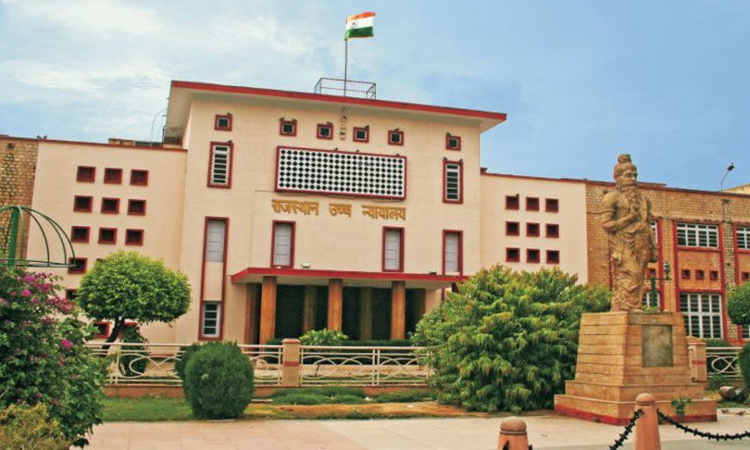
Photo: TrendSPLEND via Wikimedia Commons (CC BY-SA 4.0)

Judgment Intelligence

Petition Dismissed
Rajesh Kumar v. Shri Anand Kumar & Ors.
2026:RJ-JD:3216
S.B. Civil Writ Petition No. 24708/2025
Court
Rajasthan High Court
Date of Decision
19 January 2026
Bench
Justice Sanjeet Purohit
Relevant Acts & Sections
Indian Evidence Act, 1872 — Sections 45, 47, 67, 73, 138, 145; Constitution of India — Article 227; Code of Civil Procedure, 1908 — Section 115
Final Outcome

Writ petition dismissed. The trial court's orders of 17.09.2025 and 14.11.2025, including the closure of the plaintiff's right to cross-examine, stand; the stay petition and pending applications were disposed of (paras 10-12).

Key holdings

  1. Sections 138 and 145, and Sections 45, 47, 67 and 73, of the Evidence Act do not provide for hiding a document’s contents while confronting a witness (paras 6.2-6.6).
  2. Ratanlal applies only where a witness gives a statement like a handwriting expert, denying signatures (paras 6.8-6.9).
  3. A witness who cannot identify even his own signature without seeing the whole document is not an expert-type witness (para 6.10).
  4. A fresh application seeking the same relief is in effect a review, barred by res judicata within the same suit (paras 7.1-7.4).
  5. Closing cross-examination was upheld given repeated applications in a suit pending over 20 years (paras 8-8.1).

Brief Facts

Rajesh Kumar sued his relatives for declaration, partition and injunction over Marudhar Hotel, Pali, claiming it as joint Hindu family property; the defendants called the family settlement of 23.06.1988 forged (paras 2-2.2). Issues were framed in 2006 and the plaintiff's evidence has closed (para 2.3). During the defendants' evidence, he applied under Sections 138 and 145 of the Evidence Act to show the witness only the signatures, hiding the rest of the documents (paras 1, 2.4). The trial court refused on 17.09.2025, rejected a similar second application on 14.11.2025 and closed his cross-examination (paras 2.6-2.8). He relied on Ratanlal v. Kamla Devi (para 3).

Court's Findings

Section 138 governs the order of examination and Section 145 cross-examination on previous written statements; neither, nor Sections 45, 47, 67 and 73, provides for confronting a witness with one part of a document while hiding the rest (paras 6.2-6.5). Ratanlal allowed showing signatures on admitted documents only when a witness gives a statement like a handwriting expert, denying the signatures (para 6.8). Here the witness lacked expert knowledge and the confidence to recognise even his own signature unless the whole document was shown, so the premise for the method did not exist (paras 6.9-6.10). Following the Madras and Karnataka High Courts, which treated covering a document's contents as deceptive (paras 6.11-6.12), the Court held the method permissible only where the witness appears as an expert on handwriting or signatures; evidence so elicited is not conclusive and risks shaking even a truthful witness (para 6.13). The second application was in effect a review, barred by res judicata at a later stage of the same suit (paras 7-7.4). With one witness cross-examined since 14.10.2024 in a suit pending over 20 years, the Court found gross abuse of process and no ground for Article 227 interference (paras 8-9).

Legal Principle

The ‘pigeon hole’ or ‘window’ method, showing a witness only the signature on a document while concealing its contents, is not provided for in the Evidence Act. It may be permitted only where the witness deposes in the nature of a handwriting or signature expert, and evidence it elicits is not conclusive (paras 6.5, 6.10, 6.13).

Precedents Relied Upon

  1. Ratanlal v. Smt. Kamla Devi 1992 AIR Rajasthan 1
    Distinguished Discussed at ¶ 3, 6

    Showing a witness the signatures on admitted documents is permissible when he gives a statement like a handwriting expert, denying the signatures; relied on by the petitioner, held confined to that context and not attracted where the witness’s testimony is not of that nature.

  2. Perumal v. V. Balasubramanian 2011 SCC OnLine Mad 158
    Followed Discussed at ¶ 4, 6

    Madras High Court disapproved the practice of showing a witness only the signature portion by blocking the rest of the document, as even a well-educated person may not identify his own signature shown in isolation; cited by the respondents.

  3. Devaraj v. Dayarathini & Ors. 2020 SCC OnLine Kar 1662
    Followed Discussed at ¶ 4, 6

    Karnataka High Court held that the entire document must be shown when a witness is confronted with his signature, and covering or folding the contents to leave only the signature open is a deceptive method; the order records that the Supreme Court dismissed the SLP against it on 19.11.2020; cited by the respondents.

View all precedents (8)
  1. Chhabil Das v. Pappu 2007 (1) CCC 183 (SC)
    Followed Discussed at ¶ 4, 7

    The principle of res judicata applies at different stages of the same proceedings; applied to hold that a second application seeking the same relief was barred.

  2. Bhanu Kumar Jain v. Archana Kumar & Anr. 2005 (1) CCC 725
    Followed Discussed at ¶ 4, 7

    Principles of res judicata apply at different stages of the same proceedings; an order made in the course of a proceeding that has become final binds the later stages.

  3. Shalini Shyam Shetty v. Rajendra Shankar Patil (2010) 8 SCC 329
    Referred To Discussed at ¶ 9

    Cited on the limited scope of supervisory jurisdiction under Article 227 over interlocutory orders of courts below.
  4. Jai Singh v. Municipal Corporation of Delhi (2010) 9 SCC 385
    Referred To Discussed at ¶ 9

    Cited on the limited scope of supervisory jurisdiction under Article 227 over interlocutory orders of courts below.

  5. Surya Dev Rai v. Ram Chander Rai (2003) 6 SCC 675
    Referred To Discussed at ¶ 9

    Cited on the limited scope of supervisory jurisdiction under Article 227 over interlocutory orders of courts below.

NyayVidhan
Court Judgments · 3 min read
Decided: January 19, 2026 Justice Sanjeet Purohit
PDF
WhatsApp Telegram X / Twitter LinkedIn

✕

Popular: POCSO, IBC, Electoral Bond, Article 370, NDPS Act, Bail Conditions, SC Contempt