
Latest
Tuesday, October 20, 2026
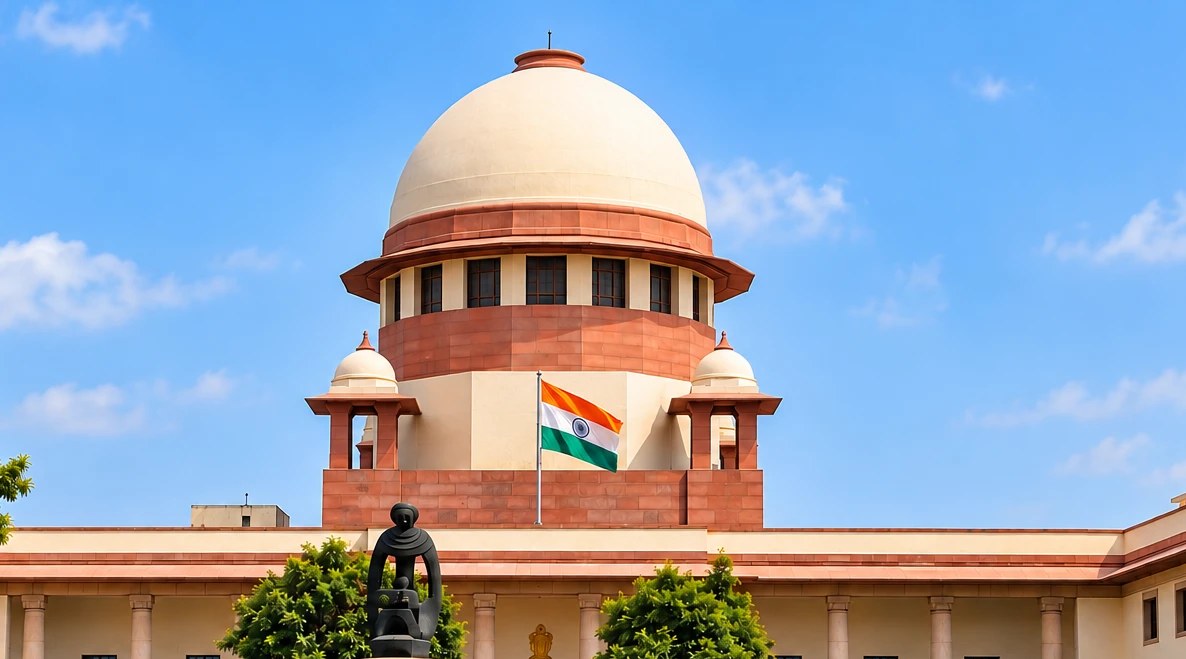
Supreme Court of India
Constitutional Law

Grounds of Arrest Must Be Given in Writing, Even Under UAPA: Supreme Court Orders Prabir Purkayastha's Release

Published: · NyayVidhan

The Supreme Court held that a person arrested under the UAPA, or for any other offence, has a fundamental and statutory right to receive the grounds of arrest in writing, applying Pankaj Bansal to Section 43B(1) of the UAPA. As Prabir Purkayastha was remanded at 6:00 a.m. before written grounds reached him or his lawyer, his arrest and remand were declared invalid and he was ordered released on bail bonds (paras 20, 50-53).

Grounds of Arrest Must Be Given in Writing, Even Under UAPA: Supreme Court Orders Prabir Purkayastha's Release

Judgment Intelligence

Petition Allowed
Prabir Purkayastha v. State (NCT of Delhi)
2024 INSC 414
Criminal Appeal No. 2577 of 2024 (arising out of SLP (Crl.) Diary No. 42896 of 2023)
Court
Supreme Court of India
Date of Decision
15 May 2024
Bench
Justice B.R. Gavai and Justice Sandeep Mehta
Relevant Acts & Sections
Constitution of India - Articles 21, 22(1), 22(5) and 141; Unlawful Activities (Prevention) Act, 1967 - Sections 43A, 43B and 43C; Prevention of Money Laundering Act, 2002 - Section 19; Code of Criminal Procedure, 1973 - Sections 50, 57 and 167
Final Outcome

Appeal allowed: the arrest, the remand order of 04.10.2023 and the High Court's order of 13.10.2023 declared invalid and set aside; as the charge sheet had been filed, the appellant to be released on bail and bonds to the trial court's satisfaction, without comment on the merits (paras 52-55).

Source Supreme Court of India, www.sci.gov.in — judgment dated 15.05.2024

Key holdings

  1. Pankaj Bansal's written-grounds rule applies to arrests under Section 43B(1) of the UAPA (paras 17-19).
  2. Grounds of arrest must be given in writing to every arrestee, under any law (paras 20, 30).
  3. Formal 'reasons for arrest' in an arrest memo are not the 'grounds of arrest' (paras 48-49).
  4. A charge sheet does not cure an arrest made without communicating the grounds (para 22).
  5. Remand ordered before written grounds reach the accused or his lawyer is vitiated (paras 35-36, 50).

Case explainer by NyayVidhan: an account of this judgment and the law it laid down, not the court's text. The judgment itself is the authoritative version.

Brief Facts

The Special Cell of Delhi Police registered FIR No. 224 of 2023 on 17.08.2023 under Sections 13, 16, 17, 18 and 22C of the UAPA read with Sections 153A and 120B IPC, and arrested the appellant, a director of PPK Newsclick Studio Pvt. Ltd., on 03.10.2023 at 5:45 p.m. (paras 3, 34). The computerised arrest memo had no column for the grounds of arrest (para 4). He was produced at the Remand Judge's residence before 6:00 a.m. on 04.10.2023, with a remand advocate he had not engaged, and remanded to seven days' police custody (paras 5, 34). The Delhi High Court rejected his challenge on 13.10.2023 (para 7).

Court's Findings

Section 43B(1) of the UAPA is verbatim the same as Section 19(1) of the PMLA, so Pankaj Bansal's ruling that written grounds must be furnished applies equally to UAPA arrests (paras 17-19). Anyone arrested under the UAPA or for any other offence has a fundamental and statutory right to written grounds, the only effective means to consult a lawyer, oppose remand and seek bail (para 20). Rejecting the plea that Articles 22(1) and 22(5) do not require writing, the Court relied on Harikisan and Lallubhai Jogibhai Patel and held the two clauses identically worded (paras 25-30). A breach vitiates arrest and remand, and a charge sheet does not cure it (para 22). Pankaj Bansal, delivered on 03.10.2023, governed the remand of 04.10.2023 and binds all courts under Article 141 (paras 45-46). The arrest memo gave only formal 'reasons for arrest', not the personal 'grounds of arrest' (paras 48-49). The appellant's lawyer learnt of the remand around 7:00 a.m. and got the remand application only after it was granted; the lines recording his hearing were later insertions (paras 35-36, 39).

Legal Principle

Every person arrested under the UAPA or any other law has a fundamental and statutory right to be given the grounds of arrest in writing, personal to him, at the earliest; failure to furnish them before remand vitiates the arrest and remand, and a later charge sheet does not validate the illegality (paras 20, 22, 30, 49-50).

Precedents Relied Upon

  1. Pankaj Bansal v. Union of India and Others 2023 SCC OnLine SC 1244
    Applied Discussed at ¶ 15, 17, 19, 31, 45, 51

    A copy of the written grounds of arrest must be furnished to the arrested person as a matter of course and without exception; its interpretation of Section 19(1) PMLA applies pari passu to Section 43B(1) UAPA.

  2. Ram Kishor Arora v. Directorate of Enforcement 2023 SCC OnLine SC 1682
    Distinguished Discussed at ¶ 8, 10, 45

    Held Pankaj Bansal to be prospective; that did not help the State, as the appellant was remanded on 04.10.2023, after Pankaj Bansal was delivered on 03.10.2023.

  3. Roy V.D. v. State of Kerala (2000) 8 SCC 590
    Relied Upon Discussed at ¶ 21

    Life and liberty are so sacrosanct that they cannot be interfered with except under the authority of law.

View all precedents (5)
  1. Harikisan v. State of Maharashtra and Others 1962 SCC OnLine SC 117
    Applied Discussed at ¶ 25, 27

    Constitution Bench: grounds of detention under Article 22(5) must be communicated in writing in a language the detenu understands; this interpretation applies equally to Article 22(1).

  2. Lallubhai Jogibhai Patel v. Union of India and Ors. (1981) 2 SCC 427
    Relied Upon Discussed at ¶ 26

    If the grounds are only verbally explained and nothing in writing is left with the detenu, the mandate of Article 22(5) is infringed.

NyayVidhan
Court Judgments · 3 min read
Decided: May 15, 2024 Justice B.R. Gavai and Justice Sandeep Mehta
PDF
 Join our WhatsApp Group
✕

Try: POCSO, IBC, Electoral Bond, Article 370, NDPS Act, Bail Conditions, SC Contempt