
Latest
Wednesday, October 21, 2026
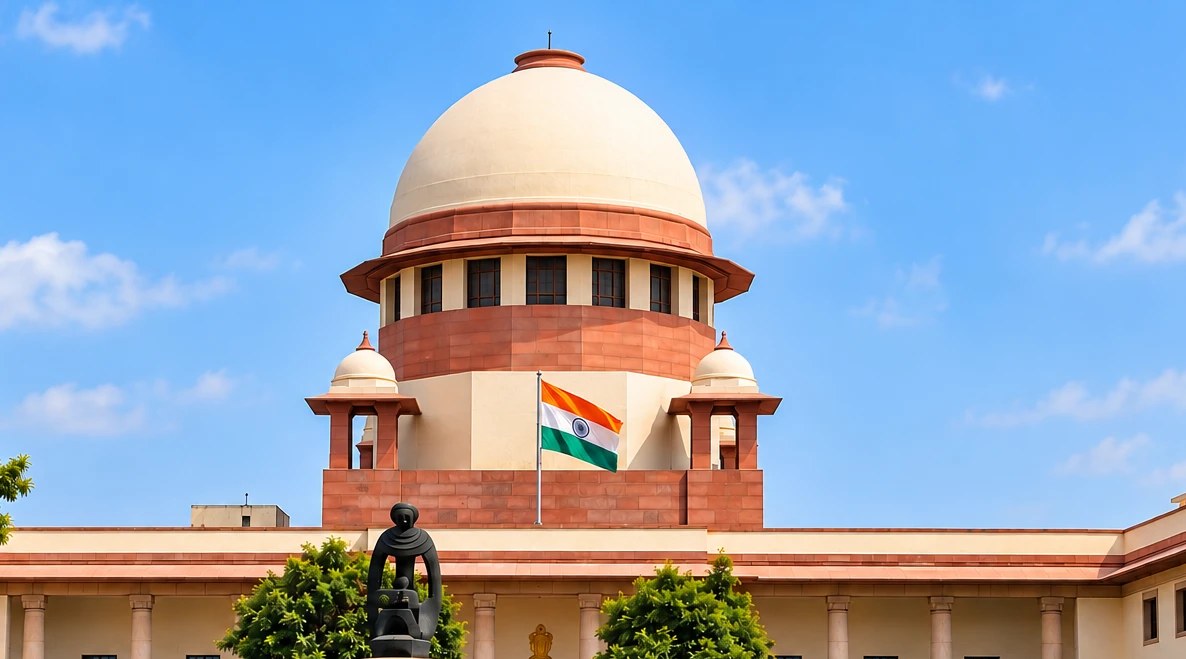
Supreme Court of India
Supreme Court

Non-Disclosure of Cheque-Bounce Conviction in Nomination Affidavit Voids Election; No Need to Prove Material Effect: Supreme Court

Published: · NyayVidhan

The Supreme Court upheld the unseating of a municipal councillor in Madhya Pradesh who did not disclose, in her nomination affidavit, a conviction under Section 138 of the Negotiable Instruments Act with one year's imprisonment. Rule 24-A requires disclosure of any conviction, the offence need not be serious, and once suppression is found the voters' informed choice is impeded, so the result need not be shown to be materially affected (paras 15, 19, 21).

Non-Disclosure of Cheque-Bounce Conviction in Nomination Affidavit Voids Election; No Need to Prove Material Effect: Supreme Court

Judgment Intelligence

Petition Dismissed
Poonam v. Dule Singh & Ors.
2025 INSC 1284
Special Leave Petition (Civil) No. 12000 of 2025
Court
Supreme Court of India
Date of Decision
6 November 2025
Bench
Justice Pamidighantam Sri Narasimha and Justice Atul S. Chandurkar
Relevant Acts & Sections
Madhya Pradesh Municipalities Act, 1961 - Sections 20, 22(1)(d) and 26(2); Madhya Pradesh Nagar Palika Nirvachan Niyam, 1994 - Rule 24-A; Negotiable Instruments Act, 1881 - Section 138; Constitution of India - Articles 19(1)(a) and 136
Final Outcome

Special Leave Petition dismissed; the trial Court's order declaring her election void, upheld in revision, stands (paras 5, 26).

Source Supreme Court of India, www.sci.gov.in — judgment dated 06.11.2025

Key holdings

  1. Holding a bye-election subject to the pending case does not make the challenge infructuous (para 8).
  2. Rule 24-A(1) requires disclosure of any conviction, irrespective of the sentence imposed (para 15).
  3. A conviction for a minor offence or one not involving moral turpitude cannot be excused from disclosure (para 19).
  4. Non-disclosure impedes the voters' informed choice, so material effect on the result need not be proved (paras 21, 24).
  5. An acquittal in appeal after the election does not cure non-disclosure at the time of nomination (paras 15, 25).

Case explainer by NyayVidhan: an account of this judgment and the law it laid down, not the court's text. The judgment itself is the authoritative version.

Brief Facts

The petitioner was elected Councillor from Ward No. 5 of Nagar Parishad, Bhikangaon, and the result was notified on 04.10.2022 (para 2). She had been convicted on 07.08.2018 under Section 138 of the Negotiable Instruments Act and sentenced to one year's rigorous imprisonment, but her affidavit of 09.09.2022 under Rule 24-A disclosed no conviction (paras 2, 11-12). The conviction was set aside on 30.12.2022 (para 5). The trial Court declared her election void on 17.02.2025 and the High Court dismissed her revision (paras 4-5). A bye-election was held subject to this case (para 8).

Court's Findings

The bye-election did not make the challenge infructuous, as the Court had made its result subject to these proceedings (para 8). The conviction was in force when she filed her nomination, so her affidavit was false and her nomination improperly accepted, attracting Section 22(1)(d)(iii) of the 1961 Act (paras 12, 15). Voters' right to know candidates' criminal antecedents flows from Article 19(1)(a), as Association for Democratic Reforms held (paras 13-14). Ravi Namboothiri involved only a fine and a different disclosure rule, and Karikho Kri concerned non-substantial omissions, so both were distinguished (paras 17-18). Rule 24-A(1) requires disclosure of any conviction, and nothing in the Rules lets a court excuse non-disclosure because the offence was minor or did not involve moral turpitude (para 19). Krishnamoorthy does not hold that only serious offences must be disclosed, though whether non-disclosure is fatal remains a matter of judicial discretion on the facts (para 20). Following Kisan Shankar Kathore and Mairembam Prithviraj, improper acceptance of a returned candidate's nomination voids the election without separate proof of material effect (paras 21-24). Her reliance on a later acquittal, without testifying to explain the omission, made out no exceptional case under Article 136 (para 25).

Legal Principle

A candidate's failure to disclose a subsisting conviction in the affidavit filed with the nomination paper is suppression of material information that makes the acceptance of the nomination improper and the election void; the conviction need not be for a serious offence, and material effect on the result need not be separately proved (paras 19, 21, 24).

Precedents Relied Upon

  1. Union of India vs. Association for Democratic Reforms 2002 INSC 253
    Relied Upon Discussed at ¶ 14

    Voters have a right under Article 19(1)(a) to know candidates' antecedents, including their criminal past.

  2. Ravi Namboothiri vs. K.A. Baiju & others 2022 INSC 1187
    Distinguished Discussed at ¶ 6, 16, 17

    Non-disclosure of a conviction carrying only a fine, under a different disclosure provision, did not void the election.

  3. Karikho Kri vs. Nuney Tayang and another 2024 INSC 289
    Distinguished Discussed at ¶ 6, 18

    Omissions not of a substantial nature did not make the acceptance of the nomination improper.

View all precedents (6)
  1. Krishnamoorthy Vs. Shivakumar and others 2015 INSC 960
    Explained Discussed at ¶ 7, 20, 24

    Non-disclosure of criminal antecedents impedes the free exercise of electoral right; it does not confine disclosure to serious offences.

  2. Kisan Shankar Kathore vs. Arun Dattatray Sawant & Others 2014 INSC 384
    Relied Upon Discussed at ¶ 22

    Improper acceptance of a nomination for suppression of material information renders the election void.

  3. Sri Mairembam Prithviraj @ Prithviraj Singh Vs. Shri Pukhrem Sharatchandra Singh 2016 INSC 1000
    Relied Upon Discussed at ¶ 23

    Where a returned candidate's nomination is improperly accepted, material effect on the result need not be proved further.

NyayVidhan
Court Judgments · 3 min read
Decided: November 6, 2025 Justice Pamidighantam Sri Narasimha and Justice Atul S. Chan...
PDF
 Join our WhatsApp Group
✕

Try: POCSO, IBC, Electoral Bond, Article 370, NDPS Act, Bail Conditions, SC Contempt