
Join our WhatsApp Group
Breaking
Thursday, October 8, 2026 Jaipur Edition
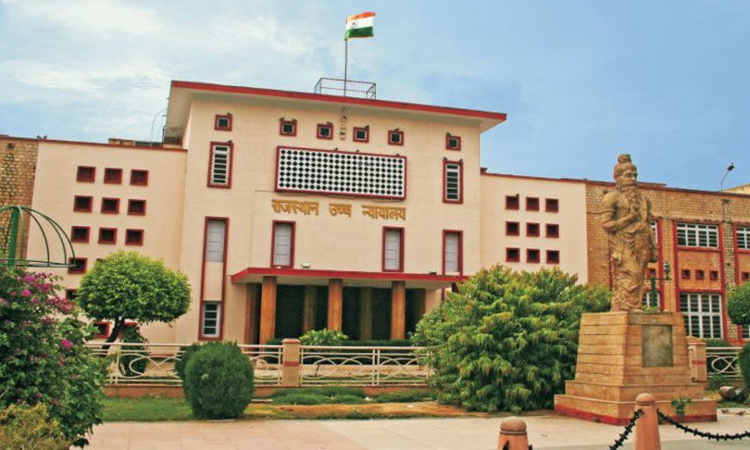
Rajasthan High Court
Family Law

Tribal Daughter's Land Suit Cannot Be Rejected Merely Because Hindu Succession Act Excludes Scheduled Tribes: Rajasthan High Court

Published: · NyayVidhan

The Rajasthan High Court revived a revenue suit in which a Scheduled Tribe landholder's only child, his daughter, seeks a declaration of her khatedari rights in ancestral land. The Board of Revenue had rejected her plaint under Order 7 Rule 11 CPC solely because Section 2(2) of the Hindu Succession Act, 1956 excludes Scheduled Tribes (para 5). Following the Supreme Court in Tirth Kumar and Ram Charan, the Court quashed that order and sent the suit for trial on merits (paras 6-8).

Tribal Daughter's Land Suit Cannot Be Rejected Merely Because Hindu Succession Act Excludes Scheduled Tribes: Rajasthan High Court

Judgment Intelligence

Petition Allowed
Manni Devi v. Rama Devi & Ors.
S.B. Civil Writ Petition No. 10638/2025
Court
Rajasthan High Court
Date of Decision
22 July 2025
Bench
Justice Anoop Kumar Dhand
Relevant Acts & Sections
Hindu Succession Act, 1956 — Section 2(2); Code of Civil Procedure, 1908 — Order 7 Rule 11; Rajasthan Tenancy Act, 1955 — Section 230; Constitution of India — Articles 14, 15 and 21
Final Outcome

Petition allowed. The Board of Revenue's order of 09.06.2025 was quashed and the Order 7 Rule 11 application rejected. The SDO must decide the suit on merits on the evidence, uninfluenced by this order, preferably within two years (paras 7-9).

Key holdings

  1. A tribal daughter’s plaint over ancestral land cannot be rejected only because Section 2(2) excludes Scheduled Tribes (paras 5, 7-8).
  2. Following Ram Charan, where the Act does not apply, custom must be proved; courts should not presume a custom excluding daughters (para 6).
  3. Where custom is silent, denying a daughter her share in her father’s property violates her right to equality (para 6).
  4. Tribal daughters are entitled to parity with male tribals; the Union should revisit Section 2(2) (paras 16-18).
  5. The revenue court must decide the suit on evidence, preferably within two years (para 8).

Brief Facts

The petitioner belongs to the Meena community, a Scheduled Tribe, and is her father's only child (paras 2, 5). By a deed of 12.03.2018 her father gifted the land to respondent No. 2 (para 5). Her civil suit to cancel the gift met an objection that she must first obtain a declaration of khatedari rights from the revenue court, so she sued for that declaration before the SDO, Chaksu (para 5). The SDO dismissed the respondents' application to reject the plaint on 24.07.2023, but the Board of Revenue allowed their revision on 09.06.2025 and rejected the plaint (paras 1-2, 5). The respondents relied on Section 2(2) (para 3).

Court's Findings

It was undisputed that the land is ancestral and that the petitioner is her father's sole child (para 5). The Board had allowed the revision solely because a daughter belonging to a Scheduled Tribe was, in its view, barred by Section 2(2) from claiming succession rights in ancestral property (para 5). Relying on Tirth Kumar, the Court held the issue no longer res integra, noting that the earlier position discussed in Kamla Neti had been found to cause discrimination against Scheduled Tribe women (para 6). It quoted Ram Charan, which reiterated that view: where the Hindu Succession Act does not apply, custom governs and must be proved; courts should not start from an assumed custom excluding daughters; and where custom is silent, denying a daughter her share in her father's property violates her right to equality (para 6). Seeing no reason to differ, it quashed the Board's order (para 7). Under the heading ‘A Way Forward’, it recalled Kamla Neti's call for the Centre to consider amending the Act, and observed that tribal daughters are entitled to parity with male tribals in intestate succession while Section 2(2) operates as a barrier to their claims (paras 10, 16-17).

Legal Principle

Section 2(2) of the Hindu Succession Act, 1956 does not by itself defeat a Scheduled Tribe daughter's claim to her father's property. Following Tirth Kumar and Ram Charan, her plaint for a declaration of rights in ancestral land cannot be rejected under Order 7 Rule 11 CPC solely because she belongs to a Scheduled Tribe (paras 5-8).

Precedents Relied Upon

  1. Tirth Kumar & Ors. v. Dadu Ram & Ors. Civil Appeal No. 13516/2024, order dated 19.12.2024
    Followed Discussed at ¶ 2, 6, 7

    As read by the High Court, the earlier position under Section 2(2) discussed in Kamla Neti was held to cause discrimination against Scheduled Tribe women, so the issue is no longer res integra; no reason to take a different view.

  2. Ram Charan & Ors. v. Sukhram & Ors. Civil Appeal No. 9537/2025, order dated 17.07.2025
    Followed Discussed at ¶ 2, 6, 7

    Reiterating Tirth Kumar: where the Hindu Succession Act does not apply, custom must be proved; an exclusionary custom cannot be presumed, and where custom is silent, denying a tribal daughter her share violates her right to equality.

  3. Kamla Neti (Dead) v. Special Land Acquisition Officer & Ors. 2023(3) SCC 328
    Referred To Discussed at ¶ 3, 6, 10, 18

    Cited by the respondents for the bar on Scheduled Tribe women absent a Central notification; the Court noted that position had been found discriminatory and recalled its call (para 7.1) to the Central Government to consider amending the Hindu Succession Act.

View all precedents (5)
  1. Gulam v. Board of Revenue & Ors. AIR 2006 Rajasthan 162
    Referred To Discussed at ¶ 3

    Cited by the respondents: daughters belonging to Scheduled Tribes do not fall within Section 2 of the Hindu Succession Act.

  2. Ahmedabad Women Action Group (AWAG) & Ors. v. Union of India 1997(3) SCC 523
    Referred To Discussed at ¶ 3

    Cited by the respondents: the challenge to Section 2(2) of the Hindu Succession Act was rejected and the provision held intra vires.

NyayVidhan
Court Judgments · 3 min read
Decided: July 22, 2025 Justice Anoop Kumar Dhand
PDF
WhatsApp Telegram X / Twitter LinkedIn

✕

Popular: POCSO, IBC, Electoral Bond, Article 370, NDPS Act, Bail Conditions, SC Contempt