
Judgment Intelligence
Petition AllowedJinat Bano v. State Bank of India & Anr.
2026:RJ-JP:23947
S.B. Civil Writ Petition No. 5036/2026
- Court
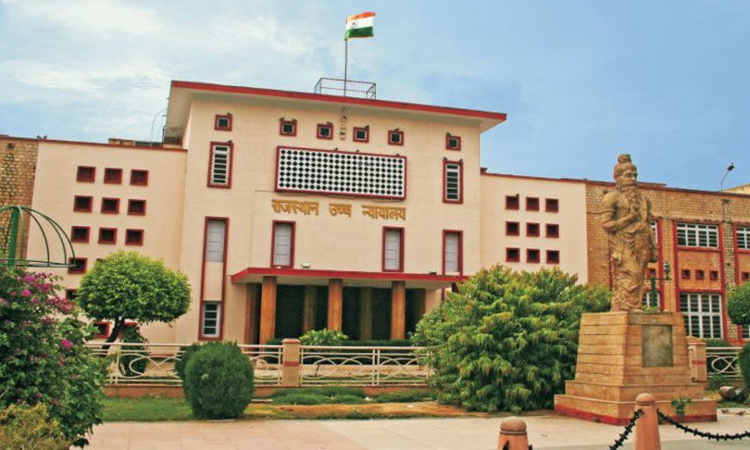
- Rajasthan High Court
- Date of Decision
- 30 June 2026
- Bench
- Justice Anand Sharma
- Relevant Acts & Sections
- Constitution of India — Articles 19(1)(g), 21, 226
Final Outcome
Petition disposed of: the bank to remove the debit freeze forthwith and keep a lien only on the disputed amount; the petitioner to cooperate with the investigation and keep the account active; merits left open (para 13).
Key holdings
- Freezing a bank account must satisfy legality, necessity and proportionality (para 6).
- An investigation alone does not justify freezing every account remotely linked to a suspect transaction (para 7).
- Where the disputed amount can be segregated, the least restrictive course is to hold only that amount (paras 8-9).
Brief Facts
The petitioner found she could not operate her account with the State Bank of India, Jagatpura, Jaipur and was told it had been frozen; she was shown no FIR or lawful directive implicating her (para 2). The freeze was over an alleged transaction of Rs 560 (para 3). She argued that the freeze was arbitrary and that at most the disputed amount could be restrained; the respondents called it a temporary, lawful investigative measure needed because cyber offences move money fast (paras 3-4).
Court's Findings
Freezing a bank account is a legitimate investigative tool, but it must satisfy legality, necessity and proportionality, because a bank account is the instrument of a person's daily financial life and livelihood (para 6). The agency must have tangible material showing a prima facie connection between the account and the offence; conjecture or administrative convenience is not enough (para 7). Where the suspect amount is identifiable and can be segregated, there is ordinarily no justification for making the whole account inoperative (para 8). Proportionality requires the least restrictive measure (para 9). Indiscriminate freezing can disrupt business, statutory payments and contractual obligations and the livelihood of the account holder's dependants (para 10). The Court followed the coordinate bench in Shwetambari Vikram Bhatt, where only the disputed sum stayed frozen (para 11). Investigation cannot become punitive before guilt is adjudicated (para 12).
Legal Principle
A bank account may be frozen during investigation only on tangible material showing a prima facie nexus with the offence, and only to the extent necessary. Where the disputed amount is identifiable, a lien on that amount is the proportionate course, not a freeze of the entire account (paras 7-9, 12).
Precedents Relied Upon
- Shwetambari Vikram Bhatt v. State of Rajasthan & Ors. S.B. Criminal Writ Petition No. 1081/2026 & connected petition (Rajasthan High Court, Jodhpur, decided 19.03.2026) 2026:RJ-JD:13929
Freezing a bank account is an extraordinary measure needing a live, proximate nexus with the offence; where only a quantified amount is under investigation, only that amount should stay frozen and the account otherwise operable.
