

Join our WhatsApp Group
Breaking
Wednesday, October 7, 2026 Jaipur Edition
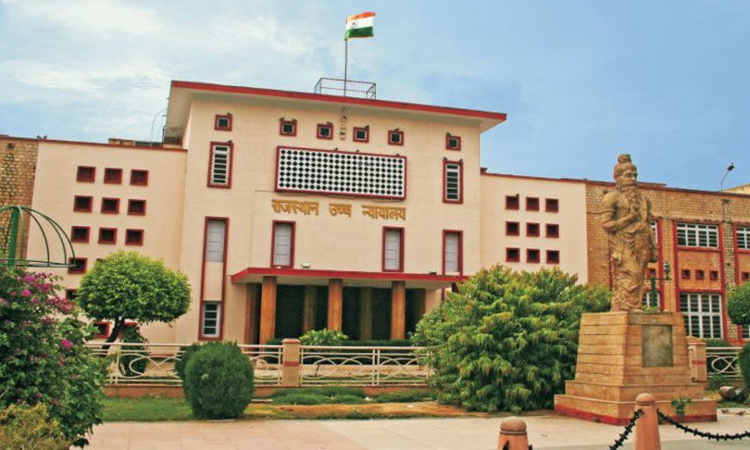
Rajasthan High Court
Criminal Law

Senior Official Cannot Be Prosecuted for Hindustan Zinc Gas Leak Merely by Designation: Rajasthan High Court

Published: · NyayVidhan

The Rajasthan High Court quashed criminal proceedings against a senior official of Hindustan Zinc over a 2005 gas leak at its Chittorgarh plant, holding that criminal liability cannot rest on designation alone (paras 19-34, 85-87). The complaint made only omnibus allegations, the forensic reports contradicted each other, and the private complaint under the Environment (Protection) Act merely duplicated a completed police investigation (paras 39-40, 57-66).

Senior Official Cannot Be Prosecuted for Hindustan Zinc Gas Leak Merely by Designation: Rajasthan High Court
Photo: TrendSPLEND via Wikimedia Commons (CC BY-SA 4.0)

Judgment Intelligence

Petition Allowed
Jai Raj & Anr. v. State of Rajasthan & Anr.
2026:RJ-JP:31845
S.B. Criminal Miscellaneous (Petition) No. 532/2017
Court
Rajasthan High Court
Date of Decision
28 July 2026
Bench
Justice Farjand Ali
Relevant Acts & Sections
Environment (Protection) Act, 1986 — Sections 15, 16, 19, 24; Indian Penal Code, 1860 — Sections 278, 285, 287, 290, 336; Code of Criminal Procedure, 1973 — Section 482; Jan Vishwas (Amendment of Provisions) Act, 2023
Final Outcome

Petition allowed. The charge order of 26.09.2011 and the revisional order of 15.11.2016 were quashed and the criminal proceedings relating to the petitioners stand quashed; civil remedies for compensation remain open (paras 85-89).

Key holdings

  1. Criminal liability is personal; designation alone cannot ground prosecution of a company officer (paras 20, 30-34).
  2. Section 16 of the Environment (Protection) Act needs specific allegations of control, consent, connivance or neglect (paras 21-24).
  3. Mutually contradictory scientific reports from the same laboratory cannot support a criminal trial (paras 39-42).
  4. A mechanical failure followed by prompt shutdown is not, by itself, criminal negligence (paras 44-46).
  5. A private complaint that merely repeats a completed police investigation to add accused, without fresh material, abuses the process (paras 58-66).

Brief Facts

On 09.11.2005 villagers near Putholi, Chittorgarh, complained of coughing and breathlessness after an alleged leak of sulphur gas from Hindustan Zinc's plant (para 2). The police registered an FIR, investigated with forensic experts and charge-sheeted only one plant functionary (paras 2, 12, 25). After serving notice on the Pollution Control Board, the complainant filed a private complaint in 2008 against the company and its senior officers, including the petitioner, a Senior Vice-President/President (paras 2-3, 19). Charges under Sections 278, 285, 287, 290 and 336 IPC and Sections 15 and 16 of the Act were framed in 2011 and upheld in revision in 2016 (paras 1, 4).

Court's Findings

Criminal liability is personal, and Section 16 of the Act reaches only a person in charge of the business or an officer by whose consent, connivance or neglect the offence occurred (paras 20-22). The complaint did not say the petitioner supervised the acid plant or that the leak occurred with his consent or neglect, and the police had consciously left him out (paras 23-27). Relying on Sanjay Dutt v. State of Haryana and Datar Switchgear, the Court held that designation alone cannot ground prosecution (paras 30-34). The forensic scene report blamed sulphur trioxide from a failed pump, but the chemical report on the samples found no acid at all (paras 38-40). The plant was shut down promptly, and a mechanical failure is not criminal negligence (paras 44-46). The private complaint added no fresh material and only sought to enlarge the list of accused (paras 57-66). The Court also noted the decriminalisation of the Act by the Jan Vishwas Act, 2023 (para 82).

Legal Principle

A senior officer of a company cannot be prosecuted for an industrial accident merely because of his designation. Under Section 16 of the Environment (Protection) Act and settled criminal law, the complaint must show his control of the activity, or that the offence was committed with his consent, connivance or neglect (paras 20-24, 30-34).

Precedents Relied Upon

  1. Sanjay Dutt v. State of Haryana 2025 SCC OnLine SC 32
    Relied Upon Discussed at ¶ 30

    Vicarious liability is not automatic; it arises only where the statute provides for it and the complaint makes specific allegations of the officer’s personal role; designation or supervisory status is insufficient.

  2. Maharashtra State Electricity Distribution Co. Ltd. v. Datar Switchgear Ltd. (2010) 10 SCC 479
    Relied Upon Discussed at ¶ 31

    Without an express statutory provision for vicarious liability, officers of a company cannot be prosecuted merely because of their position; the complaint must state their individual role.

  3. Pratap Lal Teli v. State of Maharashtra 2019 SCC OnLine Bom 4274
    Relied Upon Discussed at ¶ 63

    Section 19 of the Environment (Protection) Act is a statutory fetter on cognizance, and prosecution must strictly conform to it.

View all precedents (4)
  1. Vivek Kumar v. State of Jharkhand 2015 SCC OnLine Jhar 5011
    Relied Upon Discussed at ¶ 63

    Proceedings initiated in derogation of the statutory mandate on cognizance under the Act are unsustainable.
NyayVidhan
Court Judgments · 2 min read
Decided: July 28, 2026 Justice Farjand Ali
PDF
WhatsApp Telegram X / Twitter LinkedIn

✕

Popular: POCSO, IBC, Electoral Bond, Article 370, NDPS Act, Bail Conditions, SC Contempt