
Latest
Wednesday, October 21, 2026
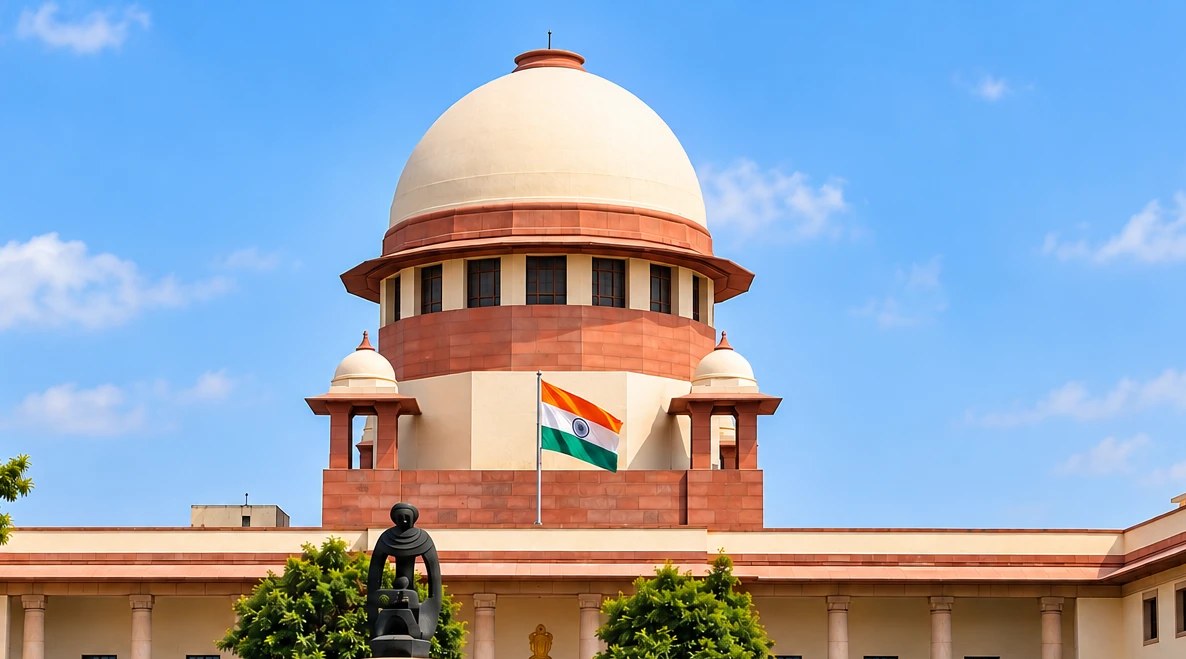
Supreme Court of India
Constitutional Law

Lieutenant Governor Can Nominate Delhi Municipal Corporation Members Without Ministers' Advice: Supreme Court

Published: · NyayVidhan

The Supreme Court held that the Lieutenant Governor of Delhi nominates the ten persons with special knowledge of municipal administration to the Delhi Municipal Corporation as a statutory duty under Section 3(3)(b)(i) of the DMC Act, not on the aid and advice of the Council of Ministers. Because Parliament's law vests the power in him, the exception in Article 239AA(4) applies, and the Delhi Government's challenge to the January 2023 nominations failed (paras 37, 39-41).

Lieutenant Governor Can Nominate Delhi Municipal Corporation Members Without Ministers' Advice: Supreme Court

Judgment Intelligence

Petition Dismissed
Government of NCT of Delhi v. Office of Lieutenant Governor of Delhi
2024 INSC 578
Writ Petition (C) No. 348 of 2023
Court
Supreme Court of India
Date of Decision
5 August 2024
Bench
Chief Justice D.Y. Chandrachud, Justice P.S. Narasimha and Justice J.B. Pardiwala
Relevant Acts & Sections
Constitution of India - Articles 163 and 239AA; Delhi Municipal Corporation Act, 1957 - Section 3(3)(b)(i); Government of National Capital Territory of Delhi Act, 1991 - Section 41
Final Outcome

Writ petition dismissed: the Lieutenant Governor's notifications of 03.01.2023 and 04.01.2023 were held not to violate Article 239AA read with Section 41 of the GNCTD Act; no order as to costs (paras 40-42).

Source Supreme Court of India, www.sci.gov.in — judgment dated 05.08.2024

Key holdings

  1. Article 239AA(4) differs from Article 163: the Lieutenant Governor's discretion may arise from any law, not only the Constitution (para 21).
  2. A law made by Parliament on a State List subject limits the executive power of the Delhi Government (paras 15, 20).
  3. The nomination power under Section 3(3)(b)(i) is a statutory duty of the Lieutenant Governor, not executive power of the Delhi Government (para 39).
  4. The Court added two principles on this power to its restatement of Union-NCTD relations (para 38).

Case explainer by NyayVidhan: an account of this judgment and the law it laid down, not the court's text. The judgment itself is the authoritative version.

Brief Facts

In the December 2022 elections to the Delhi Municipal Corporation, the Aam Aadmi Party won 134 of the 250 wards (para 3). On 03.01.2023 the Lieutenant Governor nominated ten persons under Section 3(3)(b)(i) of the DMC Act, and the notification and a corrigendum were published in the Gazette (para 3). The Government of NCT of Delhi sought certiorari under Article 32 to quash them and a direction that nominations be made only on the aid and advice of the Council of Ministers (para 4). It relied on a practice of over 30 years of nominations on such advice (para 7).

Court's Findings

The 2018 and 2023 Constitution Bench rulings hold that once Parliament legislates on a State or Concurrent List subject, the executive power of the Delhi Government is limited by that law (paras 13-15, 18-20). The Lieutenant Governor is not placed like a State Governor under Article 163, since Article 239AA(4) lets him act in his discretion where he is so required 'by or under any law' (para 21). The DMC Act, a Parliamentary law under Entry 5 of the State List, was amended in 1993 to give effect to Article 239AA and Part IX-A (paras 17, 26-27). The power to nominate came in for the first time with that amendment, which gave the power to nominate MLAs to the Speaker in the same Section, so it is no relic or 'semantic lottery' (paras 29, 37). The Act gives the Lieutenant Governor functions of an independent authority, such as appointing the Election Commissioner and convening the first meeting, while the Government's powers concern rules, taxes and recruitment (paras 32, 35-36). Text and context together show a statutory duty (paras 37-38).

Legal Principle

Where a Parliamentary law expressly vests a power in the Lieutenant Governor of Delhi and its context shows a statutory duty, he exercises it in his discretion under the 'by or under any law' exception in Article 239AA(4), not on the aid and advice of the Council of Ministers (paras 21, 37-39).

Precedents Relied Upon

  1. Relied Upon Discussed at ¶ 5, 13

    Where Parliament makes a law on a State or Concurrent List subject, executive action of NCTD must conform to it.

  2. Relied Upon Discussed at ¶ 5, 13, 14

    The executive power of GNCTD is limited by a law enacted by Parliament on a List II or List III subject.

  3. Samsher Singh v. State of Punjab (1974) 2 SCC 831
    Referred To Discussed at ¶ 5, 6

    Cited by the petitioner for the rule that in the cabinet system the Governor's satisfaction is that of his Council of Ministers.

View all precedents (4)
  1. Nabam Rebia and Bamang Felix v. Deputy Speaker, Arunachal Pradesh Legislative Assembly (2016) 8 SCC 1
    Referred To Discussed at ¶ 5

    Relied on by the petitioner for the aid and advice principle.

Statutory Provisions

NyayVidhan
Court Judgments · 3 min read
Decided: August 5, 2024 Chief Justice D.Y. Chandrachud, Justice P.S. Narasimha and J...
PDF
 Join our WhatsApp Group
✕

Try: POCSO, IBC, Electoral Bond, Article 370, NDPS Act, Bail Conditions, SC Contempt