

Join our WhatsApp Group
Breaking
Thursday, October 8, 2026 Jaipur Edition
Rajasthan High Court
Constitutional Law

No Blanket Ban on Pharmacy College NOCs Without Legislative Backing: Rajasthan High Court

Published: · NyayVidhan

The Rajasthan High Court allowed a private pharmacy college's writ petition against the State's order of 26.04.2025 banning NOCs for new B.Pharmacy courses and colleges. Following the Supreme Court's ruling in Pharmacy Council of India v. Rajeev College of Pharmacy, Justice Sunil Beniwal held that the State, without legislative competence, could not impose such a ban, and that confining it to private colleges was arbitrary and violative of Article 14 (paras 8.8, 9.1, 11).

No Blanket Ban on Pharmacy College NOCs Without Legislative Backing: Rajasthan High Court
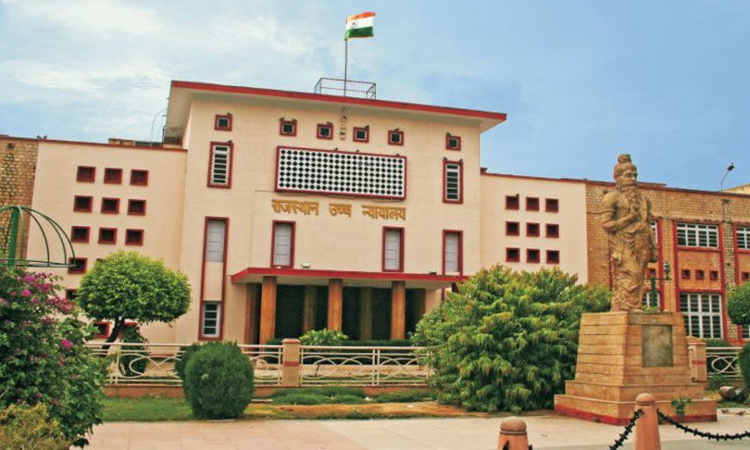
Photo: TrendSPLEND via Wikimedia Commons (CC BY-SA 4.0)

Judgment Intelligence

Petition Allowed
Global Pharmacy College v. State of Rajasthan & Ors.
2025:RJ-JD:44028
S.B. Civil Writ Petition No. 10763/2025
Court
Rajasthan High Court
Date of Decision
14 October 2025
Bench
Justice Sunil Beniwal
Relevant Acts & Sections
Constitution of India — Articles 14, 19(1)(g), 19(6), 226; Pharmacy Act, 1948
Final Outcome

Writ petition allowed. The order of 26.04.2025 was held arbitrary and violative of Article 14; the NOC is to issue if the college otherwise qualifies, with its 2025-26 fee adjusted for the next year (paras 11-14). A special appeal, D.B. SAW/683/2026, has been filed.

Key holdings

  1. A ban on new pharmacy colleges needs legislative competence; an executive order cannot impose it (paras 7.3, 8.8).
  2. Rajeev College permits curbs on mushrooming colleges only in accordance with law, not a blanket executive ban (paras 8.1-8.2).
  3. Barring only private colleges while universities remain free to start B.Pharmacy courses is arbitrary and discriminatory (para 9.1).
  4. The State NOC is one step before PCI approval and cannot override the PCI as the expert regulator (para 10).
  5. The college gets the NOC if otherwise eligible, and its 2025-26 fee is carried over (paras 12, 14).

Brief Facts

Global Pharmacy College, Kuchaman City (Nagaur), sought to start a B.Pharmacy degree course. After an earlier writ, an inspection report of 28.08.2024 went in its favour, and following an interim order of 06.02.2025 in a second writ, RUHS granted provisional consent of affiliation on 25.02.2025 (paras 2.1-2.2). The PCI had rejected its application on 12.02.2025 for want of the NOC and consent of affiliation (para 2.2). On 26.04.2025 the State banned NOCs for B.Pharmacy courses and new colleges (para 2.3). The college said the Pharmacy Act, 1948 gave no power for such a ban and that universities were left free; the State called it a conscious policy decision based on Rajasthan Pharmacy Council data (paras 3-4).

Court's Findings

The Court began with Rajeev College, where the Supreme Court treated the right to establish educational institutions as a fundamental right subject to reasonable restrictions, and held that a ban by executive instructions needs legislative competence (paras 7-7.3). It read the passages of that judgment on which the State relied as allowing curbs on the mushrooming of pharmacy colleges only strictly in accordance with law, and as ruling out a blanket prohibition by an executive resolution (paras 8.1-8.2). Allahabad High Court rulings had held State moratoria on pharmacy and nursing courses to be without jurisdiction, and the Punjab and Haryana High Court had rejected the Bar Council of India's complete ban on new law colleges (paras 8.3-8.6). The Court found the State's ban equally without legislative backing and held the State not competent to impose it (paras 8.7-8.8). The note-sheet filed with the additional affidavit did not justify barring private colleges alone while private and government universities stayed free to start courses, which made the order arbitrary and discriminatory (para 9.1). The State's NOC is only one step before PCI approval and cannot override the PCI, the expert regulator under a special law (para 10).

Legal Principle

The right to establish an educational institution can be restricted only in accordance with law. A State Government without legislative competence cannot impose a blanket ban on NOCs for pharmacy colleges by an executive order, and a ban that falls on private colleges alone is arbitrary and violative of Article 14 (paras 7.3, 8.8, 9.1, 10, 11).

Precedents Relied Upon

  1. Pharmacy Council of India v. Rajeev College of Pharmacy & Ors. AIR 2022 SC 4321
    Followed Discussed at ¶ 3, 4, 7, 8

    The right to establish educational institutions under Article 19(1)(g) may be restricted only in accordance with law; the PCI moratorium resolutions, being executive instructions, were struck down, and a blanket prohibition on pharmacy colleges cannot be imposed by an executive resolution.

  2. T.M.A. Pai Foundation & Ors. v. State of Karnataka & Ors. (2002) 8 SCC 481
    Referred To Discussed at ¶ 7

    Considered in Rajeev College: the right to establish educational institutions is a fundamental right, subject to reasonable restrictions found necessary in the larger public interest.

  3. Islamic Academy of Education & Anr. v. State of Karnataka & Ors. (2003) 6 SCC 697
    Referred To Discussed at ¶ 7

    Considered in Rajeev College together with T.M.A. Pai Foundation on reasonable restrictions on the right to establish educational institutions.

View all precedents (6)
  1. Karmyog Sewa Samiti v. State of U.P. and Ors. Writ C No. 7273/2025, decided on 19.08.2025 (Allahabad High Court)
    Relied Upon Discussed at ¶ 8

    Following Rajeev College, a State Government decision declaring 2025-26 a zero period for B.Pharma and D.Pharma courses was held without jurisdiction and violative of Article 19(1)(g).

  2. Babban Singh Memorial Education Sewa Trust v. State of U.P. Writ C No. 9010/2024, decided on 26.09.2025 (Allahabad High Court)
    Relied Upon Discussed at ¶ 8

    Relying on Rajeev College, a State moratorium on nursing courses by executive instructions was held without authority, as only the Indian Nursing Council regulates such courses.

  3. Chandigarh Education Society v. Bar Council of India & Ors. CWP No. 7441/2020, decided on 04.12.2020 (Punjab and Haryana High Court)
    Relied Upon Discussed at ¶ 8

    The Bar Council of India, with no enabling provision, could not impose a complete ban on new law colleges under the Legal Education Rules, 2008.
NyayVidhan
Court Judgments · 3 min read
Decided: October 14, 2025 Justice Sunil Beniwal
PDF
WhatsApp Telegram X / Twitter LinkedIn

✕

Popular: POCSO, IBC, Electoral Bond, Article 370, NDPS Act, Bail Conditions, SC Contempt