
Join our WhatsApp Group
Breaking
Thursday, October 8, 2026 Jaipur Edition
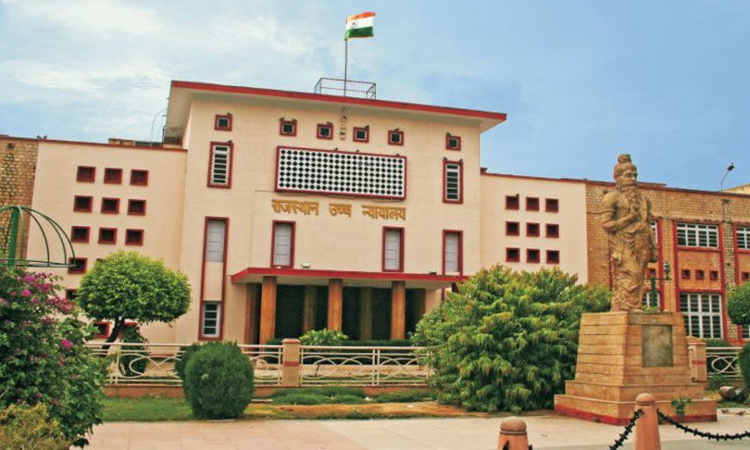
Rajasthan High Court
Family Law

Woman Who Denies Being Claimant's Mother Can Be Directed to Take DNA Test: Rajasthan High Court

Published: · NyayVidhan

The Rajasthan High Court held that when a woman admits her marriage but denies that the plaintiff is her child, the dispute is one of maternity, on which the statutory presumption of legitimacy says nothing (paras 16-20). Relying on Dipanwita Roy, it held that a person cannot be forced to give a sample but can be directed to take a DNA test, and refusal invites an adverse presumption (para 22). The trial court's refusal to order the test was quashed (para 24).

Woman Who Denies Being Claimant's Mother Can Be Directed to Take DNA Test: Rajasthan High Court

Judgment Intelligence

Petition Allowed
Smt. Bhauri Devi v. Mahendra Kumar & Ors.
2026:RJ-JP:5770
S.B. Civil Writ Petition No. 5426/2022
Court
Rajasthan High Court
Date of Decision
7 February 2026
Bench
Justice Bipin Gupta
Relevant Acts & Sections
Code of Civil Procedure, 1908 — Order 26 Rule 10-A; Indian Evidence Act, 1872 — Sections 112 and 114 (Illustration (h)); Bharatiya Sakshya Adhiniyam, 2023 — Sections 116 and 119
Final Outcome

Petition allowed. The order of 24.02.2022 was quashed and the application partly allowed: the trial court shall order defendant No. 2 to undergo a DNA test matched with the petitioner's; refusal attracts Section 119 BSA, Illustration (h), in the petitioner's aid (para 24).

Key holdings

  1. A woman denying that a child is hers raises a question of maternity, not paternity (paras 16-17).
  2. Section 112 Evidence Act / Section 116 BSA presume only a man's parentage, not maternity (paras 18-20).
  3. DNA testing can now determine maternity as conclusively as paternity (para 21).
  4. A person cannot be forced to give a sample but can be directed to take a DNA test; refusal invites a presumption under Section 119 BSA (paras 22, 24).
  5. A defendant who claims to be the natural son must prove it himself; no DNA test of him was ordered (para 23).

Brief Facts

The petitioner sued to have a registered Will of 10.04.2014, made by her late father Badri in favour of defendant No. 1, declared void, claiming the land was ancestral and seeking a declaration as owner of his half share (paras 2, 14). The defendants, including Badri's widow (defendant No. 2), denied that she was the couple's daughter and said their son was defendant No. 3 (para 3). An issue was framed on whether she is Badri's daughter (paras 5, 15). Her application under Order 26 Rule 10-A CPC for a DNA test was rejected on 24.02.2022 on the grounds of privacy and the defendants' refusal (paras 4, 7).

Court's Findings

The suit was not confined to the Will: the petitioner claimed her father's half share, and the trial court had framed an issue on her parentage (paras 14-15). Defendant No. 2 accepted that Badri was her husband but denied that the petitioner was her child, so the question was maternity, not paternity; most judgments cited by both sides dealt with paternity (paras 16-17). Calling a mother's denial of her child a "rarest of rare" case, the Court noted that Section 112 of the Evidence Act and Section 116 of the BSA presume only a man's parentage and never contemplated a woman denying a child born of her womb (paras 18-19). Without a presumption, a child struggles to prove parentage, but DNA testing now settles maternity conclusively (paras 20-21). On privacy, the Court held that a person cannot be forced to undergo the test but can be directed to; non-appearance or refusal lets the court draw a presumption under Section 114 of the Evidence Act, now Section 119 of the BSA, as Dipanwita Roy held (para 22). No test of defendant No. 3 was needed; he must prove he is Badri's natural son (para 23).

Legal Principle

Where a woman admits the marriage but denies that the claimant is her child, the issue is maternity, which Section 112 Evidence Act and Section 116 BSA do not cover. A civil court may direct her to take a DNA test; she cannot be compelled, but refusal permits a presumption under Section 119 BSA (paras 16-22).

Precedents Relied Upon

  1. Dipanwita Roy v. Ronobroto Roy (2015) 1 SCC 365
    Relied Upon Discussed at ¶ 11, 22, 24

    A court may direct a DNA test where it is eminently needed after balancing the parties' interests; the person cannot be compelled, but on refusal the court may draw a presumption under Section 114, Illustration (h), of the Evidence Act.

  2. Nandlal Wasudeo Badwaik v. Lata Nandlal Badwaik & Anr. (2014) 2 SCC 576
    Referred To Discussed at ¶ 11, 22

    Cited by the petitioner; its passages holding that DNA proof can displace the Section 112 presumption are quoted within the extract from Dipanwita Roy.

  3. Narayan Dutt Tiwari v. Rohit Shekhar & Anr. (2012) 12 SCC 554
    Referred To Discussed at ¶ 11

    Cited by the petitioner in support of a direction for a DNA test.

View all precedents (8)
  1. Neelam Rani & Ors. v. Smt. Mainka @ Maina Devi & Anr. 2014 (3) Civil Court Cases 317 (P&H)
    Referred To Discussed at ¶ 11

    Cited by the petitioner in support of a direction for a DNA test.

  2. Dalip Singh & Ors. v. Ramesh & Ors. (2017) 2 RLW 1043
    Referred To Discussed at ¶ 11

    Cited by the petitioner in support of a direction for a DNA test.

  3. Namdeo Babasaheb Korde & Anr. v. Babasaheb @ Babarao Ramkrishna Korde & Ors. 2013 SCC OnLine Bom 1756
    Referred To Discussed at ¶ 11

    Cited by the petitioner in support of a direction for a DNA test.

  4. R. Rajendran v. Kamar Nisha & Ors. 2025 INSC 1304
    Referred To Discussed at ¶ 12

    Cited by the respondents in opposing the DNA test.

  5. Ashok Kumar v. Raj Gupta & Ors. (2022) 1 SCC 20
    Referred To Discussed at ¶ 12

    Cited by the respondents in opposing the DNA test.

NyayVidhan
Court Judgments · 3 min read
Decided: February 7, 2026 Justice Bipin Gupta
PDF
WhatsApp Telegram X / Twitter LinkedIn

✕

Popular: POCSO, IBC, Electoral Bond, Article 370, NDPS Act, Bail Conditions, SC Contempt