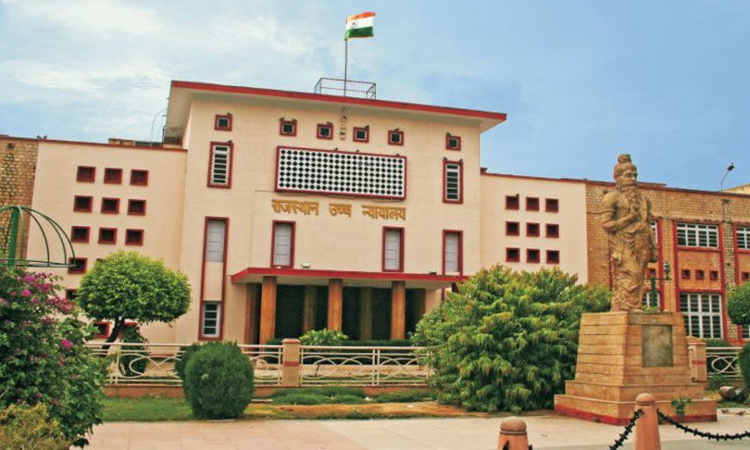

Photo: TrendSPLEND via Wikimedia Commons (CC BY-SA 4.0)
Judgment Intelligence
OtherBhagwan Singh v. Superintending Engineer, AVVNL, Banswara & Ors.
2025:RJ-JD:45818
S.B. Civil Writ Petition No. 1149/2018
- Court
- Rajasthan High Court
- Date of Decision
- 29 October 2025
- Bench
- Justice Farjand Ali
- Relevant Acts & Sections
- Constitution of India — Article 226; Rajasthan Compassionate Appointment of Dependents of Deceased Government Servants Rules, 1996
Final Outcome
Writ petition disposed of: from 01.11.2025 the department must deduct ₹20,000 a month from the daughter-in-law’s salary and credit it to the petitioner’s account for his maintenance, for life or until further orders of the competent authority (paras 22-23). A special appeal, D.B. SAW/1574/2025, has been filed.
Key holdings
- Compassionate appointment is an act of grace and a welfare measure, not a vested right (paras 13, 16-17).
- ‘Family’ for compassionate appointment covers all dependents of the deceased, including parents, not the widow alone (para 18).
- The appointee holds the post as the family’s representative and must look after the other dependents (para 19).
- The affidavit to maintain the in-laws, on which the appointment rested, binds the appointee; promissory estoppel applies (paras 12-13, 15).
- The employer must deduct ₹20,000 a month from her salary from 01.11.2025 for the father-in-law’s maintenance (para 22).
Brief Facts
Bhagwan Singh’s son, a Technical Assistant with AVVNL, died in service on 15.09.2015 (paras 2, 10). Invited to apply for compassionate appointment under the Rules of 1996, the father recommended his daughter-in-law instead (para 2). Her affidavit of 19.10.2015 undertook to live with and maintain her husband’s parents; she was appointed Lower Division Clerk in March 2016 (paras 4, 12). A Municipal Board inquiry reported that she left the matrimonial home within eighteen days of the death and that the petitioner had no income (paras 3, 11). His written demands for part of her salary went unanswered (para 5). The respondents said she faced harassment, later remarried and owed no duty, and called the petition premature (para 7).
Court's Findings
Justice Farjand Ali treated compassionate appointment as an act of grace and a welfare measure, not a vested right or a mode of employment (paras 13, 16-17). The daughter-in-law got the post without advertisement or competitive selection (para 16). Her affidavit to maintain her in-laws was a material and foundational condition of the appointment; having obtained the job on its strength, she could not resile from it without a fraud upon the scheme (paras 12-13). By accepting the post in place of the petitioner, the original nominee, she stepped into a position of trust, and promissory estoppel applied (para 15). ‘Family’ in this framework is not the widow alone but all who depended on the deceased: parents, spouse and children (para 18). An appointment given to one member is held as the family’s representative, with a moral and legal obligation to maintain the other dependents (para 19). She had received nearly 70% of the provident fund and compensation and left the in-laws unsupported (para 14). The Court refrained from commenting on her personal choices, including remarriage, but would not let her enjoy the job while neglecting those it was meant to support (paras 12, 21).
Legal Principle
A compassionate appointment is held by one member as representative of the deceased employee’s family, which includes dependent parents. An appointee who obtained it on an undertaking to maintain them is bound by it, and the employer may be directed to pay part of the salary to a neglected dependent (paras 13, 15, 19, 22).