
Latest
Wednesday, October 21, 2026
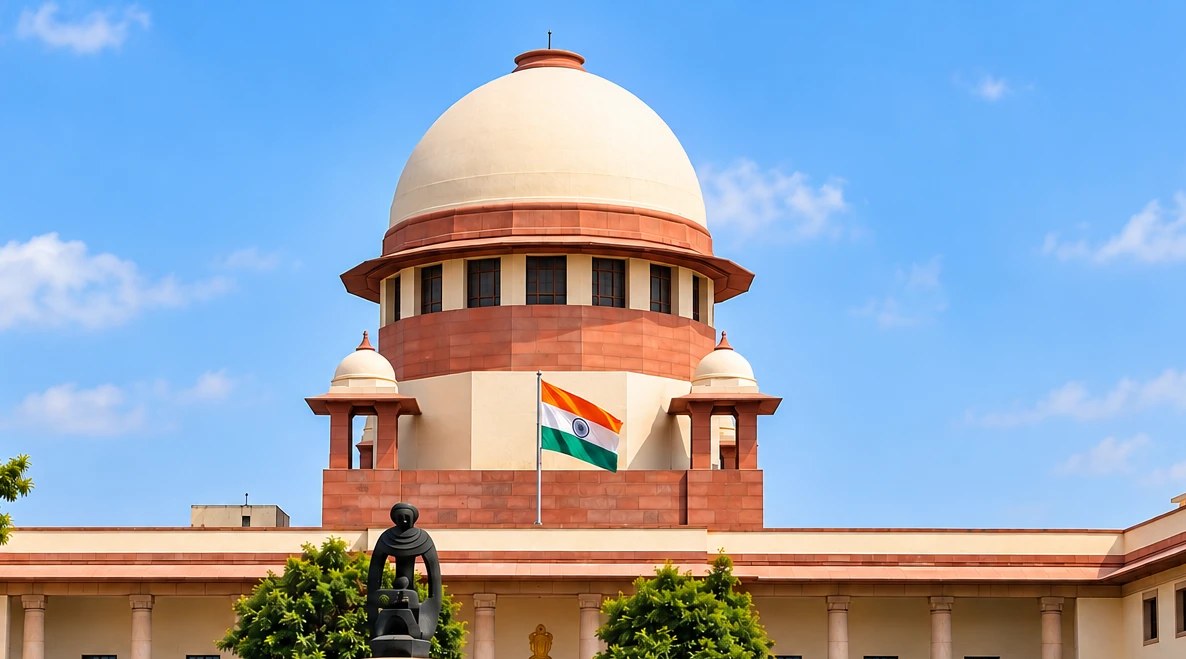
Supreme Court of India
Supreme Court

BCI Can Prescribe a Pre- or Post-Enrolment Bar Exam: Constitution Bench Overrules V. Sudeer

Published: · NyayVidhan

A five-Judge Constitution Bench held that the Bar Council of India has power under the Advocates Act, 1961 to prescribe an examination for enrolment, and that V. Sudeer, which had struck down the 1995 pre-enrolment rules, does not lay down the correct law. Whether the All India Bar Examination is held before or after enrolment is for the Council, and final-semester students may take it. The ruling is prospective and does not mandate pre-enrolment training (paras 32, 34-35, 38, 47).

BCI Can Prescribe a Pre- or Post-Enrolment Bar Exam: Constitution Bench Overrules V. Sudeer

Judgment Intelligence

Disposed Of
Bar Council of India v. Bonnie Foi Law College & Ors.
2023 INSC 116
Civil Appeal No. 969 of 2023 (arising out of SLP (C) No. 22337 of 2008) with W.P.(C) Nos. 25/2021 and 987/2013, T.P.(C) No. 692/2015 and connected transferred cases
Court
Supreme Court of India
Date of Decision
10 February 2023
Bench
Justice Sanjay Kishan Kaul, Justice Sanjiv Khanna, Justice Abhay S. Oka, Justice Vikram Nath and Justice J.K. Maheshwari
Relevant Acts & Sections
Advocates Act, 1961 - Sections 7, 24, 24A, 48B and 49(1)(ag), (ah); Advocates (Amendment) Act, 1973; Bar Council of India Training Rules, 1995
Final Outcome

Civil appeal and connected petitions disposed of, parties bearing their own costs; the Bar Council of India to take necessary steps within three months (paras 47, 49).

Source Supreme Court of India, www.sci.gov.in — judgment dated 10.02.2023

Key holdings

  1. V. Sudeer does not lay down the correct position of law on the Council's powers (para 34).
  2. The Council decides whether the All India Bar Examination is held pre- or post-enrolment, and it must be held twice a year as scheduled (paras 35-36).
  3. Students who have cleared all examinations up to the final semester may take the examination, subject to passing the course (para 38).
  4. Rules may require an advocate returning after long non-legal employment to retake the examination (para 42).
  5. The ruling is prospective and is no imprimatur for mandatory pre-enrolment training (para 47).

Case explainer by NyayVidhan: an account of this judgment and the law it laid down, not the court's text. The judgment itself is the authoritative version.

Brief Facts

The appeal began as a dispute over the respondent college's affiliation, during which the Court noticed falling standards of legal education and appointed a committee chaired by Mr. Gopal Subramanium (paras 5-6). Its report recommended a bar examination and apprenticeship, and the first All India Bar Examination was to be held in July-August 2010 (paras 7-8). On 18.03.2016 a three-Judge Bench referred three questions to a Constitution Bench, including whether pre-enrolment training and examination could be prescribed and whether V. Sudeer needed reconsideration (para 9). Petitions resisting the examination were tagged (para 10).

Court's Findings

Quality of lawyers is part of the administration of justice and access to justice, and half baked lawyers serve no purpose (para 19). Under Section 7 the Council, as apex body, is concerned with the standards of the profession and of those seeking entry (para 20). The powers of the State Bar Councils and of the Council are not pari materia (para 29). The 1973 Amendment removed the training and examination power only from State Bar Councils and did not touch the Council's own powers, so V. Sudeer erred (para 30). Section 7(1)(g), (l) and (m) confers wide powers (para 31), and Section 49(1)(ag), on the class of persons entitled to enrolment, leaves the power to hold an examination hardly in doubt (para 32). Read with Section 24(3)(d), these powers are adequate (para 33). The interdict placed by V. Sudeer cannot be sustained (para 34). The stage of the examination is for the Council (para 35). Graduates awaiting enrolment may do legal work other than acting or pleading in court (para 39), and the Court would not cap attempts (para 41). Enrolment fees must not become oppressive (para 44).

Legal Principle

The Bar Council of India's rule-making power under Section 49(1)(ag) read with Section 24(3)(d) of the Advocates Act, 1961 includes prescribing an examination for those seeking enrolment; the 1973 Amendment removed only the State Bar Councils' power, not the Council's (paras 30, 32-33).

Precedents Relied Upon

  1. V. Sudeer v. Bar Council of India (1999) 3 SCC 176
    Overruled Discussed at ¶ 7, 30, 34, 46, 47

    Held the 1995 pre-enrolment training rules ultra vires; does not lay down the correct law and is not good law.

  2. Indian Council of Legal Aid and Advice & Ors. v. Bar Council of India & Anr. (1995) 1 SCC 732
    Referred To Discussed at ¶ 12, 24

    Struck down an age cap of 45 years for enrolment as an advocate.

  3. Dr. Haniraj L. Chulani v. Bar Council of Maharashtra & Goa (1996) 3 SCC 342
    Referred To Discussed at ¶ 13

    Section 49(1)(ag) with Section 24 gives the Council wide powers over who may be enrolled.

View all precedents (4)
  1. Satish Kumar Sharma v. Bar Council of H.P (2001) 2 SCC 365
    Referred To Discussed at ¶ 13

    Cited by the Amicus: enrolment under Section 24 is subject to Council rules made under Section 49.

NyayVidhan
Court Judgments · 3 min read
Decided: February 10, 2023 Justice Sanjay Kishan Kaul, Justice Sanjiv Khanna, Justice A...
PDF
 Join our WhatsApp Group
✕

Try: POCSO, IBC, Electoral Bond, Article 370, NDPS Act, Bail Conditions, SC Contempt