

Join our WhatsApp Group
Breaking
Wednesday, October 7, 2026 Jaipur Edition
Rajasthan High Court
Labour Law

Disciplinary Proceedings Abate on Employee's Death If No Penalty Was Imposed: Rajasthan High Court

Published: · NyayVidhan

The Rajasthan High Court held that departmental proceedings against a government employee cannot continue after his death when no final penalty was imposed in his lifetime, because they are personal to the delinquent employee (paras 15, 18-19). It quashed a 2022 charge-sheet against a deceased physical training instructor and directed the State to consider his family's claim to service and retiral benefits uninfluenced by it (paras 23-24).

Disciplinary Proceedings Abate on Employee's Death If No Penalty Was Imposed: Rajasthan High Court
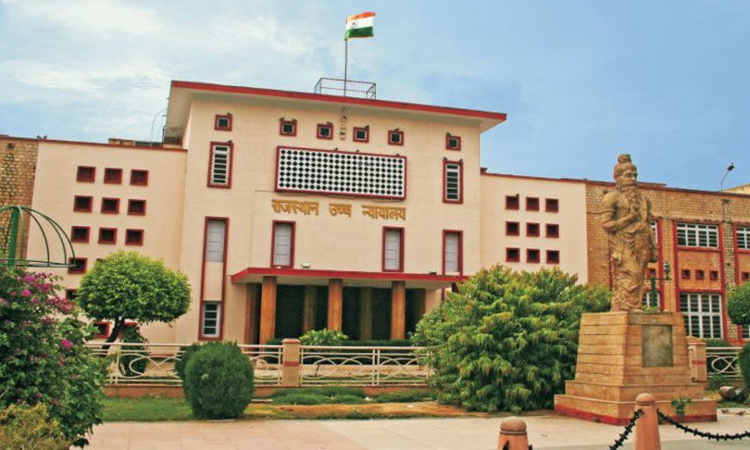
Photo: TrendSPLEND via Wikimedia Commons (CC BY-SA 4.0)

Judgment Intelligence

Petition Allowed
LRs of Babu Mohammed Panwar v. State of Rajasthan & Ors.
2026:RJ-JD:42589
S.B. Civil Writ Petition No. 8961/2022
Court
Rajasthan High Court
Date of Decision
21 August 2026
Bench
Justice Mukesh Rajpurohit
Relevant Acts & Sections
Rajasthan Civil Services (Classification, Control and Appeal) Rules, 1958 — Rule 16; Constitution of India — Article 226
Final Outcome

Petition allowed. The charge-sheet of 24.05.2022 and all consequential disciplinary proceedings were quashed; the respondents must consider the legal representatives' claim to service and retiral benefits in accordance with law. No opinion was expressed on the criminal case (paras 23-25).

Key holdings

  1. Disciplinary proceedings are personal to the delinquent employee and are meant to impose a penalty on him (paras 15, 18).
  2. They cannot continue after his death where no final penalty was imposed during his lifetime (paras 16-19, 22).
  3. A court may take note of a subsequent event, such as the employee’s death, that goes to the root of the proceedings (para 20).
  4. Departmental and criminal proceedings are distinct, and a charge-sheet is ordinarily not quashed at the threshold (para 12).
  5. The legal representatives’ claim to service and retiral benefits must be considered uninfluenced by the abated proceedings (para 24).

Brief Facts

The petitioner, a Physical Training Instructor Grade-III, was suspended in 2015 after spending more than 48 hours in judicial custody in a criminal case, and was later released on bail (para 2). After this Court directed that his representation for revocation of the suspension be decided, the District Education Officer instead issued a charge-sheet on 24.05.2022 under Rule 16 of the Rajasthan Civil Services (CCA) Rules, 1958 (paras 3-4). He challenged it, saying the charges arose from the same occurrence as the pending prosecution (para 4). He died on 27.04.2026 while the petition was pending, and his legal representatives were brought on record (para 6).

Court's Findings

The Court accepted that departmental and criminal proceedings are distinct, and that a charge-sheet is not ordinarily quashed at the threshold under Article 226 (para 12). But the employee's death changed the position (para 13). A disciplinary proceeding exists to decide whether the employee committed misconduct and to impose a penalty on him, so it is intrinsically tied to him (paras 15, 18). Following the Bombay High Court in Hirabhai Bhikanrao Deshmukh and the Allahabad High Court in Gulam Gausul Azam, such proceedings abate on death where no final penalty has been imposed (paras 16-17). No penalty had been passed here, so the proceedings could not continue whatever the validity of the charge-sheet (para 19). The State's plea that the petition was premature failed, because the Court may take note of a subsequent event that goes to the root of the proceedings (para 20). The other challenges to the charge-sheet became academic (para 21).

Legal Principle

Disciplinary proceedings are personal to the delinquent employee and aim at imposing a penalty on him. If he dies before any final penalty is imposed, the proceedings abate and cannot be continued, and his family's claims to service and retiral benefits must be considered uninfluenced by them (paras 15, 18-19, 24).

Precedents Relied Upon

  1. Hirabhai Bhikanrao Deshmukh v. State of Maharashtra & Anr. (1985) ILLJ 469 Bom.
    Followed Discussed at ¶ 9, 16

    Disciplinary proceedings are personal to the civil servant and aim at imposing a penalty; they abate on his death if not concluded by a final order.

  2. Gulam Gausul Azam & Ors. v. State of U.P. & Ors. Writ No. 18653/2012, decided on 12.05.2014 (Allahabad High Court)
    Relied Upon Discussed at ¶ 9, 17

    Departmental proceedings cannot be continued after the employee’s death so as to impose a penalty on him.

  3. Shrimati Sumitra Dhurve v. State of Madhya Pradesh 2025 MHPC JBP 15555
    Referred To Discussed at ¶ 9

    Cited by the petitioner in support of the plea that the proceedings abate on death.

View all precedents (4)
  1. Manvendra Singh v. State of Rajasthan & Ors. S.B. Civil Writ Petition No. 4276/2018, decided on 21.12.2018
    Referred To Discussed at ¶ 3

    The earlier writ petition was disposed of with a direction to decide the representation for revocation of suspension in the light of this judgment.
NyayVidhan
Court Judgments · 2 min read
Decided: August 21, 2026 Justice Mukesh Rajpurohit
PDF
WhatsApp Telegram X / Twitter LinkedIn

✕

Popular: POCSO, IBC, Electoral Bond, Article 370, NDPS Act, Bail Conditions, SC Contempt