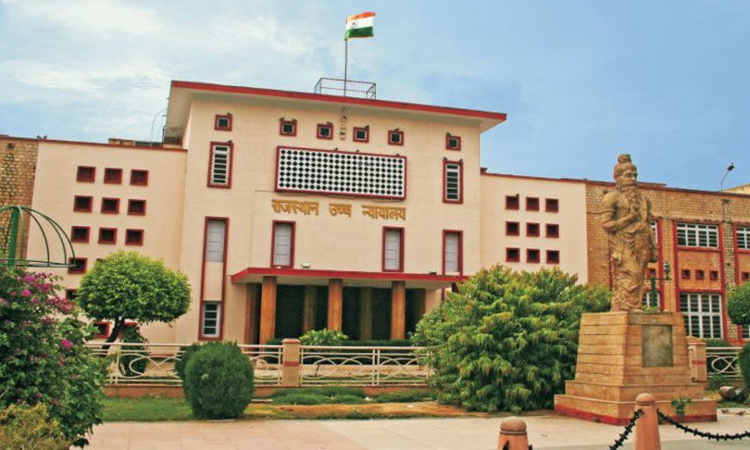

Photo: TrendSPLEND via Wikimedia Commons (CC BY-SA 4.0)
Judgment Intelligence
FIR QuashedAslam Khan v. State of Rajasthan & Ors.
2026:RJ-JD:18117
S.B. Criminal Writ Petition No. 1646/2026
- Court
- Rajasthan High Court
- Date of Decision
- 16 April 2026
- Bench
- Justice Farjand Ali
- Relevant Acts & Sections
- Constitution of India — Article 21; Indian Penal Code, 1860 — Section 379
Final Outcome
Petition allowed. All proceedings arising out of FIR No. 590/2004, Police Station Nimbahera, under Section 379 IPC, insofar as they relate to the petitioner, were dropped/quashed; the stay petition and pending applications were disposed of (paras 5, 5.2).
Key holdings
- Article 21's guarantee of fairness and expedition covers the investigation stage, not only the trial (para 4.7).
- Indefinite investigative inertia is no less prejudicial than a delayed trial (para 4.8).
- Delay simpliciter is not enough; the Court relied on the cumulative circumstances of the case (paras 4.9, 4.12).
- Without fresh material after the acquittal of the charge-sheeted accused, continuing proceedings against an unnamed person would amount to "preserving suspicion in vacuum" (para 4.3).
- The order is confined to its peculiar facts: extraordinary lapse of time, no substantive material and complete investigative stagnation (para 5.1).
Brief Facts
FIR No. 590/2004 was registered at Police Station Nimbahera under Section 379 IPC; the petitioner was not named in it (paras 1-2). After investigation, seven persons alone were charge-sheeted and tried, and all were acquitted by the Additional District Judge, Nimbahera, on 29.02.2012 (paras 2, 4.2). Complaining of police harassment, the petitioner obtained anticipatory bail from the Sessions Judge on 03.10.2020, but no further action followed for over five years (paras 2, 4.5). He sought the dropping of all proceedings against him under Article 21. The State replied that lapse of time does not extinguish the power to investigate and that anticipatory bail already protected him (para 3).
Court's Findings
Non-naming in an FIR is not decisive by itself, but where a matter stays pending for decades with no later material, it assumes substantial importance and prima facie indicates that the police had no credible material against the petitioner (para 4.1). Once those against whom tangible material existed were tried and acquitted, a dormant suspicion against a person with no stronger material is inherently questionable (paras 4.2-4.3). No supplementary charge-sheet, notice, warrant, proclamation or abscondence step was ever taken (para 4.4), and the dormancy after anticipatory bail showed a merely technical pendency (para 4.5). An investigation hanging over a person for twenty to twenty-five years creates a continuing civil disability (para 4.6). Article 21 demands fairness and expedition at every stage, including investigation; applying Vakil Prasad Singh v. State of Bihar, the Court held that indefinite investigative inertia is no less prejudicial than a delayed trial (paras 4.7-4.8). It accepted that delay alone does not end the power to investigate, but found cumulative arbitrariness in the combined circumstances (para 4.9), making continuation an abuse of the criminal process (paras 4.10-4.11).
Legal Principle
Lapse of time alone does not extinguish the power to investigate. But where a person never named in the FIR faces it for decades, the charge-sheeted accused have been acquitted, and no fresh material or coercive step exists, keeping the proceedings alive is manifestly arbitrary and violates the right to speedy justice under Article 21 (paras 4.9, 4.11).
Precedents Relied Upon
- Vakil Prasad Singh v. State of Bihar AIR 2009 SC 1822
Inordinate delay in investigation cannot be countenanced; the sword of pending criminal proceedings cannot be permitted to hang endlessly over a person.