
Latest
Wednesday, October 21, 2026
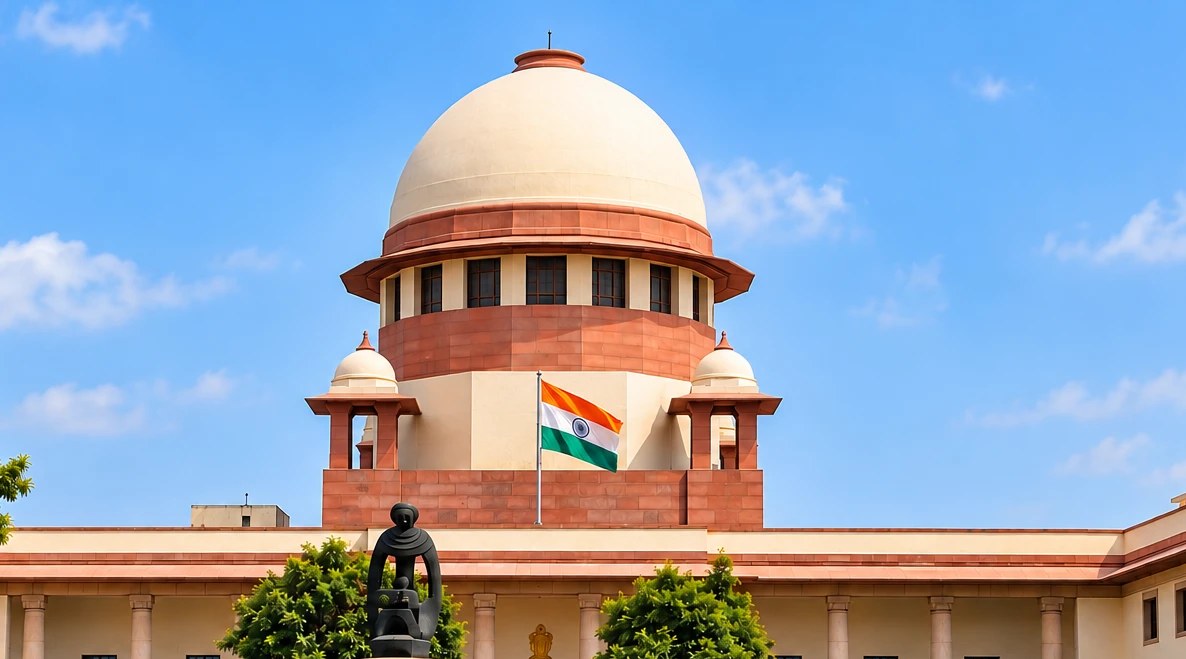
Supreme Court of India
Criminal Law

Challenge to Arrest in Judicial Custody Fails, but Supreme Court Grants Arvind Kejriwal Bail in CBI Case

Published: · NyayVidhan

In Arvind Kejriwal's appeals against the CBI, the Supreme Court granted him bail but its Judges differed on his arrest. Surya Kant J. held that the CBI, which arrested him in judicial custody in the ED case with the Trial Court's leave, complied with Section 41A CrPC; Ujjal Bhuyan J. found the timing suspect and evasive replies no ground for arrest. The arrest appeal was dismissed and the bail appeal allowed (Surya Kant J., paras 23, 36, 40; Bhuyan J., paras 23-24; Order, para 2).

Challenge to Arrest in Judicial Custody Fails, but Supreme Court Grants Arvind Kejriwal Bail in CBI Case

Judgment Intelligence

Bail Granted
Arvind Kejriwal v. Central Bureau of Investigation
2024 INSC 687
Criminal Appeal No. 3816 of 2024 (arising out of SLP (Crl.) No. 11023 of 2024) with Criminal Appeal No. 3817 of 2024 (arising out of SLP (Crl.) No. 10991 of 2024)
Court
Supreme Court of India
Date of Decision
13 September 2024
Bench
Justice Surya Kant and Justice Ujjal Bhuyan
Relevant Acts & Sections
Code of Criminal Procedure, 1973 - Sections 41, 41A and 439; Constitution of India - Articles 20(3) and 21; Prevention of Corruption Act, 1988 - Section 7; Indian Penal Code, 1860 - Sections 120B and 477A
Final Outcome

Arrest appeal (SLP 10991/2024) dismissed; bail appeal (SLP 11023/2024) allowed, the High Court's order of 05.08.2024 set aside and the appellant released on bail on a Rs.10 lakh bond with two sureties, the ED-case conditions and no public comment on the case (Order, para 2).

Source Supreme Court of India, www.sci.gov.in — judgment dated 13.09.2024

Key holdings

  1. When a court orders an arrest and issues a warrant, Section 41(1)(b)(ii) CrPC does not apply (Surya Kant J., paras 33-34).
  2. Once a High Court has issued notice and heard bail on merits, relegating the accused to the Trial Court may not be prudent (Surya Kant J., paras 45-46).
  3. A chargesheet changes the circumstances, but no straitjacket formula ties bail to its filing (Surya Kant J., paras 43, 46).
  4. Silence or evasive replies cannot by themselves justify arrest or continued detention (Bhuyan J., paras 24-25).
  5. The appellant may not comment publicly on the merits of the CBI case (Surya Kant J., para 47).

Case explainer by NyayVidhan: an account of this judgment and the law it laid down, not the court's text. The judgment itself is the authoritative version.

Brief Facts

The CBI registered an FIR on 17.08.2022 alleging a conspiracy in framing Delhi's Excise Policy 2021-22; the appellant, Delhi's Chief Minister, was not named in it. Arrested by the ED on 21.03.2024, he was in judicial custody when the CBI obtained the Trial Court's leave on 24.06.2024 to interrogate him and on 25.06.2024 to arrest him; he was arrested on 26.06.2024. On 05.08.2024 the Delhi High Court upheld the arrest and relegated his bail plea to the Trial Court (Surya Kant J., para 3). The CBI named him as an accused only in its chargesheet of 29.07.2024 (Bhuyan J., para 13).

Court's Findings

Section 41A CrPC does not require a notice to a person already in judicial custody, and the Trial Court's permission to interrogate met its requirements (Surya Kant J., paras 21, 23). Section 41A(3) permits arrest when reasons are recorded, as the CBI did on 25.06.2024 (Surya Kant J., para 27). Because the court ordered the arrest and issued a warrant, Section 41(1)(b)(ii) did not apply, so the arrest had no procedural infirmity (Surya Kant J., paras 33-34, 36). With 17 accused, 224 witnesses and no early end to the trial, continued incarceration would infringe Article 21, and the evidence was already with the CBI (Surya Kant J., paras 39-41). Once the High Court had issued notice and heard the merits, relegating him to the Trial Court was unnecessary (Surya Kant J., paras 45-46). Bhuyan J. found that the CBI felt no need to arrest him for 22 months and moved only after he got bail in the ED case, that evasive replies cannot justify arrest given Article 20(3), and that the belated arrest was unjustified (Bhuyan J., paras 23-25, 41). The CBI must dispel the perception of a caged parrot (Bhuyan J., para 33).

Legal Principle

Section 41A CrPC does not require a notice to an accused already in judicial custody; an investigating agency may arrest him in another case with the court's permission. Even a lawful arrest does not justify continued incarceration where the trial is unlikely to end soon (Surya Kant J., paras 21, 26, 40).

Precedents Relied Upon

  1. Arnesh Kumar v. State of Bihar (2014) 8 SCC 273
    Distinguished Discussed at ¶ 5, 32

    Conditions of Section 41(1)(b)(ii) CrPC for arrest; inapplicable where the court itself ordered the arrest.

  2. Central Bureau of Investigation v. Anupam J. Kulkarni (1992) 3 SCC 141
    Relied Upon Discussed at ¶ 26

    A person already in custody may be arrested for the same or a different offence by order of a Magistrate.

  3. Gudikanti Narasimhulu v. Public Prosecutor (1978) 1 SCC 240
    Relied Upon Discussed at ¶ 38

    Bail is a question of liberty, justice, public safety and the burden on the public treasury.

View all precedents (5)
  1. Relied Upon Discussed at ¶ 38

    The statutory policy against bail melts down where the trial is unlikely to finish in reasonable time.

  2. Arvind Kejriwal v. Directorate of Enforcement Criminal Appeal No. 2493/2024
    Referred To Discussed at ¶ 3, 47

    The appellant was granted interim bail in the ED case; its conditions were imposed in this case too.

NyayVidhan
Court Judgments · 3 min read
Decided: September 13, 2024 Justice Surya Kant and Justice Ujjal Bhuyan
PDF
 Join our WhatsApp Group
✕

Try: POCSO, IBC, Electoral Bond, Article 370, NDPS Act, Bail Conditions, SC Contempt